
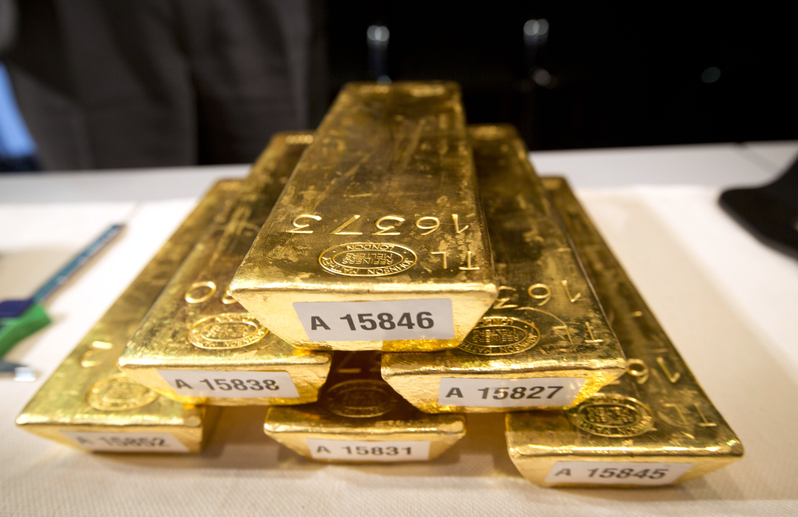
Recently, in the first seven months of this year, Hong Kong has imported nearly 100 metric tons of gold from Russia. Analysts have sounded the alarm that the increasing presence of Russian gold within Hong Kong poses a risk of sanctions or compliance issues if the supply chain involves entities sanctioned by the United States or other Western countries.
Publicly available information indicates that since Moscow’s comprehensive invasion of Ukraine in 2022, along with the sanctions imposed by the United States and the United Kingdom on Russian gold, the amount of gold exported to Hong Kong from Russia has been steadily increasing. Hong Kong entities have purchased approximately HK$276 billion (about US$35 billion) worth of Russian gold.
According to a report by the Financial Times on September 6th, Hong Kong trade data shows that from January to July 2026, the imported gold from Russia nearly reached 100 metric tons, marking a historical high and nearly tripling the import volume during the same period in 2025. Most of this gold ultimately flows into mainland China.
Analysts warn that the quantity of Russian gold within Hong Kong is on the rise. Should the trading chain involve Russian entities subject to sanctions by the United States or other Western countries, even financial institutions indirectly engaging in transactions with such sanctioned entities could face legal risks.
Tan Albayrak, a sanctions expert at the law firm Reed Smith, noted that Western banks indeed face the tangible risk of unintentional involvement. If the trading chain links to sanctioned producers, conducting transactions, even indirectly, with these sanctioned entities could pose legal risks.
Russia is the world’s second-largest gold producer. In recent years, Moscow has increasingly relied on exporting commodities, particularly to China, to support its economy during wartime. Meanwhile, Hong Kong has consistently positioned itself as a crucial hub for gold trading.
In information released by the Hong Kong Financial Services and the Treasury Bureau on September 4th, Secretary for Financial Services and the Treasury Christopher Hui mentioned that Hong Kong is evolving into a global hub for gold trading, clearing, and reserves.
Chief Executive of Hong Kong, John Lee, announced on July 6th that Hong Kong is actively promoting the international gold trading market and collaborating with the Shanghai Gold Exchange to establish physical gold connectivity. The next day, on July 7th, Hong Kong’s new gold central clearing and settlement system began trial operations, offering functions including gold trading, clearing, settlement, storage, and delivery.
Industry analysts point out that the surge in gold imports from Russia to Hong Kong raises the risk of violations. Currently, the U.S. Department of the Treasury’s Office of Foreign Assets Control explicitly states that gold transactions involving Russia may trigger sanctions, such as using gold to circumvent sanctions or providing support to sanctioned individuals.
In June 2024, the U.S. Department of the Treasury sanctioned several Hong Kong companies, including Holden International Trading Limited, Taube Precious HK Limited, and VPower Finance Security Hong Kong Limited, for their involvement in Russian gold money laundering and sanctions evasion networks.
The U.S. specifically targeted entities linked to sanctioned Russian gold producer Public Joint Stock Company Polyus through companies in Hong Kong and the United Arab Emirates, facilitating the handling and transfer of sales proceeds from Russian-origin gold. The focus of the U.S. actions is not merely on the import of Russian gold into Hong Kong but on the companies assisting Polyus and associated individuals in evading sanctions and channeling gold income back into the Russian financial system.