
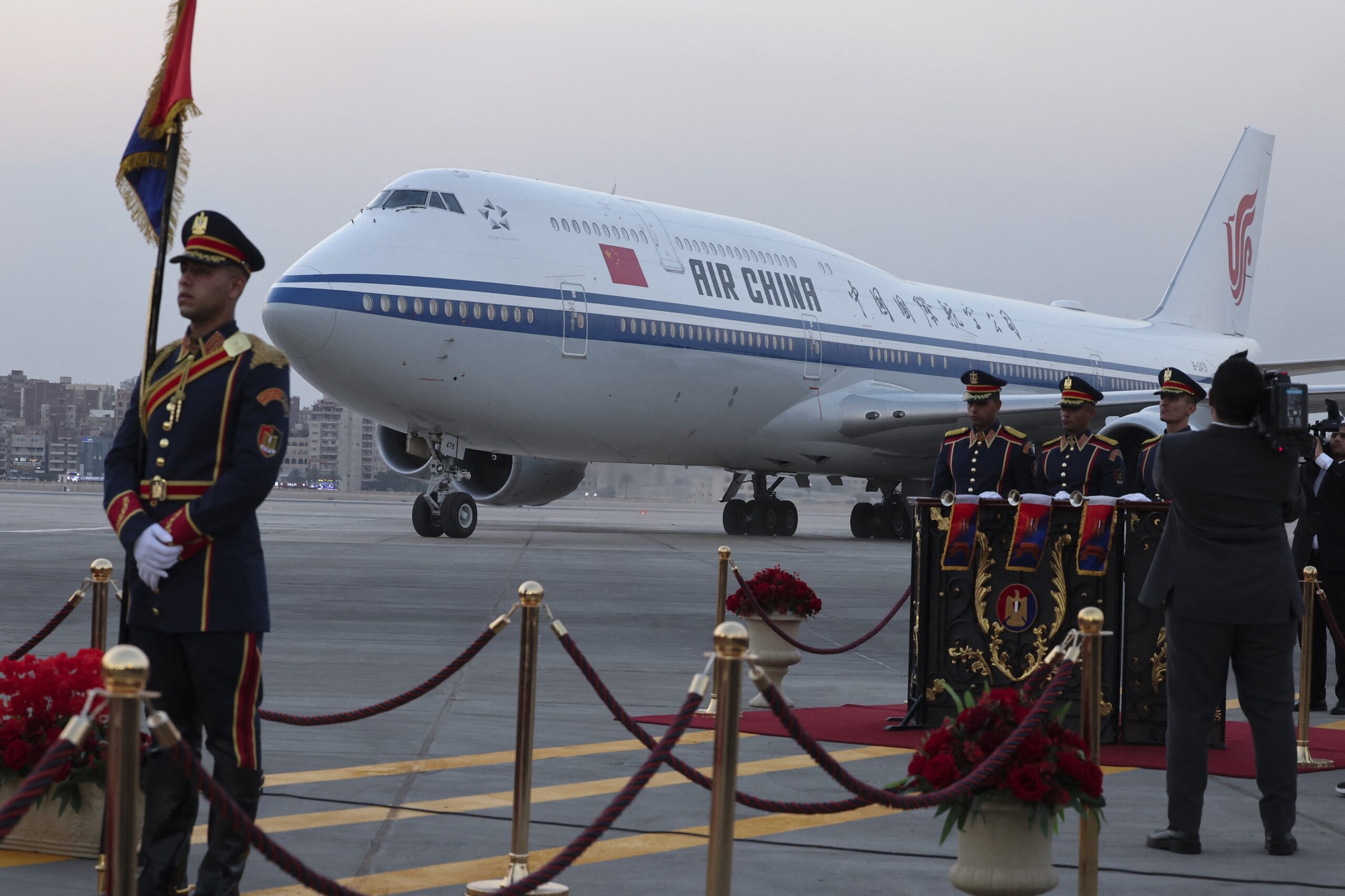
Amid escalating tensions between the United States and Iran, Chinese leader Xi Jinping met with Egyptian President Abdel Fattah al-Sisi in Cairo on September 2nd. Xi Jinping proposed the construction of a so-called “new security framework in the Middle East,” while Sisi emphasized Egypt’s “strategic balance” policy in an article before Xi’s visit.
Egypt is an important ally of the United States in the Middle East. Experts believe that while Egypt is unlikely to fully tilt towards China, its priority of economic interests is leading to a delicate balancing act. The United States has at least four strategies to address this changing situation.
On the morning of September 3rd, Xi Jinping concluded his state visit to Egypt and returned to Beijing.
This visit marked Xi Jinping’s return to Egypt after a decade. According to Xinhua News Agency, during his meeting with Sisi on the 2nd, Xi did not directly address the tense situation with Iran but proposed four initiatives for building a new security framework in the Middle East, emphasizing that regional security affairs should be led by the people of the region. He also stressed that the Palestinian issue remains central to Middle Eastern problems, claiming that Beijing is willing to cooperate with other countries to maintain the security of international waterways and promote development cooperation.
Egypt itself is a major defense partner of the United States, receiving approximately $1.3 billion in military aid from Washington annually, but in recent years, it has strengthened economic and military cooperation with Beijing.
Last month, Egypt and China held the “Eagle Response” exercise, featuring rare air combat drills between Chinese J-10 fighters and French Rafale fighters.
According to Xinhua News Agency, the two sides also agreed to expand cooperation in data centers, semiconductors, and key metal supply chains, as well as enhance the use of each other’s currencies in trade and investment.
Egypt, with the Suez Canal and a population of over 110 million people, is an important market for China. Since Sisi’s visit to China in 2014 and the signing of a strategic partnership agreement, Chinese investments in Egypt have rapidly increased.
Reuters reported that Egyptian authorities announced plans on the 3rd to expand an industrial zone developed by China within the Suez Canal Economic Zone. Meanwhile, China’s CEIEC Group signed a preliminary agreement to study a $500 million investment in building a comprehensive tire manufacturing complex.
Regarding the strengthened ties between Egypt and China, the Executive Director of a think tank on Indo-Pacific strategies, Yashiro Akio, told Epoch Times that Xi Jinping’s visit essentially aims to counter the U.S. and Israel’s influence in the Middle East, especially the United States. Following the failure in Iran, China hopes to maintain influence in the Middle East and is attempting to court Egypt to counterbalance the U.S. However, Egypt also does not want the complete dominance of U.S. and Israeli forces in the region or global affairs.
Yashiro Akio stated that the initiatives proposed by Xi are mainly political declarations and may not offer much or be effective. Just like with Ukraine, China has proposed peace plans, but they have not been heeded and China lacks the capability.
In an article published in Chinese state media before Xi’s visit, Sisi expressed Egypt’s “strategic balance” policy amidst intensifying global competition.
Yashiro Akio believes that Egypt’s pursuit of strategic balance could set an example for other Middle Eastern countries. However, the United States need not worry as long as the Iran issue is quickly resolved, China’s influence in the Middle East will decrease significantly.
Shen Mingshi, a researcher at the Taiwan Institute for National Defense and Security Studies, told Epoch Times that Xi Jinping’s visit to Egypt aims to divide Middle Eastern countries from their relationships with the United States and diminish U.S. influence in the region. China has consistently pursued this strategy, and countries heavily reliant on China economically may temporarily strengthen cooperation with China while maintaining reservations toward the United States.
Shen Mingshi noted that Egypt’s relations with the United States were previously very strong, but President Sisi’s welcoming attitude towards expanding China’s influence in the Middle East indicates a shift in its geopolitical strategy.
He analyzed that Egypt’s shift is primarily due to economic reasons, facing severe forex shortages, currency inflation, external debt, and reduced revenue from the Suez Canal due to the Red Sea crisis. Egypt requires external investments, and China’s investments in the Suez Canal Economic Zone, delay in Egypt’s debt to China, or currency swap agreements, are seen as external forces that can rescue the economy by Egypt.
Shen Mingshi believes that China cannot shake the U.S.’s security commitment in the Middle East. The United States has military bases in some countries in the Middle East, and if the U.S. withdraws, China cannot replace the military security provided by the U.S. Therefore, Middle Eastern countries will pursue a balancing act with major powers or rely on multilateral strategies, without completely tilting towards Beijing.
However, Shen Mingshi noted that Egypt beginning joint military training with China or purchasing Chinese fighter jets will undeniably impact its security cooperation relations with the United States. If tensions between the U.S. and China rise and China faces international isolation, Egypt will find it challenging to maintain a balance. “Egypt is currently prioritizing its economic interests and is playing a very risky balancing game.”
In terms of the economy, Egypt has aligned itself with BRICS countries by approaching Beijing. But there are several ways the United States can respond to this changing situation.
Firstly, Egypt’s military security still relies on the United States. If conflicts erupt between the U.S. and China in the Taiwan Strait or elsewhere, the U.S. will require allied countries to choose sides, making it challenging for Egypt to remain neutral.
Secondly, if Egypt mortgages key infrastructure such as the Suez Canal and port control to China due to debt issues, it will threaten the global deployment of U.S. military forces. If Egypt settles a large proportion of transactions in Renminbi, the U.S. may limit Egypt’s deep financial ties with China.
Thirdly, U.S. annual military aid to Egypt may be linked to economic considerations or policies aimed at restricting China. For example, restricting Huawei, denying Chinese warships entry, tying these issues to U.S. national security.
Lastly, the U.S. may mobilize investments from its allies in the Persian Gulf region to Egypt to relieve Egypt’s economic pressure and dilute Beijing’s control over Egypt.