
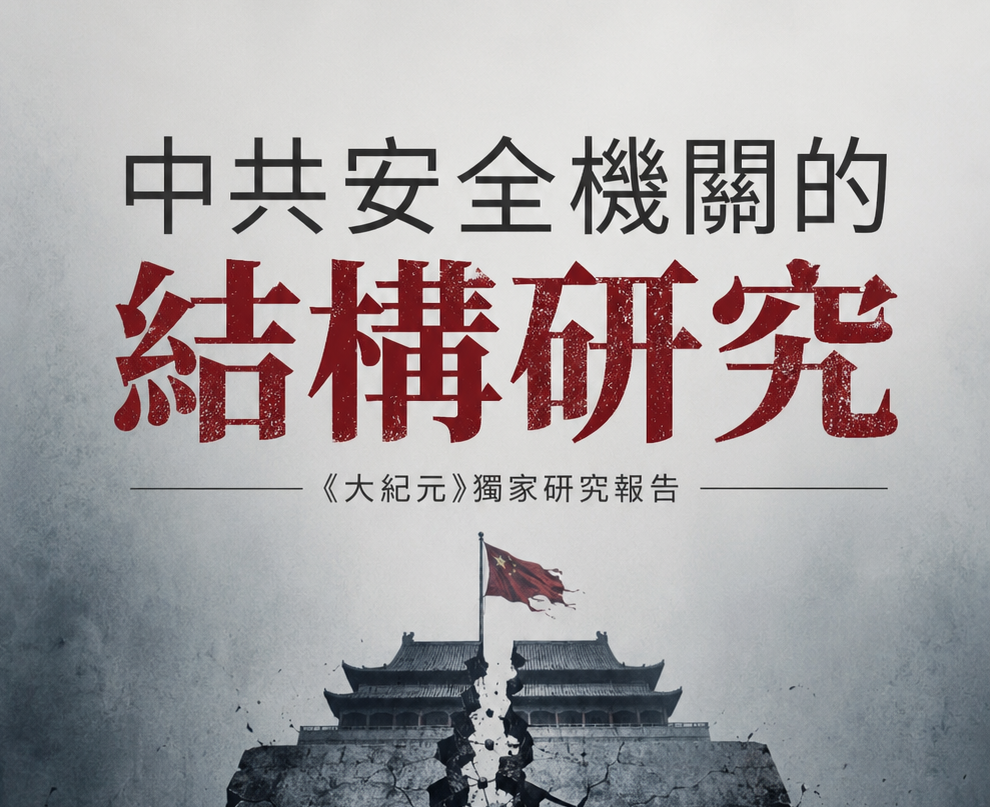
The exclusive report by Dajiyuan unveils a heavy, yet profoundly related secret to the Chinese community, shedding light on the case of former Chinese student Ji Chaoqun, whose espionage charges shocked Silicon Valley and the U.S. Chinese community. It reveals that his celebrated professional background in Silicon Valley became the fuse for self-immolation rather than a path to upward mobility for the middle class.
In the traditional Western intelligence perspective, espionage is a secret game belonging to professional agents, microfilm, and covert meetings in the dark night. When the Western judicial authorities publicly release indictment after indictment related to China, many people find themselves puzzled: why are the ones being arrested and charged often not deep-cover special agents carrying espionage equipment, but instead professors from prestigious universities, Chinese engineers from high-tech companies, overseas community leaders, or even ordinary international students?
Dajiyuan’s in-depth study of “Structure Analysis of the Chinese Communist Security Apparatus” directly exposes the mystery: this is not a traditional spy story in the conventional sense. It is a story of how a red regime turns everyone—its people, its neighbors, and even its adversaries—into parts of an authoritarian surveillance machine.
The transnational repression of the CCP does not rely on a single mysterious intelligence agency. Through its massive “security infrastructure”, it extends its tentacles across borders, silently infiltrating the academic, business, and Chinese communities in the United States. When the authentic indictments from the U.S. Department of Justice and international human rights reports corroborate the framework revealed in this report, a suffocating transnational surveillance image emerges.
Dajiyuan’s exclusive report points out that in the strategic vision of the CCP’s security apparatus, overseas Chinese, high-tech engineers, and foreign businessmen are highly institutionalized with a “dual identity”—internally, they are suspected of having contact with Western liberal ideas and potentially being “turned” by foreign intelligence agencies; externally, they are the most convenient and cost-effective channels for foreign intelligence.
In April 2023, the U.S. Department of Justice arrested Lu Jianwang, former chairman of the New York “American Chang Le Association”, and secretary general Chen Jinping. The federal indictment revealed that the two had set up an illegal “Fuzhou Overseas Service Station for Police and Overseas Affairs” in Manhattan’s Chinatown, at the direction of the Fuzhou Public Security Bureau, carrying out cross-border law enforcement and “persuasion return” actions against individuals of Minnan descent in the New York community. The indictment stated that a Fujian immigrant holding a U.S. green card was threatened by a visit from public security at home in Fuzhou for refusing to help locate fellow townsmen.
This transpacific phone call illustrates the most blatant operational logic of the CCP’s transnational suppression mechanism: no need to dispatch special agents abroad, just activate the most cost-effective leverage, domestic relatives.
Another more typical case mentioned in the Dajiyuan report is the Ji Chaoqun case. The indictment shows that Ji Chaoqun accepted “guidance” from Xu Yanjun, an intelligence official of the Jiangsu Provincial State Security Department, to collect personal background information of several Chinese aerospace and technology engineers in the U.S., including U.S. defense contractor personnel.
The significance of the Ji Chaoqun case lies not in presenting an ordinary victim, but in precisely demonstrating the work model of a local state security office: the targets are not professional spies but rather members of technical communities who can be infiltrated and exploited, directed by a provincial-level agency—the Jiangsu Provincial State Security Department, rather than by the Beijing headquarters.
The structural analysis in the exclusive Dajiyuan report provides an institutional explanation for these two cases. The report points out that local state security offices seamlessly integrate “foreign intelligence acquisition” and “cross-border fugitive prevention” in the same overseas work targets.
Based on the “Holistic National Security Concept”, the CCP expands its security boundaries indefinitely to technology, key data, and overseas communities—any individual connected to China could be included in this work viewpoint, a judgment that does not require any judicial authorization but rather internal judgment by the local agency.
In Western society, think tanks, civil cultural exchange organizations, and academic forums are significant platforms for promoting liberal ideas and diplomatic decisions. However, Dajiyuan’s exclusive report reveals that in the puzzle of the CCP’s security system, these seemingly harmless “second channels” are often carefully packaged intelligence contact platforms.
In several security investigations regarding China in Europe and the United States, Western scholars and officials were invited to academic forums hosted by the China Institutes of Contemporary International Relations (CICIR).
A scholar who had provided strategic consultation on China for the U.S. Congress recorded his firsthand experience: during several days of seemingly equal academic exchanges, researchers from the other side guided him to explore the non-public details of the next stage of export restrictions on chips by the U.S. Department of Commerce for the purpose of internal decision-making, under the guise of writing internal decision reference materials. It was not until the eve of his return to the U.S. that, in casual conversation, he inadvertently noticed the format of the other party’s work permit number, which was completely different from the normal university faculty code system, realizing that his participation was not just an academic discussion but an interrogation without iron bars.
When analyzing such “contact platforms”, Dajiyuan’s report specifically points out that CICIR has a hierarchical relationship with the national security department and its researchers have formal security system integration within the system. Similarly, institutions such as the Association of Taiwan Compatriots in China and the China International Culture Exchange Center are extensions of the “social tentacles” of security agencies in foreign affairs work—playing intermediary roles in the ecosystem chain of “security agencies—front organizations—university think tanks”, providing legitimate social cover for engaging with political figures, business people, and military experts overseas.
Commentator Li Linyi pointed out the cunning aspect of this “soft contact platform” lies in not actively seeking confidential documents but in unconsciously gathering information and penetrating influence through topic guidance, identity proximity, and multiple contacts in relaxed social settings. The person contacted often takes a long time after the fact to realize the true nature of that “academic discussion”.
The most imperceptible infiltration occurs in what is seen as the sanctum of freedom, Western university campuses. Dajiyuan’s exclusive report reveals the system of “student informants” through cross-national coordination established an invisible mechanism on overseas campuses, such as London, New York, and Los Angeles, causing overseas Chinese students to fall into a dilemma of “self-censorship and mutual surveillance”.
The May 2024 investigation report “I Feel Afraid on My Campus” released by Amnesty International provides direct quantitative evidence: about one-third of Chinese students studying in the United Kingdom, the United States, and the European Union stated in interviews that their parents in China were warned or pressured by Chinese police.
The report documented the real experience of a Chinese female student pursuing a master’s degree in London. Just because she liked and supported a post on social media advocating for labor rights in China, her parents back in China were subsequently summoned by local National Security police. The police had screenshots of her likes. Days later, the “Education Section” of the Chinese embassy invited her for coffee. The interlocutor accurately mentioned her roommate’s name, hoping she would “pay more attention to campus dynamics, report any abnormal political comments from fellow compatriots to teachers at any time”. The girl was forced to trade her companion’s freedom for the humiliation of peace for her family in China.
Dajiyuan’s report provides a complete institutional analysis of the operational logic of this mechanism. In the structure of China’s university governance, long-term institutionalized information sharing and task allocation exist between the university party committee, student affairs department, counselors, and local security agencies.
Through organizations like the Chinese Students and Scholars Association (CSSA), this mechanism extends monitoring tentacles to overseas campuses. When a student studying abroad expresses dissent or participates in protests, the big data platform rapidly anonymizes their overseas digital footprint, sending the stress directly to the student’s local police station of residence through inter-departmental linkages of the “interface regime”—threatening the work, student status, or property of family members, forcibly transforming ordinary international students into information sources for embassies.
The report particularly points out the core power of this mechanism: it does not rely on dispatching professional agents but rather generates uncertainty by creating a scenario where “anyone could be reporting”, causing overseas communities to engage in self-censorship and mutual vigilance. Thus, without employing public violence, it systematically destroys societal trust.
The crucial warning of Dajiyuan’s exclusive report is aimed at a long-overlooked structural blind spot: the resilience of this machine lies not in any specific agent or institution but in the logic of its operation that forcibly includes anyone connected to China in surveillance and oppression. Recognizing this is the starting point for any effective counteraction.
(Purchase “Structure Analysis of the Chinese Communist Security Apparatus”)