
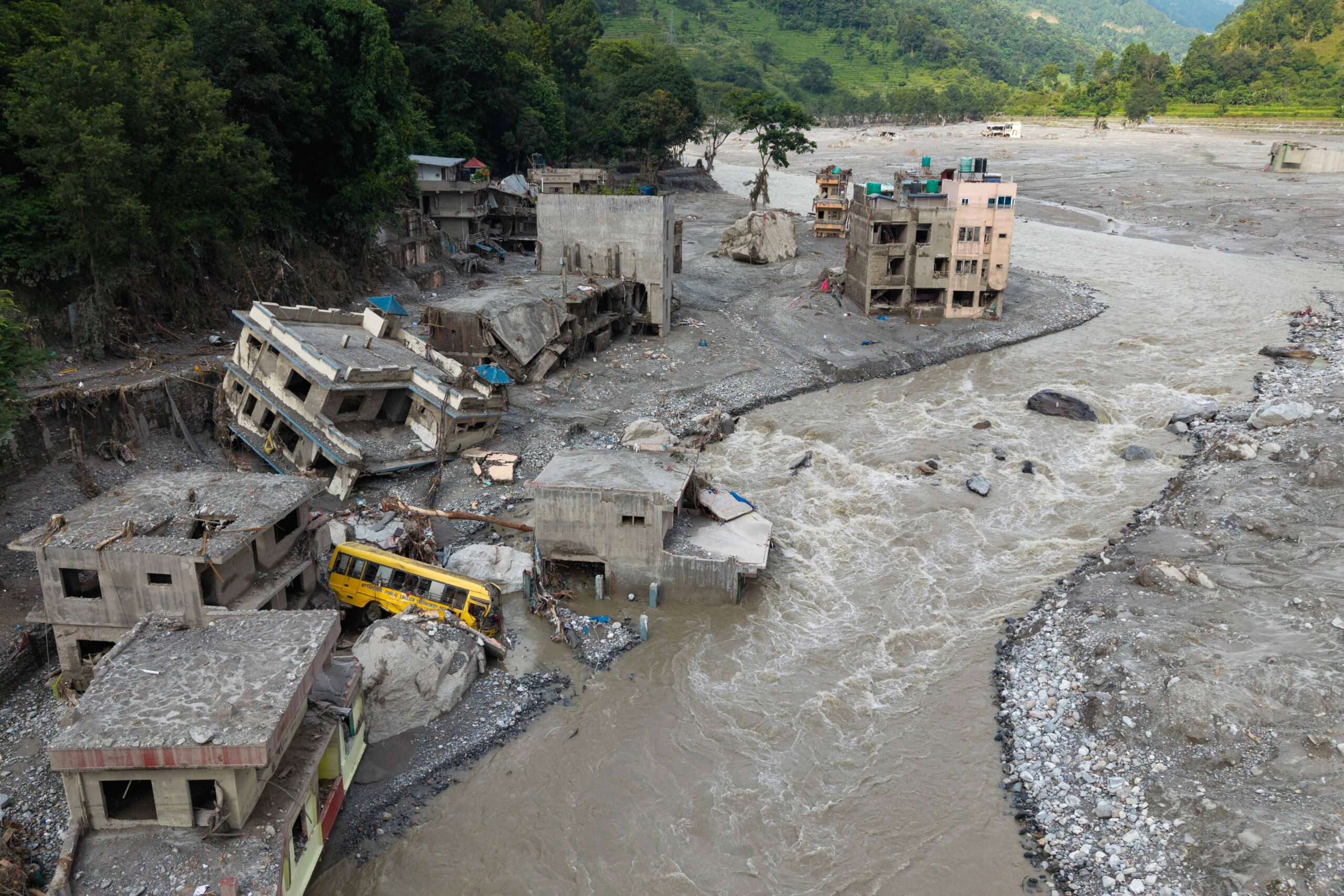
Ten days after the Nepal-Tibet mudslide incident, citizens from various countries are urging the Chinese officials to publicly disclose information about foreign nationals who have gone missing on the Tibetan side.
According to Reuters on Saturday (September 5th), Priyanka Choudhary, a Finnish citizen of Indian descent, was caught in a devastating mudslide at the Nepal border checkpoint while returning from a pilgrimage to Tibet.
Last Wednesday (August 26th), a large-scale mudslide and flash floods occurred near the China-Tibet and Nepal border, causing significant casualties. The disaster area, located in a high-altitude river valley, poses challenges for rescue operations, leading to a large number of people missing.
Ten days after the disaster, China’s state-run Xinhua News Agency reported that at least 31 people have been confirmed dead in Tibet, with 531 people missing, including 261 foreign citizens.
Choudhary is among the missing. Her family and others searching for missing loved ones are disappointed by Beijing’s response.
“There is no information from the Chinese side,” Choudhary’s brother, Tarun, told Reuters, “We cannot go to China or inquire with anyone, so I have no idea of the situation… China (the Chinese government) has not provided any latest information about the disaster area.”
Some relatives of the missing individuals state that the Chinese government’s practice of withholding information is exacerbating their anguish.
Naresh Goyal, a British citizen, is anxiously waiting for news about his sister, Neetu Goyal Tiwari. Neetu, 51, flew from India to Nepal’s capital Kathmandu on August 14 to participate in a pilgrimage organized by the Iskcon Foundation.
“We are not getting any information from the Chinese side, not knowing if my sister is safe, alive, or deceased,” Goyal told Reuters.
Goyal mentioned that a few days ago, the UK police collected his niece’s DNA sample from his sister’s home to submit to the Chinese authorities.
The Chinese Foreign Ministry has yet to respond to the related allegations, identification process for the deceased, and the DNA collection procedures used in Tibet.
In an interview with The Guardian, Goyal revealed that their family’s last message from Neetu was that she had reached the Jilong Immigration Office to complete the immigration process.
He added that he saw his sister’s name on a missing persons list circulating on social media but was unsure of its source, as obtaining information from the Chinese authorities is extremely challenging.
“Every time we ask the Chinese government, they say they will inform us through the British Embassy about the latest situation,” Goyal said.
“We have been waiting for more than seven days, every minute is agonizing, it’s really too painful,” he added.
The Chinese side has reported holding briefing sessions with the embassies of 23 countries to update them on the situation and claimed that the flood information they released is “transparent and timely.”
Beijing also stated that they have dispatched a team of DNA identification experts to Nepal, which has been severely affected by the disaster.
In contrast, in Nepal, various government departments, including the police, regularly release information about missing and deceased persons on social media and actively conduct DNA testing.
Last week, China convened a briefing session in Beijing with the envoys of countries where citizens went missing in Nepal. However, the attending envoys stated that China did not reveal specific details on how they would proceed with DNA identification of the deceased.
Furthermore, as per diplomats maintaining contact with the Chinese Foreign Ministry, China has not proactively shared videos from the Chinese side of the land border crossings, including facial recognition images, which could have been shared with the families of the missing or used for identification purposes.
Due to the sensitive nature of the discussions, these diplomats have requested anonymity.