
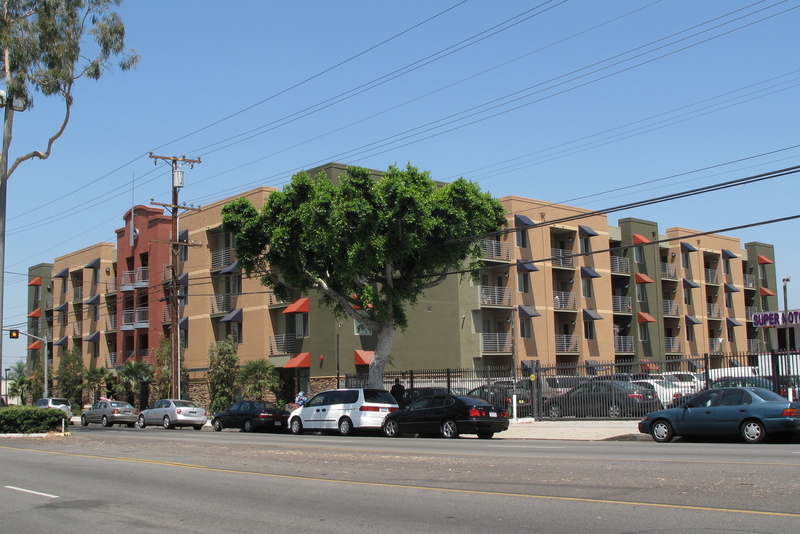
Los Angeles-area hospices and adult day care institutions have recently come under fire for “false reporting” and misappropriation of medical insurance subsidies, leading to the arrest of many involved individuals. Apart from companies being implicated in fraud, readers have also revealed to Dajiyuan that there is no shortage of individuals falsifying information to apply for elderly apartment or healthcare benefits.
Ms. May has been working in elderly care for many years, mainly caring for Chinese elderly individuals. She has noticed many abnormal occurrences: some residents from seemingly well-off families are deceiving the government by claiming low-income housing, medical subsidies, or food benefits, causing significant losses to the U.S. government.
According to her, these “poor individuals” come from mainland China and Taiwan, displaying signs of wealth through their clothing, handbags, stockings, etc. Their children drive luxury cars to pick them up, and May believes that the California government is overly indulgent towards them.
“Some individuals go as far as arranging fake marriages to qualify for elderly apartments and obtain more benefits,” May said. Inside low-income elderly housing, some residents, based on their attire and manners, are easily recognizable as former officials from mainland China.
The process of applying for low-income elderly housing in California typically involves meeting various criteria such as age, income (classified as below 30%, 50%, and 80% of the local median income levels), asset limits, and identity verification. In some areas of Los Angeles County, the high number of applicants may result in a waiting period of over five years.
May once cared for a centenarian who immigrated from mainland China to the U.S. Through family immigration, the elderly individual brought their siblings to the U.S., some of whom are around 60 years old. These relatives used the same methods to apply for elderly apartments.
“They do not disclose their assets in their home country to the U.S. government,” May said. After obtaining permanent residency, these individuals retire without working for many years and start receiving benefits, becoming a burden on public funds, resembling a criminal group.
May observed that although these individuals appear physically well, they suddenly exhibit symptoms of discomfort during medical check-ups, using walking aids and complaining about various pains to doctors.
She also heard from a friend about a retired Chinese Communist Party diplomat who enjoys various benefits using a California Medi-Cal card. She lamented that with the government focusing on caring for the elderly and societal trends leaning in this direction, young people may lose the drive to work hard and succeed, opting to rely on government assistance in old age instead. This trend could lead to the depletion of resources in the U.S., turning prosperity into poverty.
In accordance with California government regulations in 2026, low-income elderly individuals must meet specific guidelines to receive government benefits. For single individuals, the asset limit is generally $130,000 and $195,000 for couples; monthly income after deducting relevant expenses should be below $1,836 (singles) or $2,490 (couples), with primary residences and daily commute vehicles typically not counted as assets.
When elderly individuals receiving benefits from the Medi-Cal card pass away, the government usually seeks partial reimbursement for medical or care expenses through the “Medi-Cal recovery program,” pulling from their assets. Consequently, some families may take preemptive measures to avoid this debt.
Ms. C knows of elderly individuals who transfer high-value assets to their children, solely relying on low-income benefits; some elderly individuals who can self-care opt to reside in nursing homes.
Before her mother passed away last year, she stayed in and out of hospitals for emergency treatment, then transitioned to a nursing home before moving to a skilled nursing facility. While grateful for the benefits provided by the government, C feels that such a system is easily exploited, leading to adverse societal consequences.
Regarding Medicare, it only covers short-term rehabilitation care as per regulations, such as post-surgery or post-stroke recovery, reimbursing 100% for the first 20 days, requiring a personal copay from day 21 to 100, and ceasing payment thereafter. C witnessed nursing facilities circumventing legal restrictions, permitting multiple admissions within a year for a single patient, resulting in significant public healthcare burdens amounting to hundreds of thousands of dollars.
May observed that elderly individuals with White and Blue Medicare cards and excellent financial backgrounds are picked up from Monday to Friday by senior centers to enjoy government-provided services, eliminating the need to cook for themselves. Some fib about their children providing them with 70-80 hours of home care each month, fraudulently receiving one to two thousand dollars in subsidies; over two years, their children can buy them a new car using the accumulated funds.
While belonging to a middle-class family herself, May noticed that the refrigerators in the elderly individuals’ homes she takes care of contain much better food than what she has at home. “Their refrigerators are stocked with everything, and they can even bring back some prepared food from the senior center,” she remarked.
She also interacted with retired middle-class American families in their 80s and 90s, whose living standards are significantly lower than those deceiving the government for benefits. These hardworking families viewed self-sufficiency as a virtue throughout their education and careers but lack the financial means to spend thousands of dollars a month in retirement, only able to afford occasional cleaning help. On the other hand, those claiming to be impoverished enjoy services funded by the U.S. government on a daily basis.
“This is a punishment for those who have worked hard. This trend is wrong and turned upside down,” May concluded.