
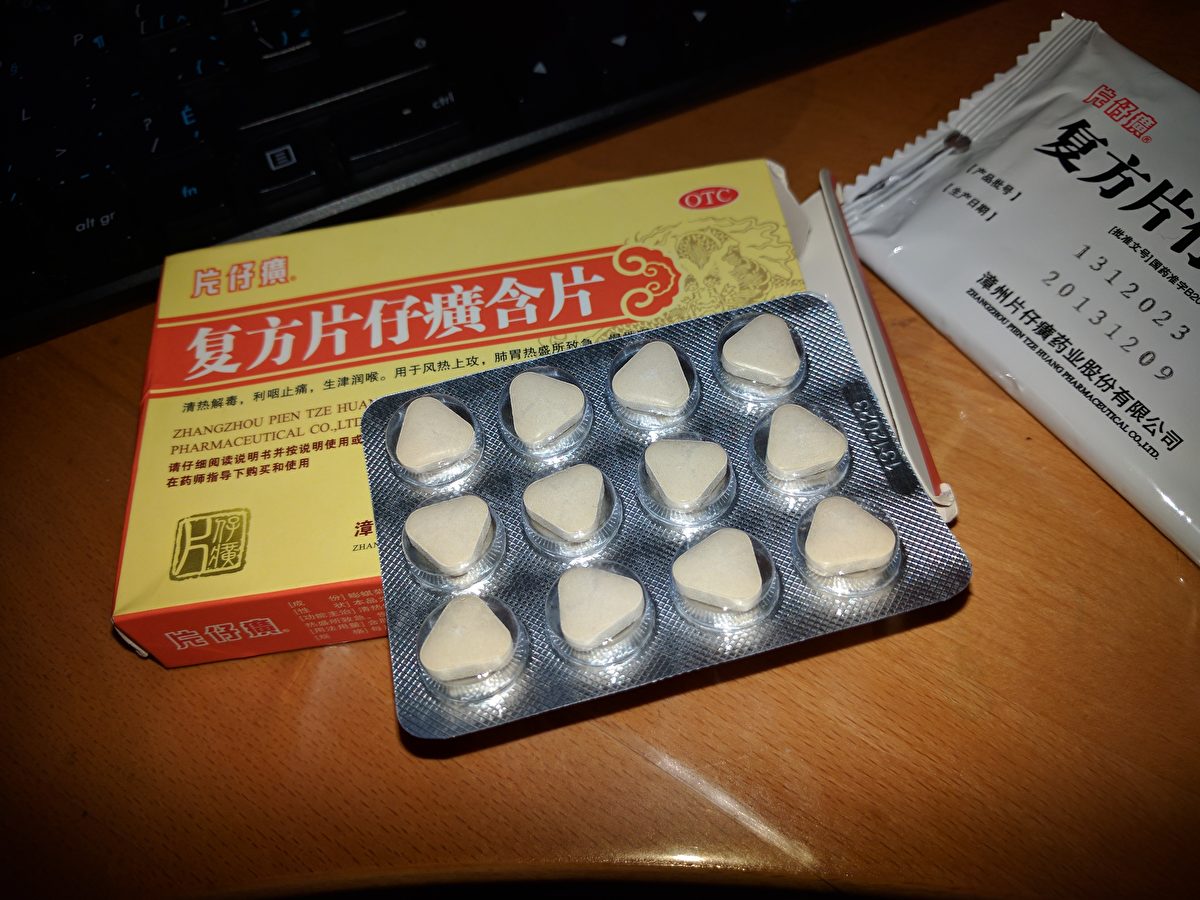
The once high-flying “Maotai of Medicine,” Pai Zi Huang, with a market value of billions in the past, is currently facing dual pressures of continued decline in performance and a cooling trend in terminal sales. The headline “Pai Zi Huang’s 760 yuan per pill is not selling” has recently become a hot topic, drawing market attention.
In May 2023, Pai Zi Huang raised the retail price of its tablets in the domestic market from 590 yuan/pill to 760 yuan/pill. Now, the sales momentum of this high-priced product is declining, challenging the market logic where “increased prices could still sell.”
Pai Zi Huang recently released its 2026 interim report. The data shows that in the first half of the year, the company achieved operating income of 4.573 billion yuan, a year-on-year decrease of 14.98%; net profit attributable to shareholders was 1.093 billion yuan, a year-on-year decrease of 24.22%; and adjusted net profit was 1.055 billion yuan, a year-on-year decrease of 27.41%.
Among them, the revenue from liver disease drugs, as the core business, was 2.348 billion yuan, a decrease of 18.92% compared to the previous year, which is higher than the overall company’s revenue decline.
Following the dual decline in performance in the first half of 2025 and the full year of 2025, Pai Zi Huang has now seen consecutive declines in revenue and net profit for the second half.
In 2025, the company’s revenue was 9.001 billion yuan, a decrease of 16.56% year-on-year; net profit attributable to shareholders was 2.159 billion yuan, a decrease of 27.49% year-on-year, marking the first time since its listing in 2003 that the company has experienced a decrease in both annual revenue and net profit.
Pai Zi Huang’s terminal sales have cooled down, as reflected in the retail market.
On August 31, “Qi Lu Yi Dian” reported that when a reporter visited a Pai Zi Huang Guoyao Tang in Jinan, there were no other customers in the store. The store clerk introduced that currently Pai Zi Huang is available in tablet and capsule forms, with 4-pack and 10-pack options, both priced at 760 yuan per pill when calculated.
Regarding the situation where Pai Zi Huang was once speculated to be selling for over 1,600 yuan per pill, the store clerk explained that over 1,600 yuan was not the official price but a price formed by online speculation, and the current official store price is unified.
Regarding sales, the clerk also admitted that compared to the same period last year, there has been a “slight decline” in store sales.
From the past situation of supply shortages, market-driven price hikes, to the current cooling terminal sales, the market heat of Pai Zi Huang has clearly undergone a transformation.
What is noteworthy is that there has been a significant divergence between the official retail prices and some actual transaction prices in the market.
According to “Qi Lu Wan Bao,” the actual selling price of Pai Zi Huang in some e-commerce channels has fallen below the official guideline price, with some channel prices dropping to the range of 500 to 600 yuan; the secondary market repurchase price even dropped to as low as 460 yuan per pill at one point.
This means that while official stores continue to sell at 760 yuan per pill, the actual transaction prices in some other channels have fallen below 600 yuan.
This phenomenon of the official price and market price mismatch reflects that the original channel pricing system of Pai Zi Huang is under pressure.
As sales slow down, inventory has also become a pressure point for Pai Zi Huang.
The company’s 2025 annual report shows that the inventory of liver disease drugs increased by 265.53% year-on-year, far exceeding the growth rates of production and sales during the same period.
It should be noted that the 265.53% increase in the inventory of liver disease drugs disclosed in the company’s annual report does not directly equate to the increase in inventory through distribution channels.
With terminal sales slowing down, Pai Zi Huang has strengthened channel management since the second half of 2025, including controlling shipments, managing price confusion, and promoting inventory clearance. This also signifies that the company is shifting from its past “scramble for goods” mode to focusing more on terminal digestion.
The cooling of Pai Zi Huang’s sales is not unrelated to its high price threshold.
In May 2023, citing increases in raw materials and labor costs, Pai Zi Huang raised the retail price of tablets from 590 yuan to 760 yuan, an increase of about 28.8%.
During periods of high demand, high prices can enhance the scarcity and high-end image of the product; however, when market demand weakens, high prices can also become a significant factor limiting consumption.
Especially in cases where actual prices in some channels have dropped to below 600 yuan, consumers’ acceptance of the official price of 760 yuan will naturally be challenged.
Furthermore, Pai Zi Huang is fundamentally a medicine, with its instructions stating its main functions as “clearing heat and detoxification, cooling blood and resolving stasis, reducing swelling and relieving pain,” rather than being a daily health product. The past consumer expectations for non-therapeutic consumption such as “nourishing health” and “protecting the liver” may also gradually cool down against the backdrop of more rational consumption trends.
The changes in the terminal market are also reflected in the capital market.
As of the close of August 28, Pai Zi Huang’s stock price was 127.30 yuan per share, a cumulative decline of over 20% since the beginning of the year, with a market value of about 76.8 billion yuan.
Compared to the peak in 2021 when the stock price once surpassed 460 yuan per share, Pai Zi Huang’s stock price has significantly fallen, with a market value evaporating by over 190 billion yuan from its highest point.
However, the company’s performance is not without highlights. In the first half of 2026, the company’s inventory decreased compared to the end of 2025, and the net cash flow generated from operating activities reached 1.625 billion yuan, a year-on-year increase of 332.58%; the gross profit margin of liver disease drugs increased to 62.77%, an increase of 1.27 percentage points year-on-year.
For Pai Zi Huang, the real test now is not whether it can continue to raise prices but how much premium the actual terminal demand can support under the official price of 760 yuan.