
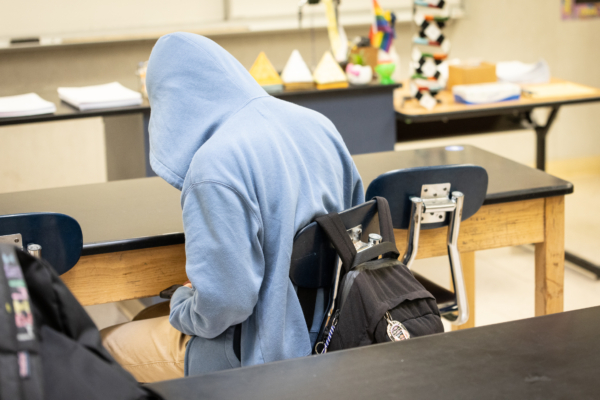
A recent study released this week revealed that the number of students in Los Angeles County who meet the California Department of Education’s definition of “homeless” has reached a new high. According to the report titled “Rising Numbers, Declining Resources: Homeless Students in Los Angeles County” by the UCLA Center for the Transformation of Schools, in the 2023-24 school year, approximately 61,249 K-12 students in Los Angeles County were identified as homeless, marking a significant increase from the previous five years. This represents a 28.4% surge from the 47,689 homeless students reported in the 2022-23 school year, accounting for about 4.5% of the total student population in the county.
The report referenced data from the California Department of Education comparing student figures from the 2019-20 to 2023-24 academic years. The overall number of homeless students in California rose from 246,480 students in the 2022-23 school year to 286,853 in the 2023-24 school year, representing a 16% increase during the same period.
The definition of homeless students outlined in the report is based on the California Department of Education’s website, which categorizes individuals as homeless students under the McKinney-Vento Homeless Assistance Act if they fall into one of the following groups:
– Living with others due to loss of housing, economic hardship, or similar reasons.
– Temporarily staying in motels, hotels, trailer parks, or campgrounds.
– Residing in emergency shelters or transitional housing.
– Living in cars, parks, abandoned buildings, or other unsuitable living conditions.
In the 2023-24 school year, a significant 75.5% of homeless students in Los Angeles County were of Hispanic descent (compared to 72% statewide), surpassing the 65% Hispanic student population in the total county student body. Other ethnic breakdowns among homeless students in Los Angeles County include: Black 11.5%, White 5.3%, Asian 2.9%, and multi-racial 2.9%.
The percentage of English Learners among homeless students is also notably high, with 37.8% of homeless students in California being English Learners, while in Los Angeles County, the figure stands at 34%.
The school district with the highest proportion of homeless students is the Norwalk-La Mirada Unified School District in the southeast of Los Angeles County, where out of a total student population of 15,636, 4,765 students are homeless, accounting for a staggering 30.5%. In the Rowland Unified School District, a community with a significant Chinese population, 2,400 out of 14,370 students are homeless, representing a 16.7% rate.
The report analysis points to several factors contributing to the high number of homeless students in the area, including high housing costs and lack of economic stability among low-income families. Many families engage in low-paying, unstable, or seasonal work, leading to significant income fluctuations that can result in housing insecurity in the event of job loss or pay cuts.
Furthermore, the report highlights that frequent school transfers among homeless students lead to absenteeism, academic lag, disrupted social connections, decreased sense of psychological security, and potentially contribute to a cycle of struggles, increasing the risk of dropping out and reducing future employability prospects, thereby perpetuating economic instability in adulthood.
In terms of academic performance, homeless students exhibit significant academic disparities compared to their housed counterparts. In Los Angeles County, while 48.7% of the overall student population meet or exceed proficiency standards in English Language Arts (ELA), only 37.1% of homeless students achieve the same. Similarly, in Mathematics, 29.3% of the general student population meet or exceed standards, whereas only 18.3% of homeless students do so.
The report recommends that the federal government enhance policies to protect homeless students, and state authorities prioritize investments and targeted interventions for areas with high concentrations of homeless students. It also suggests allocating specific funds for school districts with the highest percentages of homeless students to establish comprehensive support systems for housing-insecure youth, aiming to ensure long-term stability and assistance.