
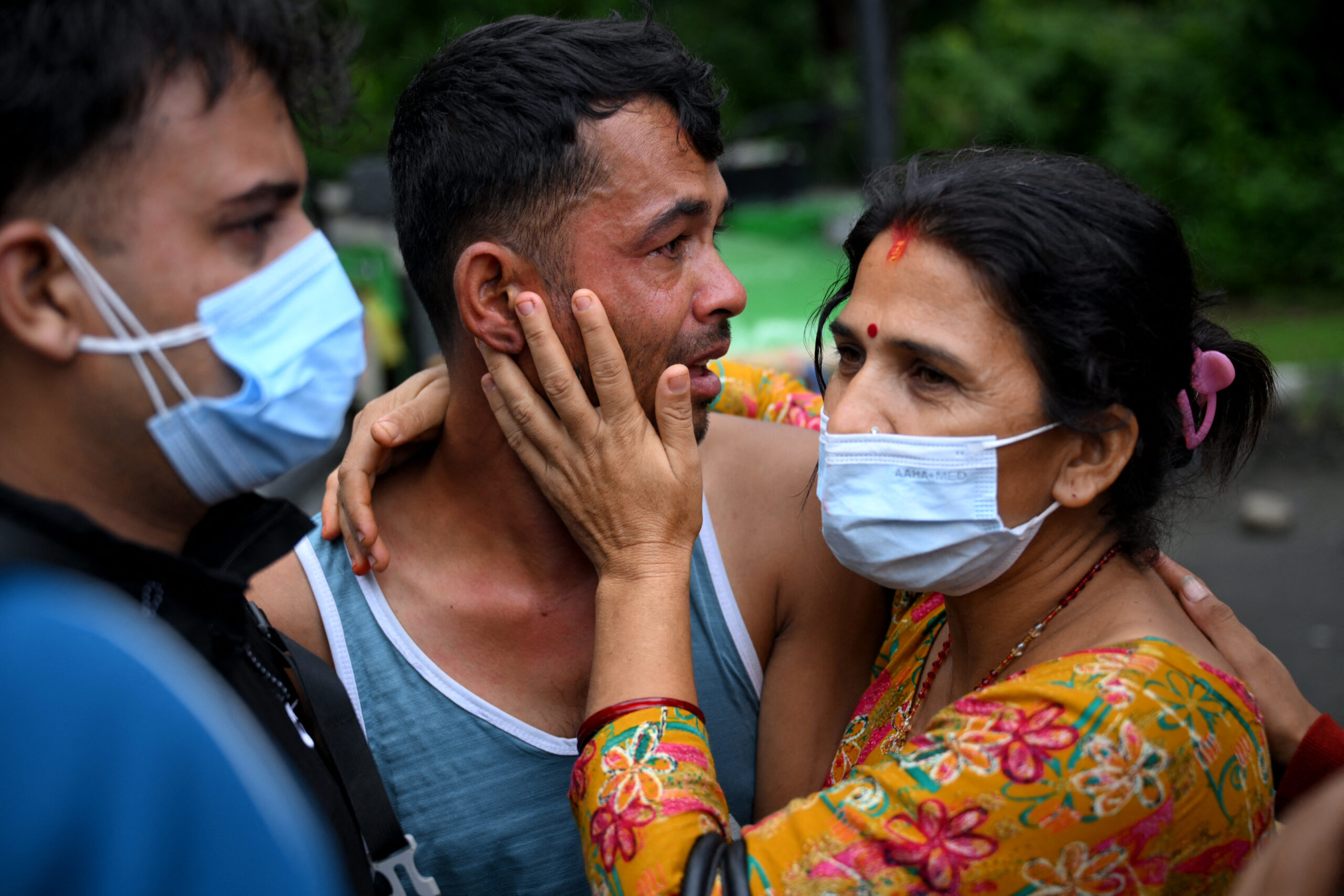
After the devastating flood swept through the Rasuwa district in Nepal, families like that of 21-year-old civil servant Ayush Khadka have been frantically searching for any sign of him in the aftermath. The flood, unprecedented in its scale, carried ice chunks, rocks, mud, and debris, engulfing towns and villages in the valleys of Nepal.
According to reports by Reuters, the night before the flood, Ayush was in contact with relatives over the phone, and his social media account showed him as “online” the next morning, sparking hope among his family that he might have survived.
Starting on August 26th, Ayush’s family began their search. His uncle Ganesh Khadka stayed near the Nepalese military camp in Nuwakot for two consecutive days, which served as a key coordination point for rescue and relief efforts. He repeatedly provided Ayush’s name, workplace, and last known location details to officials but received no definitive answers.
In their quest for more information, family members tried to reach the small town of Timur where Ayush lived, hundreds of kilometers away from their home in Salyan district. However, the roads had been destroyed, and all private helicopters were requisitioned by the government for rescue operations.
Meanwhile, Ayush’s aunt Laxmi Thapa was searching for him in Chitwan, about 200 kilometers away, where bodies of the deceased were being washed down by the flood, and people were searching.
However, unbeknownst to the family, a body, likely Ayush’s, had already been found by rescue workers on the day of the disaster. On August 27th, Thapa went to a temporary morgue facility where photos of the recovered bodies were displayed on TV screens for identification by families of the missing.
Suddenly, a photo caught her attention. She believed the person in the photo had about a “70% chance” of being Ayush. She immediately shared the photo with other relatives to confirm together.
The family scrutinized every detail in the photo. A mole on the left side of Ayush’s chin seemed to match, and the facial hair resembled his. However, they still hesitated to confirm definitively.
Heartbreakingly, the family decided not to show the photo to Ayush’s mother Muna, who was already grieving deeply.
In the following days, information remained scarce. Family members were scattered in Salyan, Kathmandu, Nuwakot, and Chitwan, piecing together Ayush’s last movements.
Meanwhile, authorities prepared to handle a large number of unidentifiable bodies, potentially resorting to mass burials, adding to the anxiety of the Khadka family. They feared that without prompt identification, Ayush might be buried before they could arrive.
It wasn’t until August 30th, the fourth day after the flood, that they finally faced the most dreaded reality upon confirming the body’s identity and informed Ayush’s mother of his demise.
Approximately 35 relatives gathered by the banks of the Narayani River to cremate the 21-year-old. Aunt Thapa expressed how joyous the family was at his birth, his early success in the civil service exam, bringing pride to the family. Now, they could only shed tears as they bid him farewell.
The Khadka family’s plight is just a microcosm of the affected families in this major disaster. The glacial lake outburst flood has claimed over 1,000 lives and left more than 4,000 missing. Countless roads, bridges, and towns have been destroyed, putting immense pressure on rescue and identification efforts.
While Nepal initially stated no need for foreign search teams, the situation changed. South Korea announced on September 1st that Nepal had requested search and rescue assistance, and it would dispatch a 44-member emergency rescue team to the Rasuwa district for around 10 days.
Meanwhile, on Monday, August 31st, the Chinese Ministry of Foreign Affairs denied reports suggesting negligence by Beijing officials in early disaster warning signals and downplaying casualty details. China’s last casualty update was the previous Saturday, confirming 16 deaths and 546 missing individuals. With over 48 hours without an update, observers believe the actual death toll in China far surpasses official figures.