
After more than 70 years since World War II, Japan’s brutal actions against China during the war have cast a shadow over Sino-Japanese relations.
During that period, Japan adopted a cautious balancing strategy in its relations with China. Tokyo sought to expand trade with Beijing while also striving to control political disagreements, hoping that economic integration would stabilize its most crucial regional relations.
Today, it seems that the era of post-World War II Japan’s non-militarization and accommodation of China’s rise is coming to an end.
It is important to note that Japan is not completely “decoupling” from China in an absolute sense. In fact, China remains Japan’s largest trading partner.
However, the changes in Japan’s economic and security policies cannot be ignored.
Tokyo is evidently seeking to reduce its strategic dependence on Beijing in critical supply chains, national security, advanced technology, and diplomatic channels. This shift is gradual rather than drastic, but it is steadily advancing and may be irreversible.
These policy changes in Japan are not arbitrary but reflect a profound shift in Japanese thinking, driven by generational change and a reassessment of Japan’s future.
On one hand, this relatively new perspective is driven by China’s increasingly assertive behavior in the Asia-Pacific region. Beijing’s recent provocations have actually accelerated the thinking and actions of Japan’s new leadership. They see no benefits in being constrained by Beijing in all significant areas.
On the other hand, Japan’s new generation of political leaders are indifferent to the past history. They do not believe they have any moral obligation to apologize for events that took place long before their birth.
What they see is a China attempting to dominate the entire region, including Japan.
Beijing has been known to use rare earth minerals as a blunt instrument to retaliate against countries with differing views. In the recent dispute over Taiwan, Beijing cut off the supply of critical minerals to Tokyo for several months.
Starting from the end of 2025 and continuing into 2026, Beijing significantly restricted exports to Japan of various heavy rare earth elements and dual-use materials due to escalating diplomatic tensions around Taiwan and Japan’s expanding defense capabilities. These restrictions affected key materials like dysprosium, terbium, gallium, and yttrium – minerals crucial to Japan’s defense and high-tech industries.
For Japan, the harsh reality is that China dominates the extraction and processing of rare earth elements, which are essential for semiconductors, precision-guided weapons, electric vehicles, advanced radar systems, aerospace components, and high-performance magnets.
In simple terms, like other highly developed countries, Japan’s economy relies heavily on a stable and reliable supply of rare earth minerals, and China undeniably holds a global monopoly on rare earth minerals.
The lesson for Tokyo is clear.
Economic reliance is a major vulnerability to national security. Japan is well aware of how fragile its supply chains are in terms of dependence and the unpredictable nature of Chinese leader Xi Jinping, and the risks it faces when their policies diverge from Beijing’s.
Of course, this year’s rare earth dispute is not the first time Japan has faced economic coercion from China.
After the 2010 China-Japan Diaoyu Islands dispute, China drastically reduced its rare earth exports to Japan, exposing the vulnerability of Japanese manufacturers.
Since then, Japan has steadily diversified its suppliers, invested in Australia’s Lynas Rare Earths, expanded recycling programs, established strategic reserves, and funded research on alternative materials.
China’s latest restrictions will only accelerate these efforts.
Tokyo is currently heavily investing in developing rare earth deposits near Minamitorishima. Recent deep-sea mining trials near Minamitorishima successfully extracted rare earth-rich sediments, which could ultimately reduce Japan’s reliance on China for rare earth supplies.
It aims to change the strategic inequalities in the Japan-China relationship in the Asia-Pacific region.
Perhaps nowhere is this shift more clearly demonstrated than in Taiwan.
Japanese Prime Minister Sanae Takaichi has stated that an attack by China on Taiwan could threaten Japan and lead to a military response under current security laws. This statement has sparked a serious diplomatic crisis with Beijing, resulting in measures including stricter export controls and economic retaliation against Japanese industries.
Tokyo’s strategic logic is simple.
Taiwan lies at the intersection of Japan’s southwestern island chain. Chinese military control of Taiwan would fundamentally alter the military balance in the Western Pacific, threatening Japan’s maritime routes and access to vital energy sources.
Japanese policymakers increasingly see Taiwan’s security as inseparable from Japan’s own security.
Japan’s policies are increasingly aligning with its rhetoric. Japan’s latest defense white paper identifies China as its most significant long-term strategic challenge, especially regarding military activities near Taiwan and Japan’s southwestern islands.
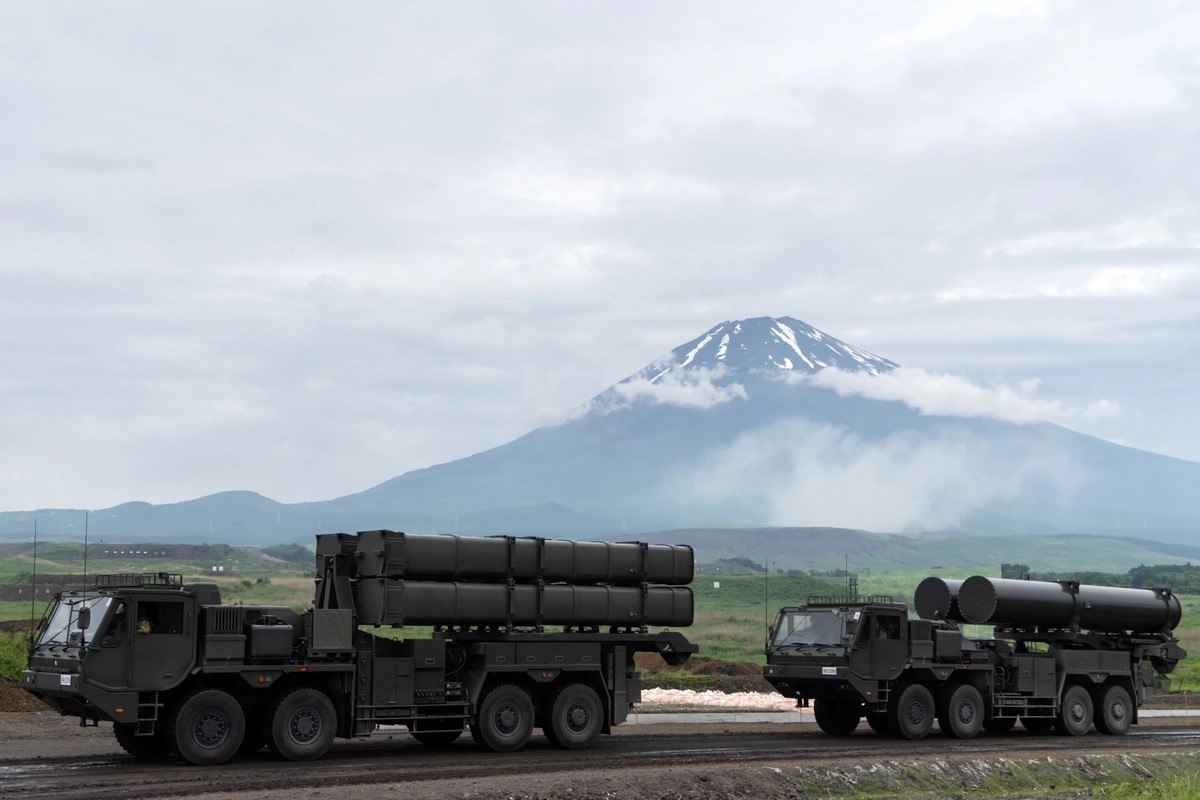
As a result, defense spending has reached about 2% of GDP, the largest military expansion since World War II.
This strategic deployment includes the procurement of long-range strike missiles, expanding missile defense capabilities, heavily investing in drones and artificial intelligence. Additionally, it involves enhancing cyber capabilities and deepening defense cooperation with the United States, Australia, the Philippines, and other Indo-Pacific partners.
Tokyo understands that in the face of China’s increasing aggressiveness, it must either take action to maintain national sovereignty or risk losing it.
James Gorrie, author of “The China Crisis: How China’s Economic Collapse Will Lead to a Global Depression” (2013), regularly publishes commentary on current affairs and China issues on his personal blog, TheBananaRepublican.com.
Japan Is Breaking Up With China–And Becoming a Rising Military Power. Published in English Epoch Times.
This article reflects the views of the author and not necessarily those of Epoch Times.