
On August 26, a flash flood occurred at the China-Nepal border, destroying the Gyirong Port in Tibet. The port had just conducted a disaster prevention drill for “glacier lake outburst flood” earlier this month, with only 21 days separating the drill from the real disaster, raising concerns.
Around 10:59 a.m. on August 26, the Gyirong Port in Gyirong County, Shigatse City, Tibet, was engulfed by a mudslide, with massive waves of mud and water instantly engulfing all buildings.
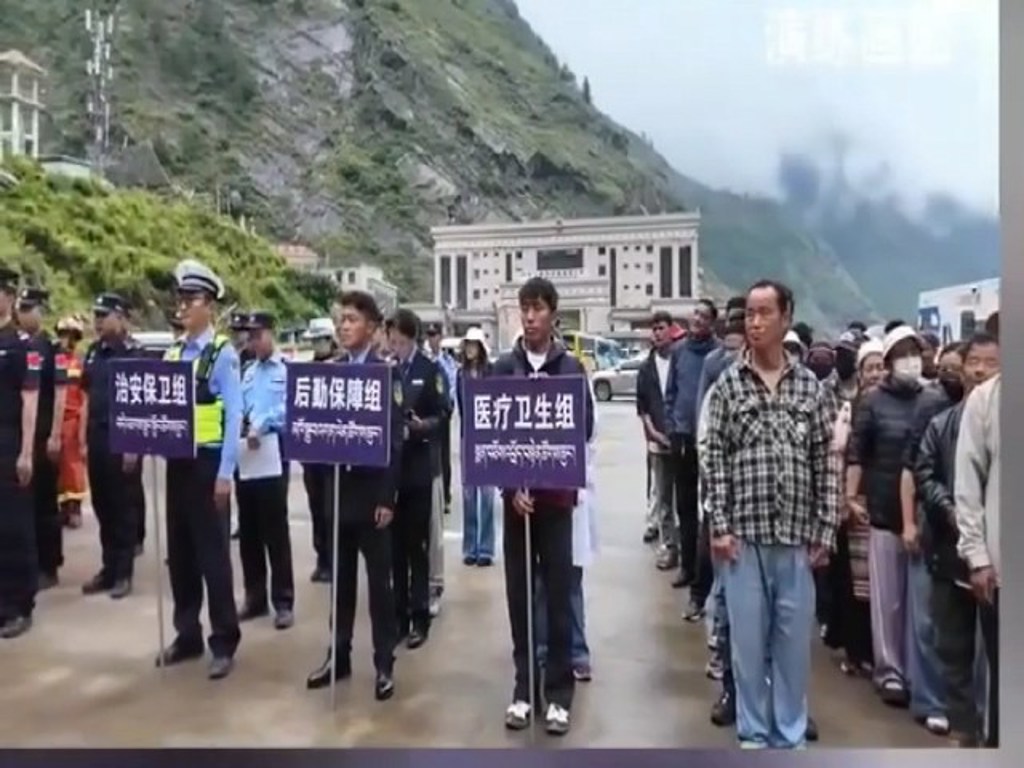
Following the incident, a video of the local official “Geological Disaster Emergency Response Drill” was circulated on the internet, with the location being an open space in front of the Gyirong Port Customs Building.
According to the official WeChat account of Gyirong, on August 5, the county’s Natural Resources Bureau, in conjunction with the Tibetan Geothermal Geological Team, conducted an “Emergency Evacuation and Disaster Response Drill for Glacier Lake Outburst Flood in Gyirong County in 2026” in Hesuo Village.
The drill simulated scenarios such as a sudden rise in water levels in the Guoba Nu River due to a breach in the dam, posing a risk of outburst, with monitoring personnel promptly reporting the situation and the command center quickly initiating warnings and emergency teams carrying out evacuation procedures in an orderly manner.
However, just 21 days after the drill, the Gyirong Port was destroyed by a mudslide. Footage from the incident showed a torrent of water and mud several dozen meters high rushing down, too fast for people to escape, engulfing vehicles and buildings instantly.
After the actual disaster on August 26, the release of related drill videos sparked discussions. While the drill itself did not predict this disaster, critics argue that the authorities were already aware of the serious risks in the area.
Senior Nepalese journalist Parshuram Kaphle recently criticized the Chinese Communist Party for failing to issue timely warnings downstream during the crucial moment when floods were known to have occurred upstream, resulting in a tragic loss of lives in Nepal.
This is the second consecutive year that the Chinese authorities have faced public backlash for not issuing warnings to Nepal about floods originating from Tibet.
In July 2025, a glacial lake outburst flood (GLOF) in the Gyirong area of Tibet triggered a transnational flood, destroying bridges connecting the two countries and leading to multiple deaths and disappearances in Nepal. At that time, the Chinese authorities also did not provide advance notification. Although both countries claimed to establish a transnational “real-time flood warning and hydrological data sharing mechanism” after the disaster, it evidently failed this test.
The cause of the disaster that struck the China-Nepal border on August 26 this year is believed to be related to glacier collapse. However, AI Laboratory founder and PTT Forum founder Yi-Chin Tu analyzed pre-disaster aerial photos and believes that the blame shouldn’t solely be on natural disasters. Ignoring factors such as engineering design and “land-grabbing” might have also contributed to the massive casualties, suggesting that as long as large buildings are not constructed along the river valleys or occupy river channels, such devastating consequences could have been avoided. Notably, the major buildings on both sides of the river valley where the disaster occurred were constructed by Chinese companies.
As of Friday, the death toll from the border flooding incident between Nepal and Tibet has risen to nearly 600, with over 2000 people missing. Xinhua News Agency reported that as of 1 a.m. on the 29th, the Gyirong mudslide disaster has resulted in 7 deaths and 554 people missing.
Due to the Chinese authorities consistently concealing the extent of the disaster, it is widely believed that the actual number of deaths and missing persons is significantly higher.