
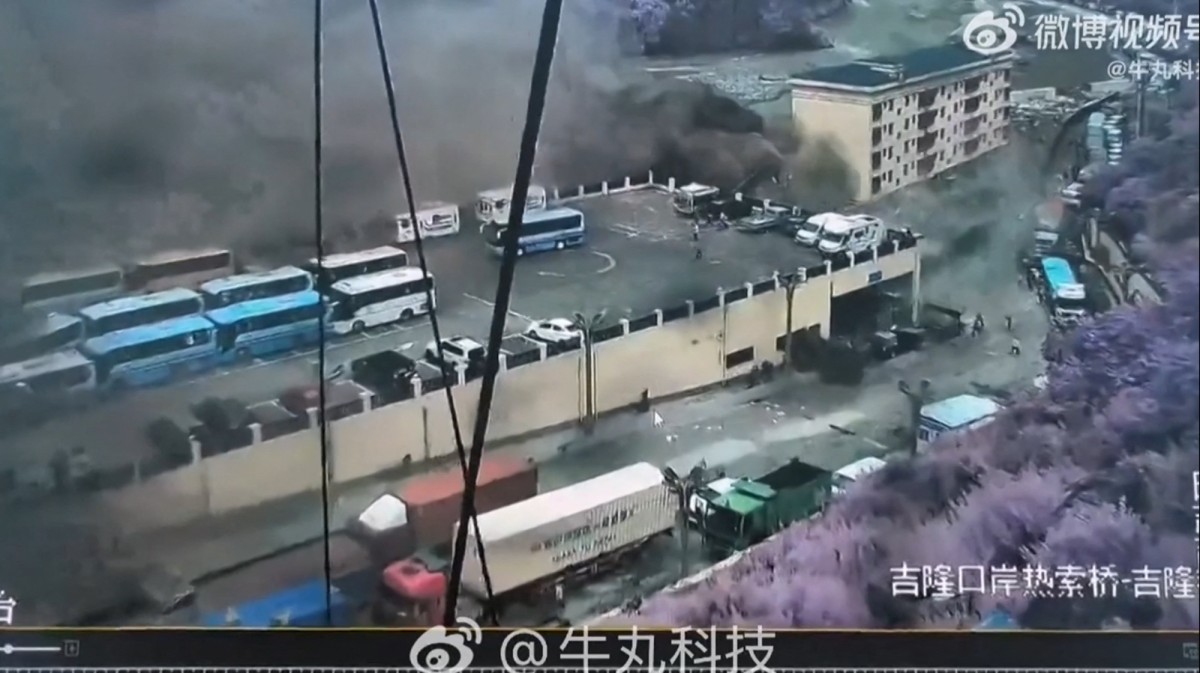
On Wednesday, August 26, following a devastating flash flood that struck the Himalayan border region between Nepal and China, the death toll in both countries continues to rise, sparking a storm of public opinion in Nepal about cross-border disaster early warning systems and geopolitical responsibilities.
Senior journalist Parshuram Kaphle from Nepal’s foreign affairs and strategic affairs publicly criticized the Chinese authorities, accusing them of failing to issue timely warnings downstream when the outbreak of flooding upstream was known, resulting in a tragic loss of lives for Nepal.
As of the time of this report, the disaster has claimed at least 160 lives and left over 800 people missing.
Meteorological and border data indicate that a powerful flood originating from high-altitude areas in Tibet struck the border port in China around 10:30 a.m. local time (approximately 8:15 a.m. in Nepal) before swiftly cascading downstream into the areas of Timure and Syabrubesi in Nepal within about 15 to 30 minutes.
Geological experts in Nepal and local media pointed out that this 15 to 30-minute gap was considered crucial “golden escape time” for residents in the basin. If China had notified downstream areas at the onset of the flood, border communities and foreign tourists would have had the opportunity to evacuate to higher ground. However, Nepalese officials and local residents stated that they received no emergency notifications from China at that time, leading to many being swept away by the sudden rush of water along with their homes.
Nepalese foreign affairs journalist Parshuram Kaphle took to social media platform X to express strong criticisms of Beijing’s border cooperation mechanisms.
Kaphle wrote, “Nepal has consistently responded to legitimate security concerns of our neighboring countries. However, it is regrettable that our northern neighbor has caused us great harm. Due to the failure to provide early warning of such a massive disaster, we have suffered heavy loss of lives.”
He further pointed out, “We constantly face crises originating from their territory, and we continue to respond to all their concerns – whether necessary or not. Why should only Nepal bear the cost of this one-sided love?”
Meanwhile, there are significant discrepancies between China and Nepal in interpreting the origins and causal relationships of the disaster. Chinese state media CCTV reported on the day that around 10:30 a.m., “a debris flow disaster occurred on one side of Nepal,” resulting in significant casualties and missing persons at the Gyirong border in Tibet.
This assertion immediately drew criticism and questioning from overseas public opinion and strategic analysts. Critics pointed out that water flows downhill from high mountains, and CCTV’s statement appeared to confuse the direction of flood causality, potentially shifting blame and avoiding Chinese responsibility for not issuing timely warnings to Nepal. Additionally, accusations surfaced on overseas social media platforms stating that Chinese domestic online platforms were swiftly deleting and tightly censoring videos from the disaster area, attempting to reshape the official narrative.
However, geological scientists have indicated that the flash flood was of immense power and occurred suddenly. Infrastructure on the Chinese side, including the Zhangmu and Gyirong customs facilities and communication stations, were destroyed in the initial onslaught, causing severe casualties and disruptions among border personnel. The instantaneous collapse of communication infrastructure may have been the key physical factor leading to a complete interruption of cross-border real-time hydrological warnings.
Nevertheless, this is the second consecutive year that China has faced backlash from Nepalese public opinion for failing to issue warnings to Nepal regarding floods originating from Tibet.
Back in July 2025, an outburst of a glacial lake in the Gyirong region of Tibet triggered a transboundary deluge, destroying bridges connecting the two countries and causing multiple fatalities and disappearances in Nepal, with China also failing to provide advance notification. Following the disaster, both countries pledged to establish a cross-border “real-time flood warning and hydrological data sharing mechanism,” but the implementation status of this mechanism evidently did not withstand this latest test.
Media outlets such as India’s “Eurasian Times” and Nepal’s “Kathmandu Post” have commented on China’s tight control over border and Tibetan water data while lack of transparency in sharing hydrological data critical to transnational lives, sparking widespread skepticism in Nepalese public opinion about the unequal cooperation and responses to neighboring countries’ concerns. A more robust mechanism for cross-border disaster prevention cooperation is urgently needed in the future.