
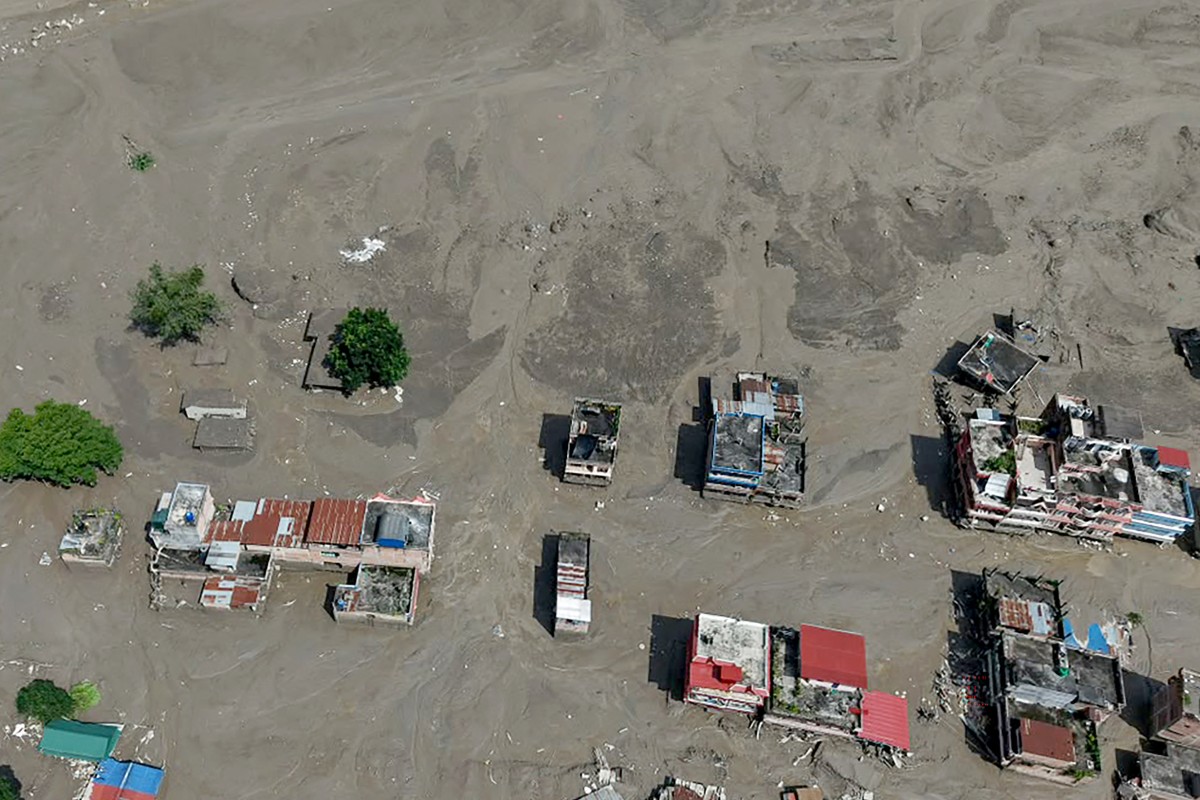
On Wednesday, August 26th, Nepali worker Bibek Kumal was digging a toilet pit outside a newly constructed house when a torrent mixed with mud and rocks rushed down, sweeping him and everything around him away.
According to Reuters, the 24-year-old Kumal was working in Bidur, located downstream in the severely affected Rasuwa district near the border of Nepal and Tibet in the Himalayan mountain region. He heard a hissing sound and his four coworkers above the 1.5-meter (5-foot) deep pit shouted for him to climb out quickly to save his life.
As Kumal struggled to climb out, his coworkers had already fled the scene. “I started running. Then a flood roared down like an earthquake,” Kumal recounted from his hospital bed at the National Trauma Centre in Kathmandu, with his brother Dinesh sitting beside him.
He said the flood of mud and debris carried him downstream, but “luckily, I got stuck on a mango tree.” “If it weren’t for that mango tree, I might have been washed away and lost my life long ago.”
This flash flood has already claimed over a hundred lives with several hundred people, including many foreigners, reported missing, making it one of the most severe disasters Nepal has experienced.
Three other injured individuals are receiving treatment along with Kumal from the flood, and more casualties are being transported to the capital Kathmandu. Authorities mentioned that 114 people have been rescued so far and are receiving medical care at various hospitals in Kathmandu and Rasuwa.
The courtyard outside the trauma center hospital is filled with concerned individuals, family members, and onlookers following the disaster.
The flood was triggered by massive mudslides into the river from the border region of Nepal and Tibet, destroying settlements and infrastructure downstream. Surveillance footage from the Chinese border side showed people fleeing before a torrent of rocks, mud, and water swept away buildings, vehicles, and claimed many lives.
Survivor Kumal recalled tightly clinging to a mango tree, watching the house he was working on disappear in the flood. Nepali rescue personnel later found and brought him to safety. He was first hit by the flood, then struck by a large rock, resulting in a leg injury. His residence elsewhere remained undamaged.
Nepal’s terrain is predominantly mountainous, making it susceptible to deadly floods and landslides during monsoon seasons while other natural disasters are also common.
Across Kumal’s hospital bed lay 11-year-old Rihana Lamichhane, another fortunate survivor of the disaster.
“I was at school at that time. The school was closed due to the disaster, so we were sent home,” she said. “The flood suddenly rushed down as I was crossing the river.”
She sustained injuries to her chest and legs, but expressed relief at escaping safely. “I am happy to have survived. I do not know how my friends are doing.”
Her mother, Rita, mentioned rushing to find her daughter after receiving a friend’s call. “I am glad my daughter did not suffer any serious harm,” she said. “Seeing her safe and sound brought me a sense of relief.”