
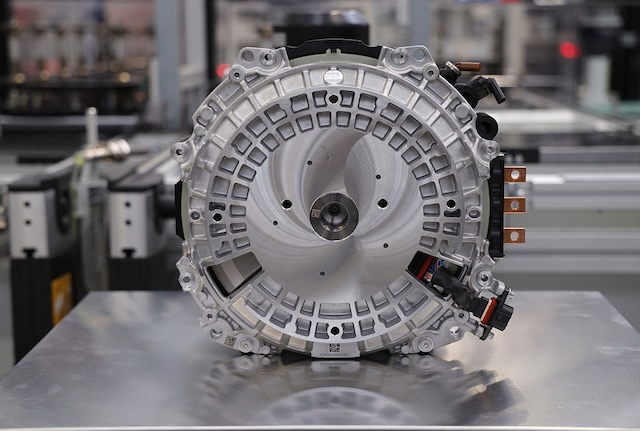
Varroc Engineering, a major automotive parts manufacturer in India, is accelerating the development of rare-earth-independent electric vehicle motors to reduce reliance on the rare-earth supply chain from China. Since the Chinese Communist Party tightened exports of medium and heavy rare earths in 2025, the global automotive industry has once again faced critical material supply risks, prompting Indian companies to actively seek alternative technologies.
Varroc is one of India’s primary automotive parts suppliers. According to the company’s annual report, its electric powertrain product portfolio includes technologies such as Permanent Magnet Synchronous Motors (PMSM) and Synchronous Reluctance Motors (SynRM), with the SynRM platform completely eliminating the use of rare earths. The company is currently further developing technology that can be entirely replaced with iron oxide (ferrite) magnets or other non-rare-earth materials; it has already switched to using lightly rare-earth materials not subject to export restrictions to produce some electric vehicle motors.
Arjun Jain, CEO and Executive Director of Varroc’s Indian operations, mentioned in an interview with Nikkei Asia that although heavy rare earth magnets are most efficient in electric powertrains, the company already possesses the technological capability to operate without the need for heavy or even light rare earths, thus ensuring confidence in maintaining product supply during restrictions.
Heavy rare earth magnets, known for their high heat resistance, are widely used in electric vehicle drive motors, as well as in power and auxiliary systems like electric seats and brake systems. Since April 2025, China has implemented export permit controls on medium and heavy rare earths, causing disruptions in the global automotive supply chain due to the high concentration of related mining and extraction activities in China. Japanese automaker Suzuki temporarily halted production of the Swift model, and India’s Maruti Suzuki adjusted its short-term production target for the e-Vitara electric vehicle due to this issue.
To reduce reliance on Chinese rare earths, the Indian government approved a ₹72.8 billion (approximately $850-900 million) incentive program in November 2025 aimed at establishing an annual production capacity of 6,000 metric tons of indigenous sintered rare earth permanent magnets. This program has attracted bids from around 20 companies. However, concerns remain about challenges in raw material and equipment procurement, making the development of electric vehicle motors that do not require rare earths a crucial complementary strategy.
Geopolitical tensions and supply chain uncertainties stemming from export controls have unexpectedly heightened the attractiveness of Indian suppliers like Varroc, which possess rapid response and research and development capabilities. Jain emphasized that automakers require suppliers that offer competitive pricing, prompt responses, and strong R&D capabilities, highlighting the strengths of Indian companies in this regard.
While increasing investments in research and development, Varroc has demonstrated robust financial performance. For the first quarter of the 2027 fiscal year ending on June 30, 2026, the company’s consolidated revenue grew by 29.9% year-on-year, with Indian operations growing by 28.6% and overseas operations by 45.6%. The electric vehicle-related business was a significant driver of growth, with revenue surging by 87% year-on-year, accounting for approximately 16% of total revenue.
(Information compiled from reports by Nikkei Asia, Varroc Engineering’s public financial statements and annual reports, as well as other publicly available information)