
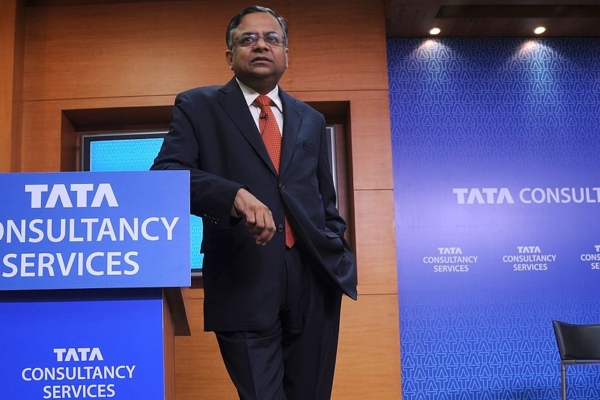
Asia’s largest outsourcing company, Tata Consultancy Services (TCS), has announced a reduction in recruitment and an increase in the widespread application of artificial intelligence (AI) agents.
On Tuesday, June 9th, Chairman of the Tata Group Natarajan Chandrasekaran announced at the annual shareholders’ meeting that the company will decrease employee recruitment in the future. This marks a significant shift in India’s labor-intensive outsourcing industry.
For decades, companies like TCS and Infosys Ltd. have supported India’s $315 billion software services industry by outsourcing Indian labor to foreign companies for service fees, making India a global back-office hub.
Now, the emergence of AI threatens India’s service outsourcing model and casts a shadow over the career prospects of IT engineers. IT engineers are a sought-after profession for millions of aspiring middle-class Indian families.
Rapid technological changes have begun to impact Tata, with the company laying off 12,000 people in 2025. Currently, the total number of employees in the company is slightly below 600,000.
Chandrasekaran stated that Tata plans to have AI agents in a one-to-one ratio with its employees.
“If the company has 500,000 employees, in the near future, the company will also have 500,000 artificial intelligence agents,” he said.
The largest outsourcing company in Asia has started transitioning to high-profit businesses. Its CEO, K. Krithivasan, revealed in a previous interview with Bloomberg that Tata has partnered with OpenAI to build an AI data center and is planning more collaborations with other tech giants.
On Tuesday, Chandrasekaran also mentioned that artificial intelligence will create new job opportunities.
“Will AI inevitably lead to a decrease in recruitment? Certainly. But that does not mean there won’t be opportunities in the future. Once the transition is complete, the field of artificial intelligence will create more opportunities, requiring new talents,” he said. Chandrasekaran served as Tata’s CEO for over seven years.
As of the end of the fourth quarter of the fiscal year ending in March 2026, Tata’s AI-related business had an annualized revenue exceeding $2.3 billion. Chandrasekaran stated that by 2028 to 2030, all of Tata’s businesses will incorporate AI components, either built-in or integrated with AI technology.