
【Epoch Times August 26, 2026】(Reported by Epoch Times journalists Zhong Yuan and Lai Wenru, Taiwan) Chinese vegetables suspected of being sent to Taiwan through Vietnam’s processing sites have raised food safety concerns. Xu Huifei, Secretary-General of the Agricultural Experimental Institute of the Taiwan Ministry of Agriculture, stated in an interview that they are currently collecting satellite image data of Vietnamese production areas to determine the feasibility of identifying the origin of crops. However, due to the differences in planting patterns, environmental conditions, and Taiwan, enough samples from both China and Vietnam need to be collected in order to make a clear judgment.
For Chinese vegetables being processed through Vietnamese sites, a Taiwanese businessman named Wang Weili (alias) told Epoch Times that the United States has been using scientific methods such as isotope testing in recent years to trace the origin of products. He suggested that Taiwan should learn from this experience and strengthen verification of origin and border inspections to prevent loopholes in processed sites. Xu Huifei mentioned to Epoch Times that while isotope testing can be used as a scientific tool for identification, if the water sources, soil, or cultivation materials in the border production areas of China and Vietnam are similar, there may still be limitations in interpretation. Additional preventive measures need to be further evaluated at both interdepartmental and international trade levels.
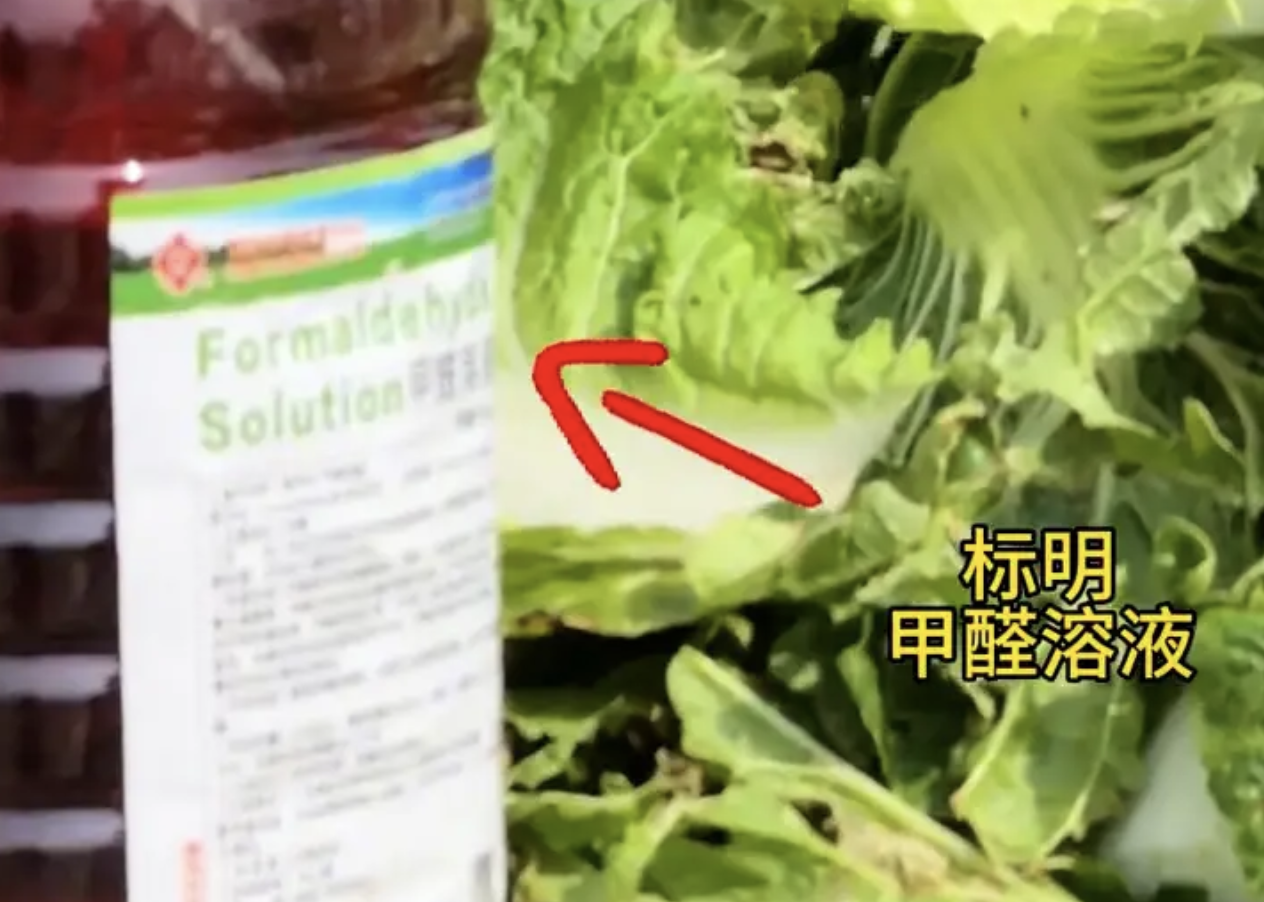
One of the largest Chinese cabbage producing areas in China, Kangbao County in Hebei, was recently exposed for dipping every cabbage in a carcinogenic “formaldehyde solution” before shipping them to wholesale markets across the country. Five common food categories that are often illegally soaked in formaldehyde were identified by the Chinese media, including animal offal, baby greens and Chinese cabbage, pickled pepper chicken feet, hairtail fish and silverfish, and mung bean vermicelli.
Taiwanese citizens are concerned about Chinese vegetables being processed in “washed sites” and then imported to Taiwan. In response to Taiwanese concerns about importing Korean kimchi due to Chinese cabbage originating from mainland China and the fear of using formaldehyde cabbage, the Taiwan Food and Drug Administration has proactively checked the non-compliant products and their distribution provided by the Korean side, confirming that the kimchi imported into Taiwan is made from products not associated with any problems. The Administration has officially written to the Korean representative office in Taipei, requesting immediate notification to Taiwan if any formaldehyde cabbage or non-compliant warnings are discovered in the future, and continued strengthening of inspections at border crossings.
Taiwan has banned the import of over a thousand agricultural and fishery products from China, but the Chinese Communist Party has managed to enter its agricultural products, especially Chinese cabbage, napa cabbage, and mushrooms, into Taiwan through Vietnam’s “washed sites.” Concerns have also been raised on social media platform threads by netizens who worry that baby greens bought from stores are from Vietnam, as they can last for three weeks in the refrigerator without spoiling. Many people are concerned that Vietnam may be a country suspected of being a “washed site” for mainland China and whether preservatives are being added.
The Taiwan Ministry of Health and Welfare’s Food and Drug Administration indicated on August 24 that Chinese cabbage is not permitted for import, and as of this year, there have been no records of imported Chinese cabbage being inspected.
Chinese vegetables suspected of being sent to Taiwan through Vietnamese processing sites have raised food safety concerns. Xu Huifei, Secretary-General of the Agricultural Experimental Institute of the Taiwan Ministry of Agriculture, explained to Epoch Times on August 26 that the institute is primarily collecting satellite image data of Vietnamese production areas to assess whether it can be used to determine crop types and origins.
Xu Huifei pointed out that Taiwan currently has about 70 crops that can be identified through a comparison of satellite images with field planting data accumulated over the years. However, due to differences in planting methods, crop patterns, and environmental conditions in Vietnam, a local database must be established first.
Earlier, Minister of Agriculture Chen Junji of Taiwan stated at the Legislative Yuan on April 29 that agricultural authorities had previously applied to take samples in Vietnam and intended to establish a database for comparison, but were hindered by the Vietnamese authorities. In the future, the Agricultural Experimental Institute will conduct aerial photography of Vietnamese production areas to calculate production and further grasp import quantities. If the volume exceeds the set limits, relevant mechanisms will be activated.
Chen Junji also pledged that for agricultural products that are more seriously affected by “washed sites,” the Ministry of Agriculture will include isotope testing in the basic inspection range; the specific items to start with will be further discussed by experts.
Regarding whether Chinese cabbage, napa cabbage, mushrooms, and other products may be involved in Vietnamese washed sites. Xu Huifei stated that the Agricultural Experimental Institute focuses on technical support and will not directly investigate the behaviors of washed sites; if crops grown near the China-Vietnam border region are in question, enough samples from mainland China and Vietnam need to be collected to make a more accurate comparison.
In recent years, the United States has used scientific methods like isotope testing to trace the origin of products. Xu Huifei explained that the isotope testing’s discrimination rate for identifying the sources of Taiwanese mushrooms from countries like Japan and South Korea is around 92% or higher, but the process takes about a month. If the water sources, soil, strain, or mushroom substrate in the border areas between China and Vietnam are similar, isotope testing may also face challenges in differentiation. Products from regions with distinct geographical, water, or soil differences like Xinjiang (such as cotton) are more likely to be identified using isotope testing; but if the conditions in Chinese and Vietnamese production areas are similar, scientific testing may still be limited.
For agricultural products more severely affected by “washed sites,” the Ministry of Agriculture will include isotope testing in the basic inspection range. Xu Huifei mentioned that the related planning is being handled by a cross-departmental team at the Ministry of Agriculture, with the Agricultural Experimental Institute primarily providing subsequent technical assistance. Using mushrooms as an example, visual inspections are still the primary method due to the longer duration required for isotope testing.
Regarding Taiwanese businessman Wang Weili expressing willingness to assist in collecting samples of agricultural products from various regions in Vietnam and establishing a comparative database. Xu Huifei believes that if samples are to be used as the basis for judgment, they must be collected directly from the production areas, preferably with accompanying professionals or officials to confirm their veracity.
Xu Huifei noted that import and customs inspections involve the Ministry of Finance and international trade regulations. Requesting specific documents or taking measures against specific countries may involve fair trade and negotiations between nations, which fall beyond the purview of technical units.
Xu Huifei stated that the technical department primarily provides scientific interpretation and testing support. Regarding the proposed actions or experiences from the United States, further research is needed by relevant units to determine which aspects are applicable or feasible under current conditions. Additional preventive measures still need to be further assessed at both interspersed departments and international trade levels.