
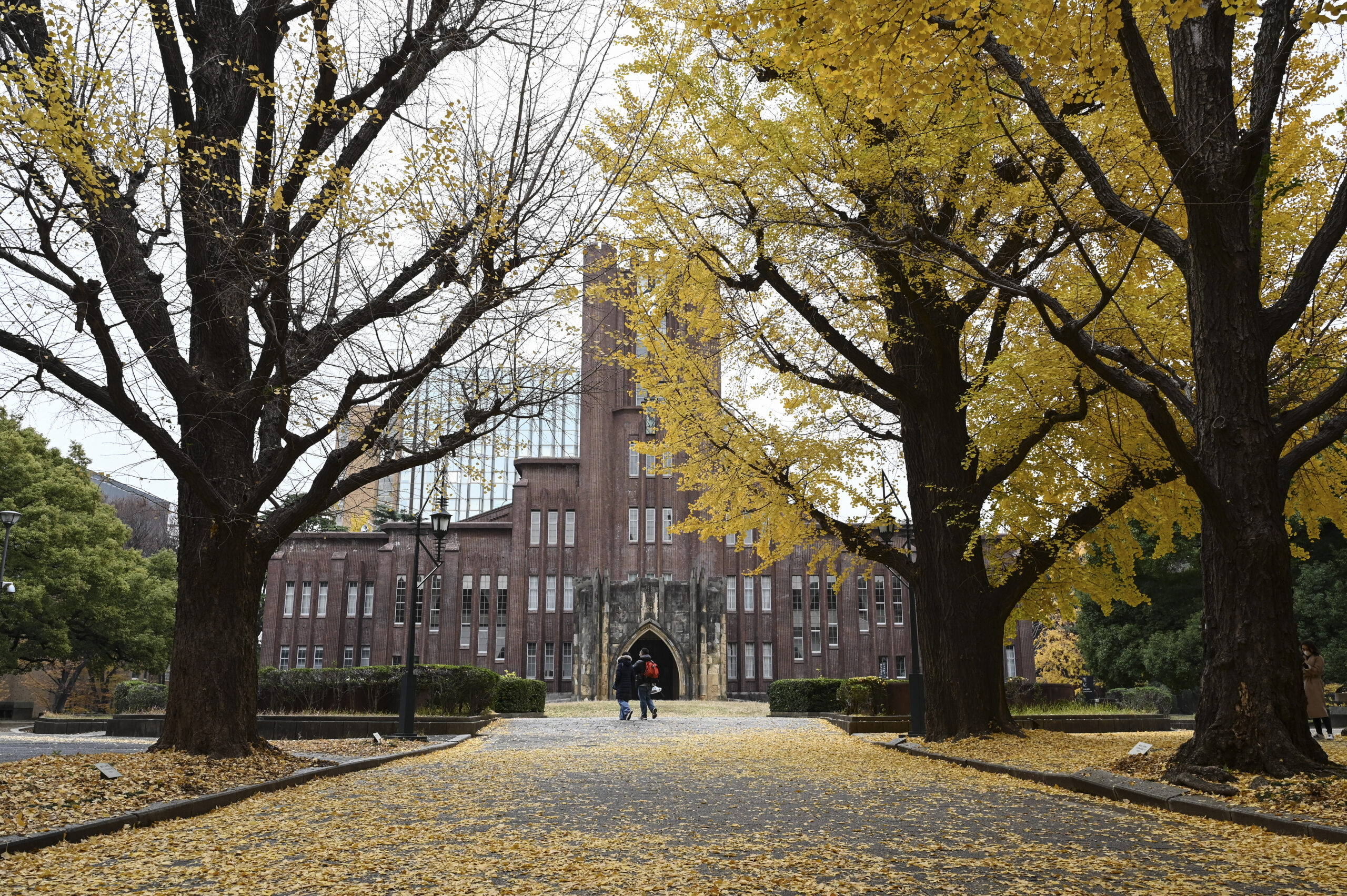
Tokyo University recently disciplined a professor by suspending him from his duties for secretly inserting inappropriate terms in the source code of the school’s professional website, which seriously tarnished the university’s reputation. The term he clandestinely added was “June 4th Tiananmen,” a sensitive term that could trigger China’s online censorship mechanism, causing internet users in China to be unable to view Tokyo University’s enrollment information. The incident has sparked controversy.
According to reports from Japanese media, the professor in question added the term “June 4th Tiananmen” in the HTML source code of the English homepage and enrollment information page of the School of Integrated Science under the Department of Medical Informatics and Life Sciences from 2020 to 2021 and prior to November 2023.
Since the related text was included in the HTML source code rather than the visible content of the webpage, ordinary users browsing the site would not see anything unusual and would not directly see the term “June 4th Tiananmen.” However, China’s internet censorship system might “see” it and subsequently block the webpage, causing users within China to be unable to access Tokyo University’s School of Integrated Science website.
Due to China’s internet censorship mechanism potentially blocking webpages containing sensitive keywords like “June 4th Tiananmen,” students in China may not be able to properly access enrollment information, thus affecting Tokyo University’s enrollment of Chinese students and related application procedures.
In response, Tokyo University stated that the professor’s actions were “absolutely unacceptable” and had severely damaged the university corporation’s reputation and credibility, violating the employment regulations for faculty and staff, leading to the disciplinary suspension.
Tokyo University did not publicly disclose the actual motive of the professor in question, but discussions on the matter quickly spread online. Many analysts believe that the professor may have “cleverly” used China’s internet censorship mechanism to prevent access by users in China to the enrollment website, thereby reducing the convenience for Chinese students to obtain enrollment information. However, these speculations have not been confirmed by the university or the individuals involved.
On the 4th, Yasuta Akio, Executive Director of the Taiwan Indo-Pacific Strategic Think Tank, posted on social media that although the professor’s actions were not commendable, if his concern was China’s expanding influence through overseas students, this anxiety is not incomprehensible.
He mentioned that the most ironic aspect of the incident is that a senior professor from Japan’s top university thought of turning the tables on China’s internet censorship mechanism with the sensitive term “June 4th Tiananmen.” He described the entire event as filled with “black humor.”
“The most absurd part of this whole situation is not in Tokyo but in Beijing,” said Yasuta Akio.
It is worth noting that at the time of this incident, Japan has been continuously strengthening research security and national governance, drawing high external attention to this case.
Over the past two years, the Japanese government has increasingly tightened management of Chinese students, researchers, and research collaborations, enhancing protection for sensitive technologies and requiring universities to improve research security mechanisms. The Ministry of Education, Culture, Sports, Science, and Technology has also been promoting the establishment of stricter conflict of interest, foreign funding, and talent mobility management systems in research institutions.
Furthermore, Japan recently established a new intelligence agency and promoted the drafting of an “anti-espionage law,” reflecting Japan’s ongoing efforts to enhance its focus on economic security, research security, and national security.