
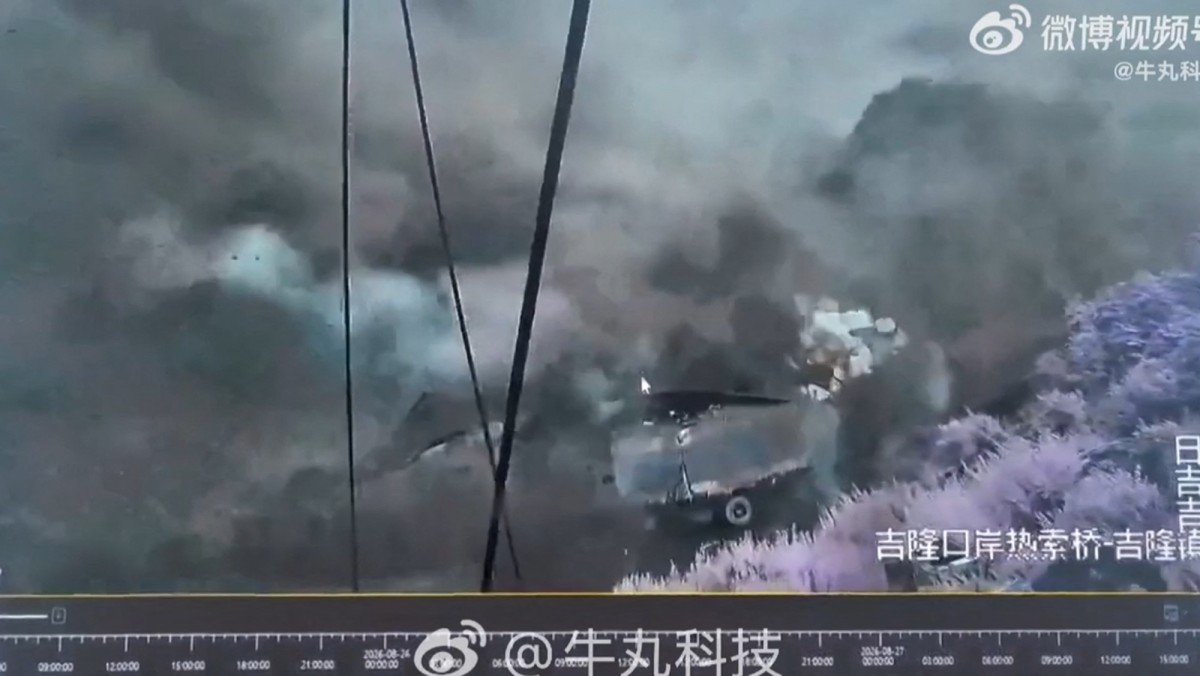
On Wednesday morning, a devastating flash flood and mudslide struck the border region of the Himalayas in Nepal. The Bhote Koshi River caused severe flooding in towns along its banks, tearing through the border town in an instant, resulting in heavy casualties and leaving numerous families separated within minutes.
The Bhote Koshi River is known as “Boqu” in China (meaning a river in Tibet in Tibetan language). As of the time of this report, the disaster has claimed at least 160 lives with over 800 people missing. Rescue teams are urgently using bulldozers and helicopters to search for survivors in the muddy debris.
Officials in Nepal stated that around 8:30 am local time, the flood ravaged the roads, bridges, and hydropower stations in the Rasuwa area. The Nepal Tourism Board and the military confirmed that at least 579 foreign tourists from 28 countries, including Chinese nationals, are missing.
The scenes in the disaster area are grim with many houses being engulfed in mud and residents fleeing to higher ground in panic. Kalpana Malla, a survivor from Nuwakot County in Nepal, told the BBC, “My family was washed away by the flood right in front of my eyes… they had no chance to escape. The flood took everything, and my son and I survived by climbing onto the roof.”
On the Chinese side in the Tibet Autonomous Region, areas like Jilong County have also been heavily impacted by severe mudslides. According to official reports from the Chinese Communist Party, at least 3 people have died and 265 are missing in the Tibet region, with the Jilong Customs Office and surrounding facilities being instantly destroyed by the floodwaters. However, due to strict censorship of disaster and casualty data by the Chinese authorities, there are concerns that the actual death toll might be much higher than reported.
Footage from surveillance cameras circulated on social media overseas shows the fierce floodwaters hitting the border areas between Nepal and China, causing people to flee in all directions as the floodwaters engulf almost everything in their path. However, videos related to the disaster within China quickly disappeared from the internet due to strict online censorship.
In response to the disaster, Nepalese Prime Minister Balendra Shah pledged that the government would fully take on the responsibilities of rescue, medical aid, and relocation. Indian Prime Minister Modi also expressed readiness to provide all possible humanitarian assistance to Nepal. Embassies of countries like the UK, the US, and the EU in Kathmandu have issued a joint statement expressing sympathy to the affected people and closely monitoring the situation.
Regarding the cause of the floods, Nepalese officials initially speculated that it was triggered by an earthquake leading to landslides, but analysis from the US Geological Survey later revealed no earthquake tremors were detected. Geologists and experts pointed out that the deadly flash flood was likely a result of a massive glacier collapse at high altitudes or a large-scale landslide blocking the river channel and causing a high-pressure breach (known as a glacial lake outburst flood).
Experts warn that with the increasing frequency of extreme weather events and the growing fragility of the environment, flash floods in the Himalayas are becoming more frequent. The establishment of a cross-border automated early warning mechanism is urgently needed.