
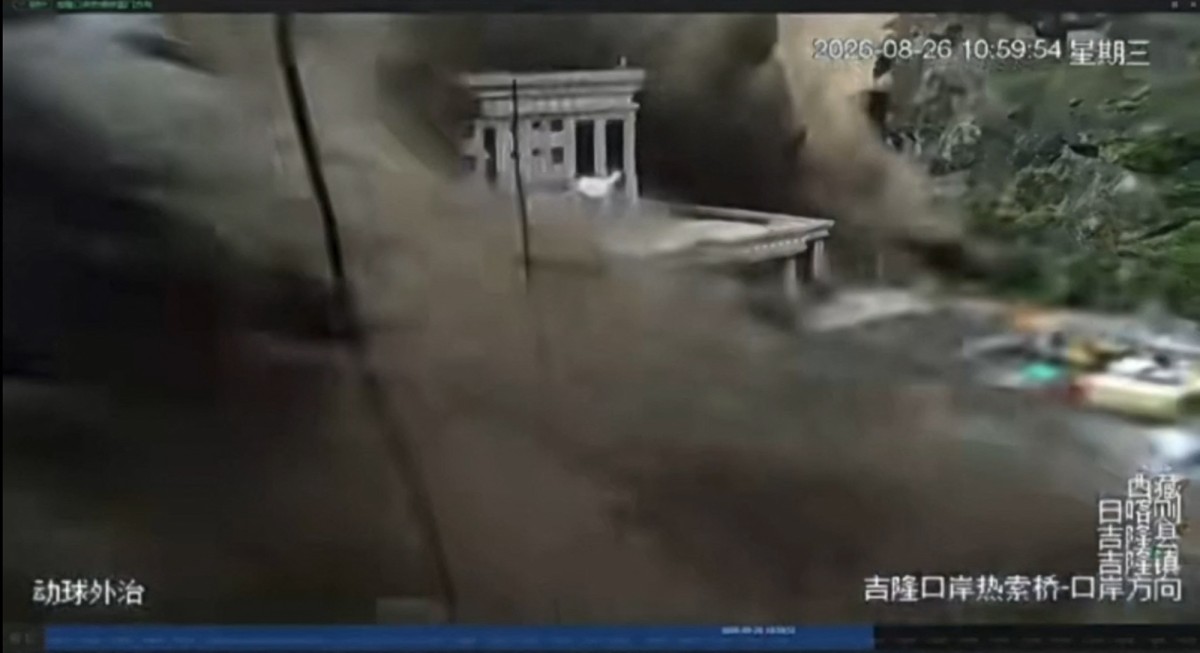
Wednesday (August 26), a massive flood and mudslide struck the border region of the Himalayas between Nepal and Tibet Autonomous Region in China. There was no abnormal heavy rainfall in the area before the disaster struck without warning, causing extensive damage to border towns and important land border crossings, as well as significant casualties and missing persons.
The flood was not due to rainfall but stemmed from the collapse of high-altitude glaciers and boulders. A large amount of high-speed floodwater carrying ice, boulders, and mud engulfed roads, bridges, houses, and hydroelectric facilities along the coast within minutes.
As of now, Nepalese rescue teams have found at least 95 bodies and at least 600 people are missing, including Chinese nationals. Earlier figures indicated that missing foreign nationals included at least 105 Indians, 12 Britons, 3 Americans, 17 Malaysians, 4 South Africans, as well as one Australian and one Dutch citizen.
Additionally, 9 Korean personnel working at a local hydroelectric plant remain unaccounted for.
According to reports from Reuters, the latest developments and analysis of the cause of the disaster are as follows:
At the time of the catastrophe, the massive floodwater and mudslide cascading down from high altitudes in the Himalayas swept through the valleys like a wall of debris. The sudden surge flooded houses and roads in Nuwakot County, Trishuli, and other areas in Nepal, leveling villages along the way.
On the Chinese side in Tibet, the most severely affected area was Gyirong County in Shigatse city. The sudden flood and landslide directly hit the important land route connecting China and Nepal at the Gyirong Port.
Surveillance footage showed a roaring black mudslide cascading down from above like a tsunami, engulfing vehicles and crowds. Gyirong Port and the surrounding areas have been cut off from external access with road closures, communication breakdowns, and power outages, becoming an isolated disaster zone in need of rescue.
Meteorological data showed no abnormal rainfall at the time of the incident. Experts and monitoring agencies tentatively analyze the main causes of the disaster as follows:
Earthquake-induced ice-rock avalanche:
Monitoring data showed that a earthquake measuring about 4.4 magnitude occurred in the area moments before the disaster. The tremors caused glaciers and rock masses in high-altitude areas of the Himalayas to collapse, triggering a large-scale “ice-rock avalanche” where millions of cubic meters of ice, snow, and boulders plummeted from the high mountain cliffs.
Glacial lake outburst and river channel damming:
The collapsed ice, boulders, and sediment rapidly fell into the Lhende Khola river that spans both Nepal and China, creating a natural dammed lake in the narrow valley. With the rapidly increasing water pressure upstream, the dammed lake burst in a short period, unleashing a massive volume of water carrying debris downstream, causing this catastrophic event to unfold like a “bolt from the blue.”
This sudden disaster has dealt a devastating blow to local infrastructure. Nepalese energy officials indicated that several major hydroelectric stations, including Rasuwagadhi, suffered severe damage from the floods, leading to an abrupt collapse in over 12% of the country’s hydroelectric capacity, plunging multiple regions into darkness.
In terms of search and rescue, Nepalese military and police personnel have urgently been deployed on the front lines to evacuate residents in low-lying areas along the river to safe locations. However, search and rescue operations are extremely challenging due to road blockages by debris and boulders, coupled with the still raging waters. China claims to have deployed hundreds of rescue personnel at the Gyirong Port, but with communications and roads disrupted in the border disaster zone, verifying the actual situation on the ground remains difficult through independent third-party sources.
Meanwhile, India and South Korea have also announced their readiness to provide assistance and contribute personnel to the rescue efforts.
Authorities have issued a special warning due to the presence of uncleared blockages and residual dammed bodies upstream in the Lhende Khola, indicating the constant risk of a secondary flood. Furthermore, as multiple rivers from the Himalayas flow southward into the plains of India, the Indian states of Bihar and Uttar Pradesh bordering Nepal have also issued flood warnings in sync.
Rescue units warn that until water levels significantly drop and sediment settles, rescue helicopters will find it challenging to land in the core disaster areas, indicating that search and rescue efforts are still at an extremely challenging critical stage.