
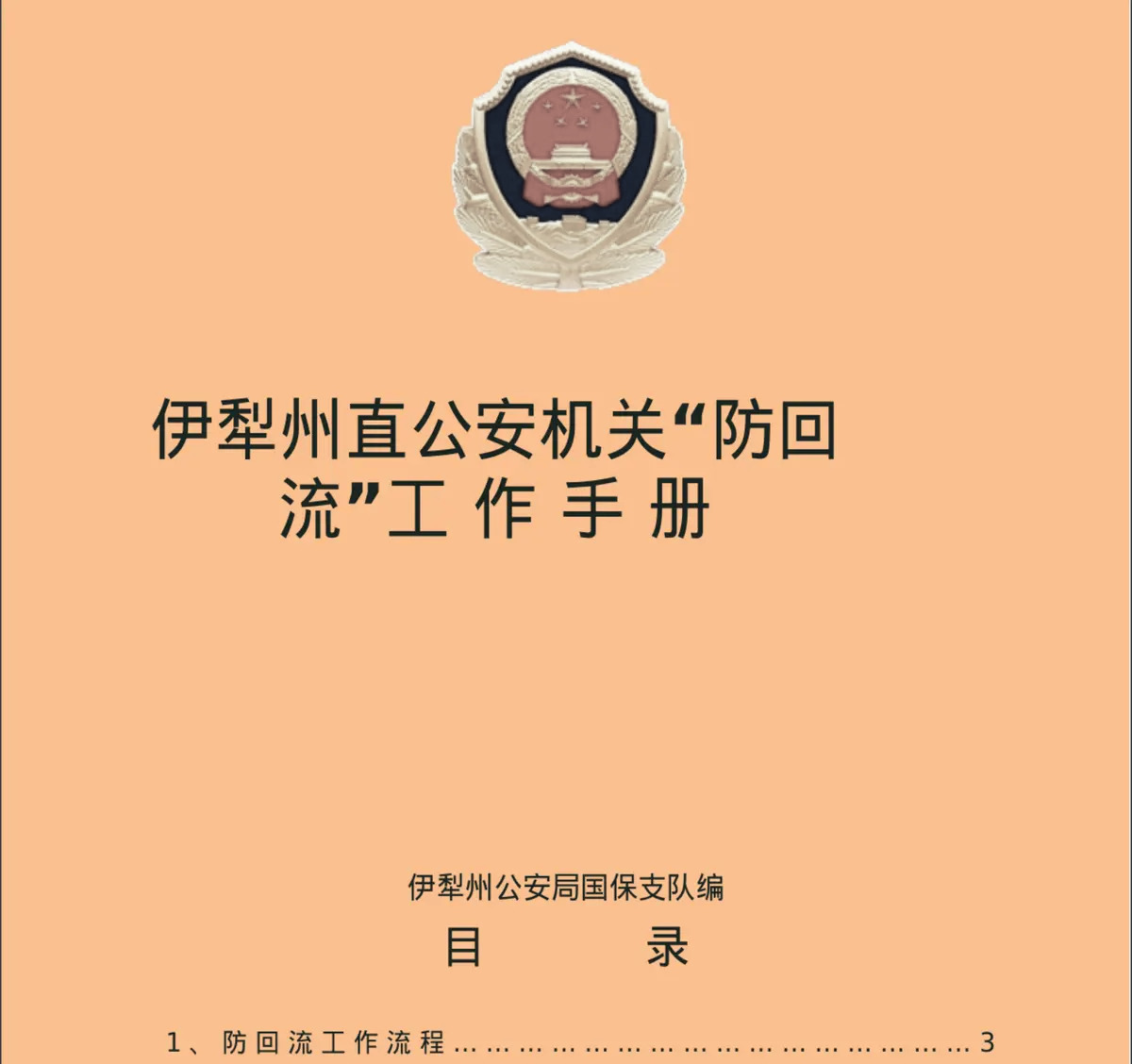
【Epoch Times August 25, 2026】With the Chinese Communist authorities announcing the implementation of the new “Immigration and Exit Administration Regulations” on September 15, reports of interception of outbound individuals have surfaced at various ports. Many Chinese citizens have suddenly discovered they have been included in a blacklist restricting their departure when handling passport or customs procedures.
According to a confidential 2017 document obtained by Epoch Times from the Xinjiang Public Security Bureau titled “Ili State Direct Public Security Bureau ‘Prevent Backflow’ Work Manual (2017),” the Chinese Communist public security system has a vertical management structure for designating individuals restricted from exit, starting from the autonomous region level down to local grassroots agencies.
This structure not only includes the 35 categories of outbound red lines established by the Xinjiang Public Security Bureau but also additional 17 key precautionary targets added by local public security departments based on their jurisdiction.
Within this internal manual, the criteria for restricting exit first come from the Xinjiang Public Security Bureau’s designated “17 categories of individuals restricted from exit,” followed by the subsequent addition of the “new 18 categories of individuals restricted from exit,” collectively forming the 35 red lines for outbound individuals.
The Xinjiang Public Security Bureau’s designated “17 categories of individuals restricted from exit” include:
1. Key individuals and special groups (including key national security individuals, those involved in undermining state stability, Christian individuals, Catholic individuals, and key individuals in cults).
2. Criminal reformed personnel engaged in crimes endangering national security (including individuals engaging in actions that endanger national security and are handled as ordinary criminal offenders).
3. Leaders, core members, and direct relatives (parents, spouses, children, siblings, etc.) of the “three forces” inside the country and their main associates.
And so on with detailed categories ranging from involvement in illegal activities to affiliations with hostile organizations, religious extremism, and more.
In addition to these, the Ili State Public Security Bureau of Xinjiang has added 18 new categories of individuals restricted from exit, including those with suspected dual loyalties, those using specific communication tools extensively to contact overseas individuals, and those participating in certain religious activities.
The criteria for restricting exit, as illustrated by the Xinjiang Public Security Bureau’s 35 red lines, reveal three distinct control characteristics of the Chinese Communist public security system:
The first, everyday life choices are criminalized.
Besides the traditional categories of criminal or politically dissident individuals, a large number of personal life choices and lawful rights are directly considered as risk indicators. For example, students abruptly dropping out of school, individuals with average economic conditions choosing to study abroad, selling property or livestock legally, moving out without proper reason, and even refusing government subsidies or welfare are included in the scope of restricted exit or thorough inspection.
Secondly, communication patterns and financial assets are comprehensively monitored.
The list explicitly includes citizens’ digital life and financial transactions as part of surveillance. Browsing so-called “religious extremist websites” using VPN software, frequent communication with overseas individuals, or funds transactions with entities deemed as “foreign hostile forces” through bank cards, online banking, Alipay, and similar tools will immediately trigger precautionary alerts.
Thirdly, extreme guilt by association and unlimited administrative discretion.
Many standards come with clauses involving “relatives and significant social relations.” This means that if one person in a family or friend circle is marked, their family members, including parents, spouses, children, siblings, and social contacts, will also be restricted from exiting. Furthermore, the document sets up a safety net provision like the 18th category allowing public security agencies at the grassroots level unlimited discretion in designating individuals for issues they deem to potentially endanger national security post-exit.
If the Xinjiang Public Security Bureau’s 35 red lines are used to prevent sensitive individuals from leaving, then the policies added by the Ili State direct public security agencies focus on preventing “backflow” – preventing foreign individuals, ideas, or funds from re-entering the country.
The document reveals that authorities in Ili State, to implement the “Prevent Backflow” project, have established an additional “eight categories of backflow prevention individuals” and “nine key target groups” (a total of 17 precautionary objects) while implementing the Xinjiang restricted exit policy.
The core logic behind the 17 listed categories is to prevent related individuals from being turned by hostile forces or religious organizations abroad or establishing intelligence and funding channels upon return.
Individuals who fall under these 17 categories will immediately undergo comprehensive monitoring and scrutiny upon re-entering the country. For instance, they might trigger security alerts at customs and be subject to prolonged questioning in designated areas. Any suspicion could lead to intensive investigations, including the unlocking and inspection of electronic devices such as phones and computers. More importantly, even if not checked upon entry, once back in their jurisdiction, Xinjiang’s comprehensive operational system will immediately issue an alert, requiring grassroots police and grid members to have “positive contact” with the target individuals within a defined period (such as within 7 days), complete face-to-face investigations and registration, and conduct at least 90 days of monitoring and verification.
Further detailing the Ili authorities’ eight backflow prevention categories include those who have been involved in terrorist activities abroad or their relatives and associates, those who illegally left the country, and those whose whereabouts are unknown, among others.
The nine key target groups for preventing backflow include minority ethnic individuals studying abroad, individuals who have visited specific countries considered terrorist hotspots, persons with significant ties to those detained by public security agencies, and so on.
This list also includes a safety net provision, considering individuals heading to sensitive countries, leaving during sensitive periods, or from sensitive backgrounds, empowering grassroots enforcers with unlimited discretion in determining the relevance of a person to the prevention objectives.
The 2017 confidential document, from establishing the 35 red lines for exit by the Xinjiang Public Security Bureau to the 17 backflow prevention targets by local public security, reveals a dual-locked system where individuals are automatically subjected to vast surveillance and scrutiny upon returning to the country.
However, designating these 52 categories of individuals is just the first step in the border control system. With a vast population and complex social relationships, how do public security agencies utilize an “integrated joint operations platform” and big data to accurately target these individuals? How do grassroots police, upon receiving system alerts, conduct electronic examinations and/or offline “positive contact”?
Stay tuned for future reports in this series to understand more about the procedure.