
Economic slowdown, combined with the impact of artificial intelligence (AI), is squeezing the job market for China’s young people. According to official Chinese government data, in July 2026, the youth unemployment rate for 16 to 24-year-olds who are not in school rose to 17.9%, hitting a nearly year-high. At the same time, approximately 12.7 million university graduates entered the job market this year.
While the severe youth unemployment cannot be solely blamed on AI, factors such as the sluggish real estate market, weak consumption, reduced hiring by businesses, and the surge in university graduates have all contributed to the worsening job market. However, more and more evidence indicates that AI is becoming a new and particularly detrimental source of employment pressure for young people. The Chinese Communist Party’s strong support for AI applications is further exacerbating the employment situation for the youth.
According to Reuters, the reduction in hiring by businesses, a soft job market, and AI automation are all simultaneously affecting the job opportunities for China’s young people. Citi Group estimates that around 9.6% of jobs in China, approximately 70 million positions, are at a higher risk of AI replacement, with workers in their twenties facing a risk ratio as high as 13.6%.
The roles most easily automated by businesses often include programmers, customer service representatives, translators, administrative staff, data processors, and content creators – positions that are commonly held by recent university graduates entering the workforce. This suggests that young people may be more vulnerable to AI displacement than senior employees.
Senior analyst He Shujing from Beijing Plenum Consulting Company told the Associated Press that many experts believe all these factors could ultimately weaken China’s economic strength.
Reports from the Associated Press and the South China Morning Post highlight that AI is already impacting traditional white-collar fields in China such as programmers, scriptwriters, translators, and short video producers. Some jobs that used to require multiple individuals can now be partially undertaken by AI, resulting in job cuts and wage declines in certain industries, leading more employees to worry about being replaced by optimization measures.
Data from the market research company IDC shows that the proportion of industrial enterprises in China using AI models and AI “agents” jumped from 9.6% in 2024 to 47.5% last year.
Mr. Fei, in his forties, revealed to the Associated Press that he was recently laid off by a technology company along with 160 colleagues. Previously, the boss believed AI could perform programming tasks nearly perfectly, a notion that Mr. Fei dismissed until he himself was let go recently.
Mr. Fei mentioned that AI can essentially replace the work of intermediate programmers in many cases. While AI may eventually have catastrophic consequences by replacing everyone, at this stage, one can only use AI just like everyone else.
An employee at an internet company in Hangzhou told Reuters that the company initially required staff to use AI tools. Tasks that previously required several people to complete can now be accomplished by one employee with the aid of AI. Subsequently, the company reduced its outsourced workforce and scaled back its hiring of recent graduates.
A part-time translator in Chengdu disclosed that compared to a few years ago, translation work salaries have decreased by over 50%. The most prevalent job opportunities now involve training AI models for translation purposes.
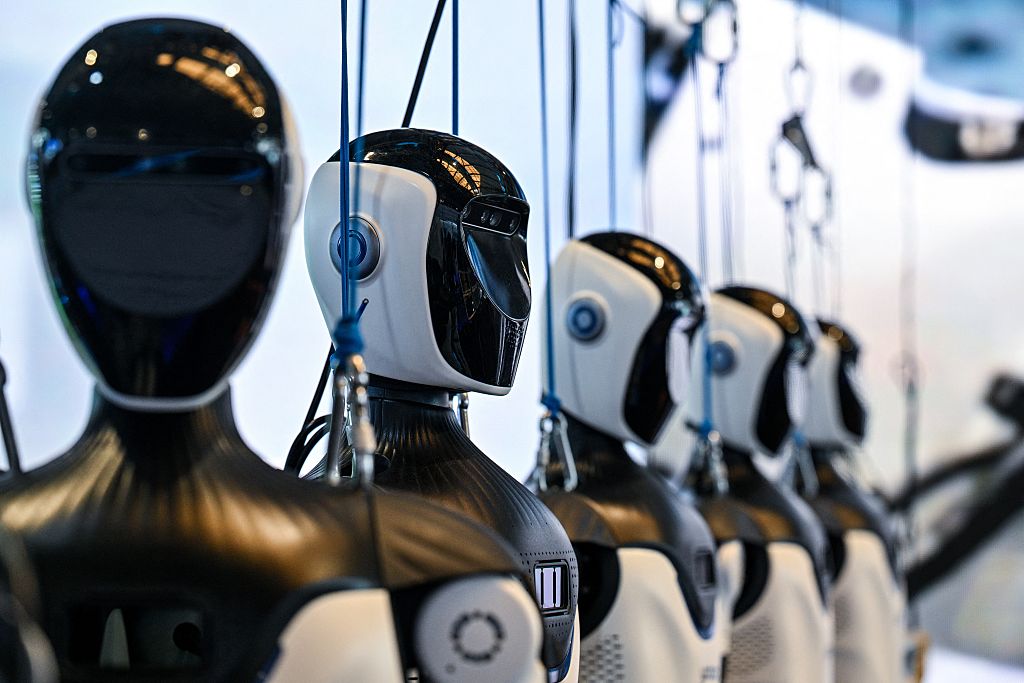
The Associated Press provided an example that humanoid robots in China can now sort packages in post offices. Although the scale is not large, their applications are constantly expanding. The widespread use of delivery robots also poses a significant threat to the livelihoods of millions of Chinese delivery workers.
The creative, production, and distribution aspects of the Chinese short video industry are increasingly relying on Generative AI (GI). Chinese media reports indicated that in the first quarter of this year, the number of real-person short videos and vertical screen video series for mobile phones dropped by roughly 75% compared to last year.
A recent report by the International Labour Organization found that industries predominantly occupied by women, such as electronic product assembly, are more susceptible to automation. Due to the scarce number of female tech professionals, AI applications are leading to higher unemployment risks for women compared to men.
AI is creating new job opportunities. The recruitment for positions such as AI engineers, algorithm engineers, and AI product managers in China is rapidly increasing. For instance, data indicates that the demand for AI product managers has grown by approximately 81% year-on-year.
However, the issue lies in the mismatch between the new AI positions being created and the traditional positions being phased out. For instance, clerks replaced by AI cannot immediately transition into becoming algorithm engineers, and graduates who lost translation jobs cannot quickly become AI experts.
This indicates that AI may result in significant job polarization: while a minority with technical skills will gain more opportunities, a majority of the traditional white-collar workers may face wage cuts, job losses, or even unemployment.
A youth survey conducted in China in 2025 found that 48.4% of unemployed youth perceive the risk of AI-related job loss, surpassing the 36.4% among students still in school.
This shift demonstrates how AI has evolved from being a corporate technological issue to a real source of employment anxiety for young people, particularly in industries like internet, design, translation, customer service, administrative roles, and content creation, where young workers increasingly fear job insecurity.
The most significant long-term impact of AI on young people in China lies in the gradual disappearance of entry-level positions. Companies that previously required 10 junior staff members may now only need 3 to 5 employees with the help of AI. Consequently, companies are reducing campus hiring, cutting back on outsourcing, and simultaneously expecting remaining employees to improve efficiency through AI utilization.
This cycle leads to a vicious cycle: economic slowdown results in reduced recruitment by businesses, while the number of graduates continues to rise. AI further diminishes entry-level positions, intensifying competition among young people.
The Chinese Communist Party is vigorously promoting the application of AI across various sectors through its “AI+” initiative and the Five-Year Plan 2030, aiming to compete with the United States. Qian Zilan, a researcher at the Oxford China Policy Lab, pointed out that the Chinese authorities are indeed expanding AI across various economic fields, potentially allowing AI to penetrate various sectors more rapidly.
However, China’s economic growth has slowed significantly, leading to concerns about unemployment and reluctance to spend, thus contributing to weak consumer expenditure. In recent years, the ongoing sluggishness in China’s real estate market has significantly eroded household wealth, with the aggressive push for AI by the Chinese government further exacerbating the situation.
According to the Associated Press, Eswar Prasad, an economics and trade policy professor at Cornell University, believes that while China’s tech industry is innovative and highly productive, it is not creating enough new job opportunities. While AI can enhance productivity across the board, it also poses a serious threat to employment, exacerbating the sluggish job growth and undermining social stability in China.
Some experts also suggest that China’s population is rapidly aging and shrinking, which could lead to a decrease in the unemployment rate in the long term. By 2050, it is projected that for every retiree in China, there will be less than two working-age individuals, compared to over 2.5 individuals in the United States.