
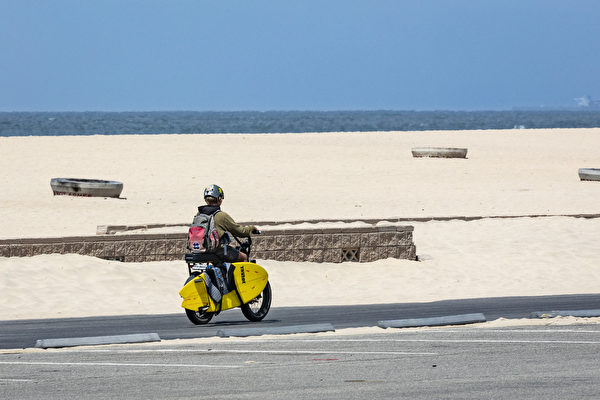
Los Angeles City Council has requested city government officials to propose regulations for electric transportation in response to the increasing popularity of electric bikes, electric motorcycles, and electric mopeds.
According to a report by the City News Bureau, the city council unanimously passed a motion put forward by Heather Hutt, John Lee, and Traci Park, requesting the Transportation Department, Los Angeles Bicycle Advisory Committee, City Attorney’s Office, Los Angeles Police Department, Street Services Bureau, and Los Angeles Metropolitan Transportation Authority (LA Metro) to present recommendations on regulating these types of transportation devices within 90 days.
The measures include:
– Ensuring all electric bikes, electric motorcycles, and electric mopeds in the city comply with relevant legal standards and requirements;
– Prohibiting the sale or resale of electric bikes, electric motorcycles, and electric mopeds that do not meet the legal standards and requirements;
– Restricting the modification or upgrade of electric bikes into electric motorcycles or electric mopeds;
– Prohibiting the sale of electric motorcycles or electric mopeds that do not meet the legal on-road requirements at the time of manufacture and/or require an M1 driving license for legal operation;
– Requiring education and training for riders under 18 years old or without a driver’s license;
– Establishing regulations for the storage and charging of electric bikes, electric motorcycles, and electric mopeds to prevent hazardous waste and battery fires.
However, the city council did not engage in further discussions on the matter.
Three council members acknowledged the significant benefits of using electric bikes and motorcycles, such as improving cardiovascular health, reducing commuting costs, and providing an environmentally friendly mode of transport. They also highlighted a substantial increase in traffic collisions involving electric mopeds and motorcycles in Los Angeles and surrounding areas.
Local authorities reported a significant increase in trauma cases, particularly head injuries and fractures, with a notable prevalence among underage riders.
Electric bikes are categorized into three main levels based on speed and motor assistance to determine their legality for riding. Level 1 only provides pedal assistance with a maximum speed of 20 miles per hour; Level 2 includes a throttle and pedal assistance with the same maximum speed of 20 miles per hour; Level 3 offers pedal assistance with a maximum speed of up to 28 miles per hour.
The motion stipulates that Level 1 and Level 2 electric bikes can typically operate on bike lanes, while Level 3 is usually restricted to roadways, and riders must be at least 16 years old. All Level 3 electric bike riders are required to wear helmets; riders under 18 for Level 1 and Level 2 electric bikes are also mandated to wear helmets.
The motion also emphasized that electric motorcycles and mopeds, marketed as a fun and efficient means of transportation for teenagers and their parents, often lack the necessary equipment for legal operation at the time of manufacture, such as turn signals, compliant headlights, and license plates.
Additionally, these vehicles legally require riders to possess an M1 motorcycle driver’s license when on the road, but buyers are often inadequately informed of this requirement at the time of purchase. The motion stated that nearly all reported collision accidents involved illegal vehicles rather than legally compliant electric bikes.
Presently, there are nine bills related to electric bikes, electric motorcycles, electric mopeds, and similar transport devices under review by the State Assembly. The city council also tasked city government analysts with providing recommendations on whether the city should adopt any of these bills.
The council further requested the Los Angeles Police Commission to annually disclose collision and casualty data involving electric bikes, electric motorcycles, and electric mopeds, along with sufficient identifying information to facilitate necessary adjustments for policymakers to enhance safety.
In May, the city council directed the city attorney to draft an ordinance prohibiting the use of electric bikes on bike lanes, equestrian trails, and hiking paths.
In 2022, Democratic State Assemblywoman Laura Friedman introduced Assembly Bill 1909, also known as the “OmniBike Bill.” Governor Gavin Newsom signed the bill that same year, and it took effect on January 1, 2024.
The legislation expanded regulations on rider safety and electric bike operation in California, outlining the legal rights of riders in the state. It also empowered local authorities to prohibit the use of any type of electric bike on equestrian trails, hiking paths, recreation paths, and bike lanes.