
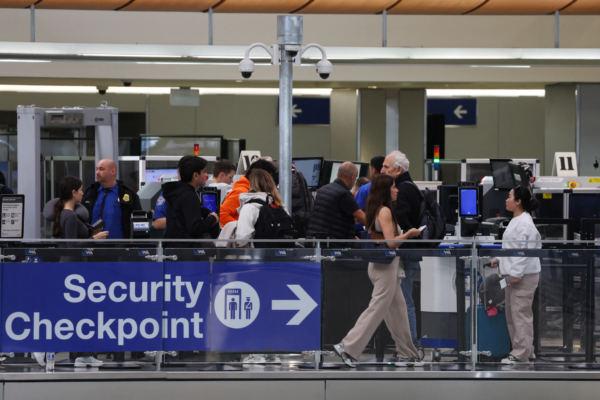
A 38-year-old Chinese woman, who legally entered the United States with a tourist visa and applied for political asylum within the validity period of her status, was arrested by the US Immigration and Customs Enforcement (ICE) at the Ontario International Airport in California at the end of July when she returned from a trip to Hawaii with her child. She was detained for over three weeks before her lawyer, Li Guofeng, filed a habeas corpus application with the federal court on August 20. The following day (August 21), the judge approved the petition and ordered ICE to release her immediately.
According to documents from the Central District of California Federal Court, the applicant, Ms. He, is a Chinese citizen who entered the US legally in October 2023 with a B-2 tourist visa and was allowed to stay until April 2024. In March 2024, within the legal stay period, she submitted an I-589 asylum application based on her Christian beliefs.
Her asylum application is still pending with the US Citizenship and Immigration Services (USCIS), awaiting an interview. In September 2024, she was issued a C08 work permit by USCIS. She has no criminal record, is married, and her 7-year-old son is a US citizen.
On July 28 this year, Ms. He returned to California from a family trip in Hawaii with her child, only to be arrested by ICE officers at the airport while retrieving her luggage. She was then taken to the Adelanto ICE Processing Center for detention.
Li Guofeng, the lawyer, challenged the government’s legal basis for continuing to detain her and requested the court to order her release or have a bond hearing within seven days in his habeas corpus application filed with the Central District of California Federal Court on August 20.
Li argued that Ms. He had been detained for over three weeks without an immigration court bond hearing and without undergoing an individualized review by the government to determine if there was a need to keep her detained, considering factors such as criminal record, societal risk, flight risk, and connections to family and the community.
The next day after filing the habeas corpus petition on August 21, good news came as the federal judge granted Ms. He’s request and ordered her immediate release from ICE custody.
Li expressed that the case’s speedy resolution, with the judge granting immediate release just a day after the petition was filed, was encouraging and demonstrated that detained individuals do not necessarily have to go through the immigration court bond application process or exhaust appeals before seeking relief through a federal court habeas corpus petition.
He mentioned that in cases he had recently handled, some federal judges swiftly ordered bond hearings, while others immediately ordered the release of the detained individuals.
Li noted an increase in ICE detention cases he had encountered recently, including individuals awaiting asylum interviews being arrested while boarding airplanes or during biometric data collection for application processing. He highlighted that ICE’s justification for arrest was often visa overstay, giving them the authority to detain individuals regardless of whether they had applied for asylum or not.
He explained that it could be challenging for detained individuals to apply for bond in immigration court. Judges assess not only if a person poses a societal risk but also evaluate flight risk.
Regarding flight risk assessment, judges have significant discretion, taking into account the asylum applicant’s reasons and evidence, prior stays in the US without applying for asylum, duration of residence in the US, and family and community connections, all of which could impact the judge’s decision.
He pointed out that obtaining release is relatively easier for individuals with no criminal records, while those with records of criminal detention find it challenging to secure release or bond in immigration court.
Li stated that there was a common misperception that individuals must first apply for bond in immigration court, face rejection, and then appeal to the Board of Immigration Appeals (BIA) before seeking federal court intervention, which he emphasized was inaccurate. He cited recent cases in New York and California where some individuals promptly sought federal court relief through habeas corpus petitions after being detained, without waiting for the immigration court bond proceedings to conclude.
Federal habeas corpus petitions often had a higher efficiency in review than the immigration court bond proceedings, with many judges instructing the government to respond within three days, promptly issuing a ruling or ordering release after the response.
In New York and California cases, federal courts requesting a bond re-hearing often required the government to bear the burden of proof in demonstrating the detained individual posed a flight risk or societal danger, with high evidence standards. This could lead to varied judgments between federal and immigration courts on the necessity of continued detention, especially for individuals with no serious criminal records or only arrest or investigation records without convictions.
Li emphasized that a crucial distinction between habeas corpus petitions and regular immigration court bond procedures was that federal courts chiefly reviewed the legality of the government’s deprivation of personal freedom and whether the detention procedures complied with constitutional due process.
He cited a case of a ride-sharing driver he had handled: a person under criminal investigation by state police but not prosecuted, who was subsequently detained by ICE. Such individuals might face challenges in applying for bond in immigration court, but through a federal habeas corpus challenge against detention, federal judges could scrutinize the detention from the perspective of the necessity to continue depriving the individual of personal freedom.
Nevertheless, Li clarified that federal court acceptance of a habeas corpus petition did not guarantee direct release by federal judges. Each case’s handling varied; while some judges ordered immediate release, others might request a new bond hearing in immigration court for reassessment of continued detention.
“If the federal court doesn’t directly release, many cases will still return to immigration court for bond reassessment,” he added.
Li also mentioned that detained individuals’ immigration cases typically accelerated through processing. In recent instances, some detainees could have a master calendar hearing arranged within one to two weeks or several weeks after ICE detention, with subsequent subsequent hearings potentially occurring quickly.
He highlighted the dual pressure detained individuals faced: the impact of prolonged detention on their physical and mental well-being, and the expedited case processing requiring them to prepare their asylum cases within a short timeframe.
Therefore, Li advised that upon learning of a family member’s ICE detention, relatives should promptly contact a lawyer and mobilize family and community resources to prepare materials demonstrating the individual’s stable connections in the US, including support letters from friends and family, residence arrangements, and other relevant proofs. Such materials could play a role in both applying for immigrant bond and subsequent immigration cases.