
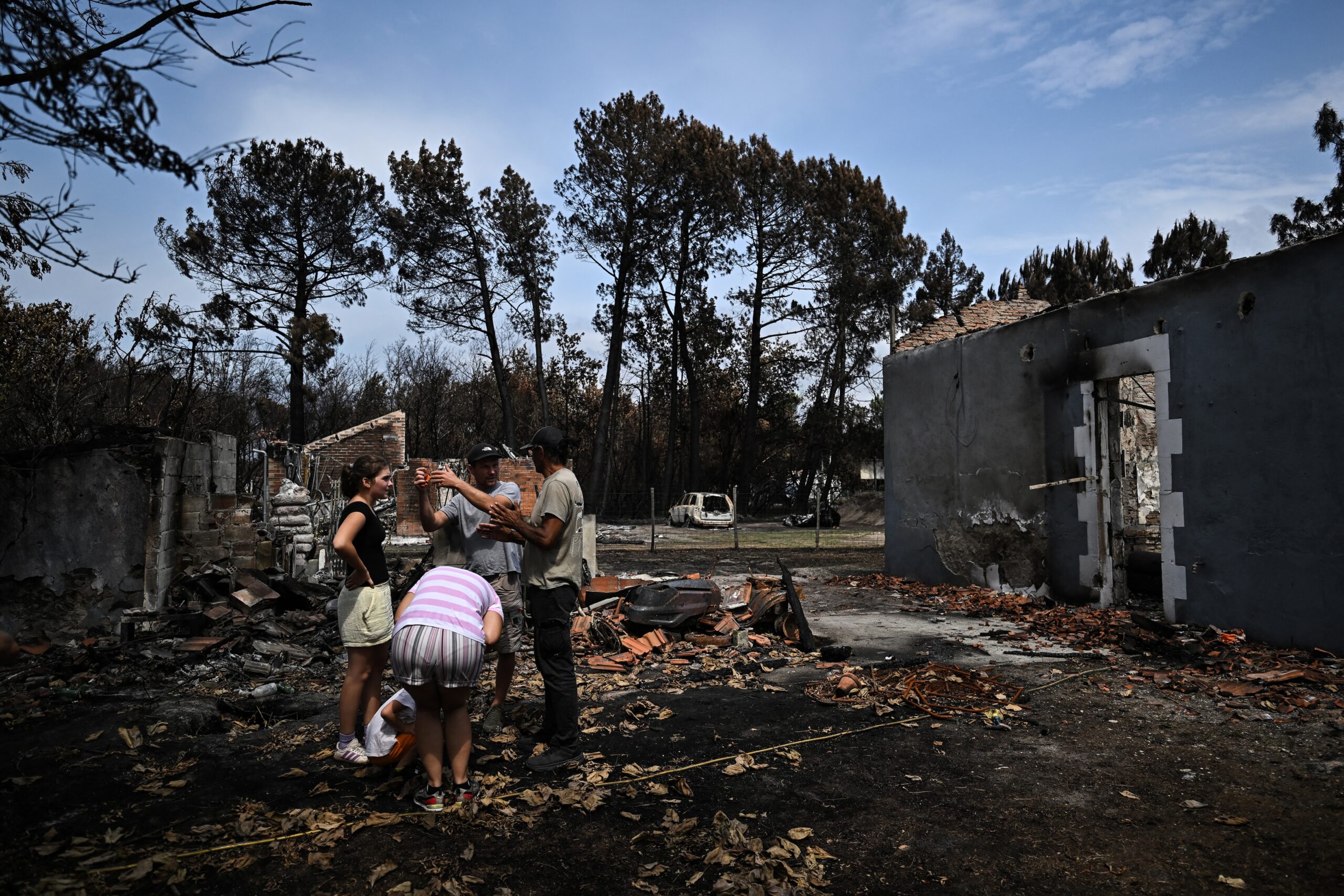
Recent weeks have seen severe wildfire seasons sweeping across multiple European countries. France has already evacuated around 220,000 people, while Spain and Greece have also been hit by wildfires. This disaster has not only resulted in significant economic losses but has also raised the pressing question of who should bear the costs of climate-related disasters, becoming a crucial issue that European countries urgently need to address.
Credit rating agency Morningstar DBRS estimates that the total losses from the wildfires in France could reach €10 to €15 billion (approximately $11.5 to $17.3 billion), with insurance losses potentially reaching several billion euros. The substantial losses have prompted a reevaluation of the expanding “climate insurance coverage gap” in Europe.
As unprecedented wildfires ravage France, Spain, and Greece, analysts warn that if the fires threaten densely populated areas, the losses could rapidly escalate beyond what the insurance industry can manage.
Marcos Alvarez, Managing Director of Morningstar DBRS, stated: “If a wildfire were to get out of control and reach a medium-sized city like Bordeaux, it could pose a real threat to the insurance industry. That would be losses on a completely different scale.”
In addition to damage to homes and businesses, insurance companies may also face sizable claims from widespread evacuations, including costs for residents unable to return to their homes, business interruptions, disrupted supply chains, and utility service outages, leading to chain losses.
Unlike floods and droughts, wildfires are typically not covered under France’s government-supported natural disaster compensation mechanism, which means that post-disaster recovery costs are expected to be largely shouldered by private insurance.
Some French insurance companies have announced that policyholders evacuated due to wildfires near Bordeaux are allowed to stay in hotels for up to three weeks, with the related expenses covered by the insurance companies.
Analysts point out that the lack of historical wildfire data in Europe may pose additional challenges for insurance companies in establishing risk models, setting premiums, and making underwriting decisions.
The European Central Bank and the European Insurance and Occupational Pensions Authority highlight that only approximately one-fourth of the losses from climate-related disasters between 1980 and 2024 were insured, underscoring the significant insurance coverage gap in Europe.
In addition to temperature and drought conditions, there is a discussion about whether forest management and environmental policies are exacerbating the risk of wildfires.
A commentary in The Wall Street Journal questions whether certain environmental policies promoted under the framework of the EU’s Green Deal may be increasing combustible materials in forests, making fires more likely to spread.
Research by forestry professor Víctor Resco de Dios and colleagues at the University of Lleida in Spain last year found that protected areas, covering 38% of temperate forests in southwestern Europe, accounted for 55% of recent wildfire burn areas. The study indicates that fires in protected areas burn more intensely, posing greater threats to nearby residents and natural habitats.
Resco de Dios stated: “When you exclude humans, what you get is more fuel, and then fires become more severe.”
The commentary also suggests that EU regulations have accelerated the depopulation of rural areas in some regions, and cumbersome administrative procedures may hinder fire prevention measures like controlled burns.
Currently, policy discussions are ongoing within the EU to address the climate insurance coverage gap. The European Central Bank and the European Insurance and Occupational Pensions Authority have proposed multi-layered policy concepts, including an EU-level public-private reinsurance mechanism and a public post-disaster financing fund.
A report released in July by the climate division of AXA predicts that by 2050, the number of high-risk wildfire days in the outskirts of French cities could increase by nearly 70%.
Rodolphe Mann, Managing Director of Miller’s French business, suggests that premiums for residential insurance in high-risk areas may rise when policies are renewed in January next year.
Wynne Lawrence, Partner at law firm Clyde & Co in London, notes that Europe is experiencing extreme wildfire conditions that were previously more common in places like California or Australia.
With the rising risk of wildfires, addressing how to improve forest management, increase insurance coverage, and allocate disaster costs between governments and the private insurance industry are crucial challenges that European countries must confront.