
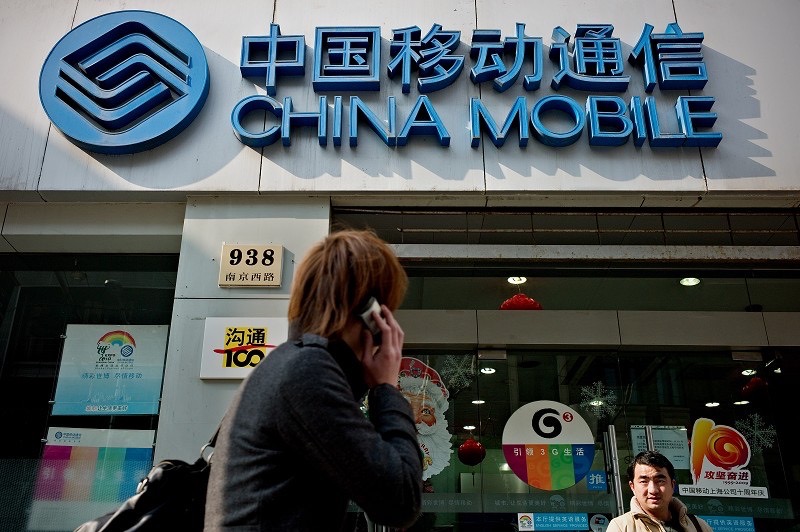
On July 31st, the three major telecommunications operators in mainland China — China Mobile, China Telecom, and China Unicom — simultaneously announced the complete cancellation of network proxy channel card sales services, commonly known as “low-price data cards.” The event sparked a firestorm on the internet.
During the evening of July 31st, China Telecom, China Mobile, and China Unicom jointly announced that starting from August 1st, 2026, mobile phone SIM cards can only be obtained through official apps, official websites, and other official channels. Third-party internet channels will completely cease related services, while previously obtained SIM card services can still be used as usual.
The so-called network proxy channel card sales refer to the practice where operators sell mobile phone SIM cards through third-party agents, self-operated stores on internet platforms, and various vertical traffic cooperation that are not their own online outlets.
According to reports from Sina, a comparison of services revealed that through proxy channels, China Unicom offers a package with a monthly rent of 29 yuan for 280GB data and 100 minutes of calls, while China Mobile offers a package at 19 yuan per month for 220GB data and 100 minutes of calls. In contrast, on the official websites of the three major telecom operators, China Mobile’s “Dynamic Mango Zone” package costs 59 yuan per month with 20GB of general data and 30GB of specific data, China Unicom’s “Smooth Ice Cream 5G” package costs 129 yuan per month with 30GB of data, and China Telecom’s 99 yuan per month package includes 40GB of general data. The prices for similar communication services vary by 3 to 6 times.
This adjustment by the three major telecommunications operators signals the end of the era of low-priced high-data card offerings.
The announcement has triggered a heated discussion among mainland Chinese netizens, with many expressing sentiments like, “The end of cheap prices marks the beginning of people’s sacrifices,” “This is pure monopoly,” “Are they preparing to cut off customers now?” and “The sickle of harvesting the consumers must be held by the oligarchs.”
Some internet users commented, “Just get rid of all forms of virtual numbers. We already have real-name registration, what more do they want?” “This is paving the way for price hikes on 6G,” “I won’t subscribe anymore. It’s just a monopoly. After they take back the control, they can raise prices however they please, set rules as they like, and whether you buy it or not is up to you,” and “This is unsightly behavior.”
It’s worth noting that before the announcement was made, rumors of discontinuing the sale of low-price data cards had been circulating for several days. According to the Beijing Daily, many stores have experienced a significant surge in sales recently due to the rumor of discontinuation. An online salesperson mentioned, “I’ve already processed transactions for over a dozen customers yesterday, all rushing before the ‘deadline.'” Some stores even claimed to be out of stock.
In response, customer service representatives from the three operators stated on July 29th that they had not received any relevant notices. The investor relations department of China Mobile mentioned that there is currently no information to disclose and to refer to the company’s official announcements for related matters. A staff member from China Unicom in Jinan also mentioned that they have not yet received any formal notification.
However, the plot took a sudden turn on the evening of July 31st. Netizens criticized, “The three of them are the biggest fraudsters,” and “Under the guise of being for your benefit, they are monopolistically increasing prices.”