
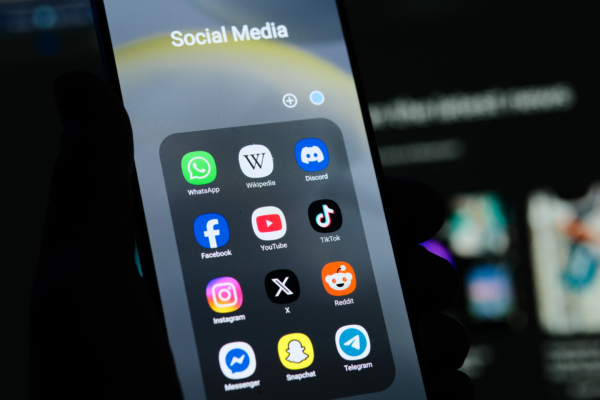
On June 15th, the British government made an announcement declaring the ban on social media use for individuals under the age of 16. Alongside this ban, they also introduced pioneering additional measures: prohibiting minors under 16 from using live streaming features and preventing strangers from initiating contact with minors. Furthermore, the UK is exploring other restrictions concerning online safety for minors.
The Department for Science, Innovation, and Technology (DSIT) in the UK, in conjunction with Prime Minister Keir Starmer, announced on June 15th a joint statement about the government’s decision to take further steps in protecting the safety of minors through globally leading additional regulatory measures. These measures, which include restrictions on harmful online functions such as live streaming and contact between strangers and minors, have garnered support from 90% of parents and are set to be presented to Parliament before Christmas, with implementation scheduled to begin in the spring of 2027.
DSIT, the UK’s central government department responsible for advancing technology and digital policies, spearheaded the social media ban and restrictions on minors using AI chatbots. DSIT stated that this initiative will pave the way for building a new social norm for the future, driving cultural transformation, and further enforcing the government’s goal of providing every child with the best possible start in life.
The UK government plans to adopt a social media ban model similar to Australia’s, covering platforms focused on user interaction for communication, content sharing, and algorithm-driven information dissemination services. Therefore, the ban in the UK will include platforms such as Snapchat, TikTok, YouTube, Instagram, Facebook, and X. WhatsApp, Signal, and other messaging services are not intended to be included in the social media ban.
Prime Minister Starmer stated, “Parents want their children to be safe and happy, but the online world has made this increasingly challenging. I have personally heard many families urgently calling for change, and we will respond to their expectations. We will go further than any other country in the world and prohibit children under 16 from using social media while establishing more comprehensive protective measures to give childhood back to children.”
“This is a clear line in the sand. The tech giants had the opportunity to address the issues but failed; now it is our turn to protect children, support parents, and establish a new social norm for future generations.”
The “more comprehensive protective measures” mentioned by Starmer refer to not only disabling social media platforms but also the introduction of groundbreaking additional regulations, such as banning minors under 16 from using live streaming and preventing strangers from contacting them. These restrictions will apply to a broader range of online services, including gaming platforms.
For 16 and 17-year-old minors, these features will also default to restricted status to prevent them from suddenly losing all protective measures upon turning 16.
Additionally, the UK government is considering nighttime restrictions on certain websites for minors under 18, as well as implementing mechanisms to interrupt “infinite scrolling.” More details on these measures will be announced in July. “Infinite scrolling” refers to systems continuously loading content for users, providing a never-ending stream of new content, as seen in TikTok’s For You page, Instagram Reels, YouTube Shorts, Facebook’s News Feed, and X’s timeline, leading users to involuntarily continue scrolling.
The UK government will also restrict minors from using AI “virtual romantic partners.” AI “romantic companions” chatbots simulate romantic or sexual relationship role-playing, and the UK government will enforce a minimum age limit of 18. Similar AI chatbots offering intimacy features will also have an age limit of 18 imposed.
The UK government stated that combining these measures will create a more comprehensive protective model than just a social media ban, focusing on addressing how children are actually harmed online rather than merely limiting specific platforms. The UK government aims to introduce more effective age verification systems following Australian practices.
Minister of Technology Liz Kendall stated, “Today we have taken a bold and crucial step towards creating a safer and healthier online life for children and future generations. Tech companies have had numerous chances to protect children, but they have failed to take sufficient actions. Therefore, we are reclaiming power from the tech giants and returning it to parents.”
Kendall has written to the newly appointed Chair of the UK’s media regulatory body, Ofcom, requesting an urgent review of enforcement capabilities and the prompt publication of clear enforcement strategies.
The UK government has pledged to provide adequate funding to empower Ofcom to carry out existing responsibilities under the Online Safety Law while enforcing new duties such as age verification.