
Renowned American writer Mark Twain once said, “It ain’t what you don’t know that gets you into trouble. It’s what you know for sure that just ain’t so.”
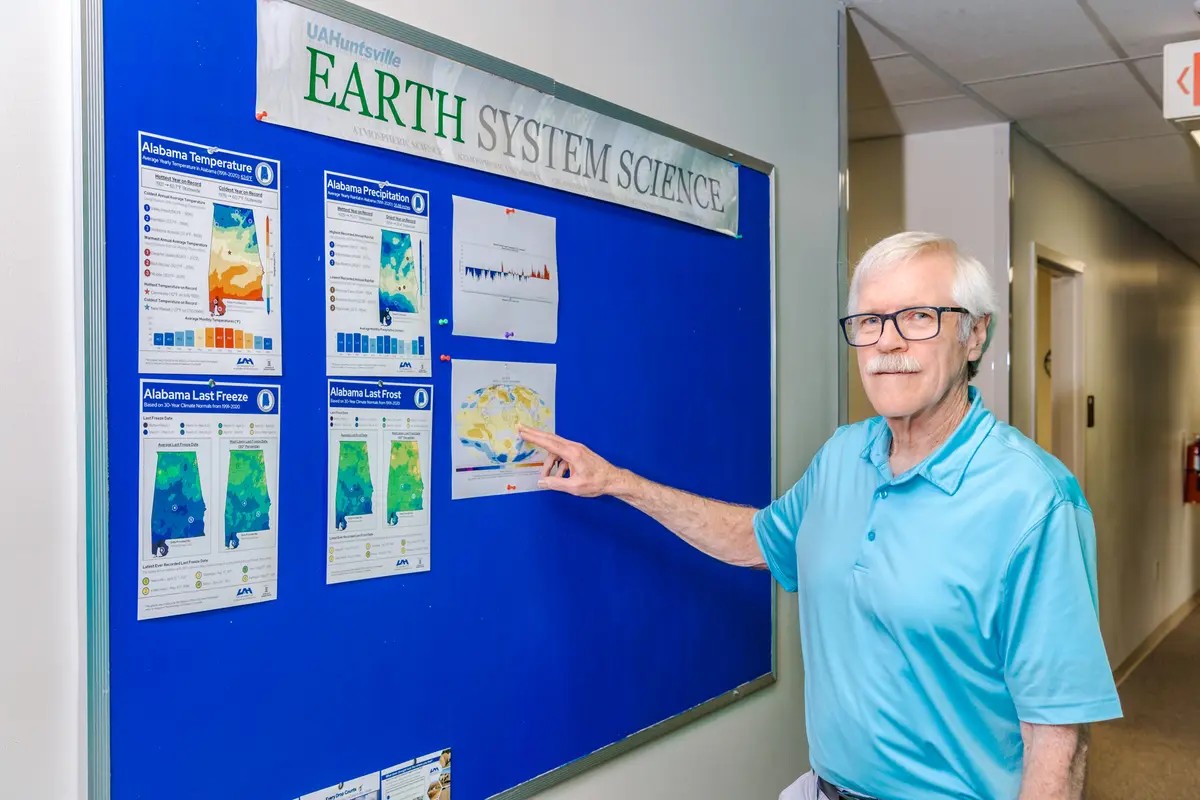
Similarly, delving deep into the truths revealed by data can sometimes be vastly different from initial impressions. John Christy, a climatologist at the University of Alabama in Huntsville, has analyzed reports from over 1,200 weather stations across the United States. His analysis challenges a commonly held belief – that extreme heat phenomena are becoming more prevalent.
According to Christy’s report titled “Declines in hot and cold daily temperature extremes in the conterminous US, 1899–2025,” published in the academic journal Theoretical and Applied Climatology in spring of this year, the data indicates that extreme heat occurrences have not increased. On the contrary, temperatures have actually become milder over the past century.
“In the U.S., we have systematic measurements that show that extreme heat events in the 1920s, 1930s, and 1950s were much more severe than they are today,” Christy told Epoch Times.
“Even with areas in the western United States currently experiencing climate situations resembling the 1930s, the situation in other regions of the country has not followed this trajectory.”
“Overall, there have been no nationwide extreme weather events.”
The National Oceanic and Atmospheric Administration (NOAA) states that global average temperatures have increased by 2 degrees Fahrenheit since 1850, with an acceleration in recent decades.
NOAA reports that 2024 was the warmest year on record since 1850, and the hottest decade on record has all occurred between 2015 and 2024.
The explanation provided by NOAA is that the rise in Earth’s surface temperature is due to human activities emitting greenhouse gases, resulting in more energy absorbed by Earth than radiated back to space.
However, Christy’s research indicates that extreme weather events have not actually increased, and the overall temperature trend in the U.S. has been toward moderation. In contrast to NOAA’s assessment, Christy’s analysis shows a decrease in both extreme high and low temperature events since 1899.
Given that Christy and NOAA are using the same data, why does such a significant difference exist?
Christy explains that the difference primarily stems from two factors. Firstly, NOAA’s charts display annual average temperatures, while Christy focuses on records of the highest and lowest temperatures during the warmest and coldest seasons. He notes that extreme values are more relevant in climate science as they determine the “environmental boundaries” that shape the survival of flora and fauna.
Christy believes the second reason for the disparity is that NOAA’s algorithms eliminate data points it deems potentially erroneous or anomalous.
His research includes a review of original reports and the collection of extreme data points omitted from NOAA calculations.
This study spans over a century of weather station reports, from handwritten records of the Army Signal Corps and Weather Bureau in the early days to the current measurement data from military and federal agencies, all of which are consolidated in a central network managed by NOAA.
Christy expressed skepticism towards the data released by NOAA, prompting further research as recent highest temperature readings from NOAA did not align with his own firsthand experiences.
“When I checked the digital data from the federal government, the government website said that the historical highest temperature in Newport, Oregon was 94 degrees Fahrenheit,” Christy said, “I know more about the West Coast because I grew up there.”
Thus, he delved into the original handwritten temperature records of that site, discovering not only had Newport reached a high of 100 degrees Fahrenheit in June 1925, but there were ten days with temperatures surpassing 94 degrees. He supplemented this missing data and then carried out similar supplements for reports from over 1,200 weather stations nationwide.
To validate these extreme temperature data points and ensure they were not errors, Christy cross-referenced his findings with data from nearby weather stations to confirm similar readings.
“This requires a significant amount of manual intervention, something we lack today since everything is handled by artificial intelligence or computer algorithms,” he stated. Yet, without the original data, “we can’t truly understand the nature of the climate and the types of extreme weather events that actually occur.”
“My dataset is much more complete than the dataset provided to researchers by the federal government,” Christy asserted.
Monica Allen, Public Affairs officer at NOAA, stated that NOAA does not comment on external research results. However, she pointed out that NOAA employs scientifically validated quality assurance algorithms to identify and mark potential erroneous observational data and detect anomalies in station historical data that may stem from non-natural factors (such as station movements or instrument replacements).
She told Epoch Times, “NOAA also takes feedback from users to identify, review, and record erroneous observational data in historical datasets.”
Nevertheless, by re-including data removed by algorithms and emphasizing the analysis of extreme temperatures rather than average temperatures, Christy’s research shows that the period of extreme heat was not during the frequently reported recent decades but in the 1930s.
Christy highlights that over the past century, extreme heat events have not significantly increased, while extreme cold events have decreased. The mitigation of extreme cold is a key factor in the rise of average temperatures.
Additionally, Christy found that temperature rises primarily occur at night, with daytime temperatures remaining relatively stable. He speculates that besides carbon dioxide emissions, there are other factors influencing temperatures.
“Nighttime temperatures have been climbing over the past 120 years,” Christy stated. “This is due to human activities around weather stations because nighttime temperatures are more susceptible to the influences of urbanization – parking lots, buildings, deforestation, and so forth.”
He mentioned that over the past century, many temperature observation points have been influenced by urbanization and suburban expansion as rural areas were developed with asphalt and concrete structures.
These structures absorb heat during the day and release it at night, combined with the removal of shading trees, leading to temperature increases.
“You can’t solely attribute the causes to greenhouse gases because the impact of urbanization is very apparent at these weather stations,” he said. “Creating the urban heat island effect doesn’t require much – building a parking lot next to a rural weather station creates the urban heat island effect.”
Christy believes that temperature distribution across the U.S. is uneven, with heatwaves being more common in western states currently, while eastern states are not experiencing heatwaves as widespread as in the 20th century.
However, media reports primarily focus on regions with the highest temperatures, fostering the perception that extreme weather is increasing nationwide.
Christy grew up in Fresno, California, and has been fascinated with identifying weather patterns since his teenage years, a passion that continued through his undergraduate studies majoring in mathematics.
After graduation, Christy worked on setting up weather stations in Africa, pursued a Ph.D. in Climate Dynamics at the University of Illinois, and later taught atmospheric science at the University of Alabama, accumulating decades of teaching experience.
In 1991, Christy and co-author Roy W. Spencer were awarded NASA’s Medal for Exceptional Scientific Achievement for establishing a precise global Earth temperature record using operating polar-orbiting satellites, enhancing climate monitoring capabilities fundamentally.
In the 1990s, Christy also contributed to reports of the Intergovernmental Panel on Climate Change (IPCC).
“I can retrieve climate information I recorded 60 years ago. So, in a way, I’ve experienced various climate patterns throughout my life,” Christy remarked.
Christy published his latest research findings in academic journals, a task that was not easy.
“Reviewers tried to find every reason to reject publishing this paper, and countering those reasons took a long time and a lot of effort,” he stated.
“I had to address many objections and repeatedly show them, ‘Here’s your objection, I’ve examined it, and it’s wrong,’ to convince them.”
“There were some papers we never managed to publish. It’s unfortunate because it means the public doesn’t have the opportunity to see such research findings.”
As for whether his research results will influence Americans’ views on climate change, Christy stated that it’s uncertain at the moment.
“If someone’s political viewpoint is that extreme weather is getting worse, it becomes almost a belief, so it’s challenging to change people’s minds in that regard,” Christy said.
“However, if one objectively examines the information, then my work over the past 50 years has been to construct datasets to pose questions to the datasets on such issues.”
The National Oceanic and Atmospheric Administration (NOAA) provides scientists with a wealth of data for analysis using their methodologies.
Monica Allen, NOAA’s Public Affairs officer, introduced that NOAA utilizes the nClimGrid-Daily data plan to analyze data from the Global Historical Climatology Network-Daily dataset when examining U.S. temperatures.
“This dataset leverages extensive daily observational station data when analyzing U.S. temperatures, allowing NOAA, the user community, and the scientific community to view the full range of our data,” she added.
Allen stated that average temperatures and extreme temperatures “provide complementary scientific insights.”
“Average temperatures establish historical benchmarks to identify extreme climate conditions; extreme temperatures help address risks from events like heatwaves and cold snaps,” she said.
Although NOAA provides vast amounts of data, Christy believes scholars who question the mainstream climate narrative struggle to secure research funding or publish papers.
“In issues like climate change, this attitude is outright intolerant,” he said.
“However, being in Alabama, I feel grateful. Here, you can still ask questions, examine real data, and not be fired for it.”
The original article:
Climatologist Says a Century of Weather Data Contradicts Claims of Record Heat
Published in the English Epoch Times.