
On May 8, Iran detained a Chinese oil tanker, the “Ocean Koi,” originally considered by the United States to be part of a shadow fleet, raising suspicions about a potential shift in the China-Iran relationship. Experts believe that the Chinese Communist Party (CCP) is unlikely to abandon its support for Iran.
Iranian state media reported that Iranian forces seized the “Ocean Koi” oil tanker in the Gulf of Oman, carrying Iranian oil. According to international shipping databases, this tanker belongs to China’s Shanghai Ocean Co. Ltd. However, since 2020, this vessel has been involved in transporting sanctioned Iranian oil, thus categorized as part of Iran’s “shadow fleet.” In February this year, the U.S. Treasury Department imposed sanctions on this ship.
Furthermore, on May 4, a Chinese oil tanker near Al Jeer Port in the entrance of the Strait of Hormuz was attacked and caught fire, as reported by mainland Caixin. Despite these incidents, including the seizure of a Shanghai-bound ship and the recent attack on a Chinese oil tanker, experts are cautious in drawing conclusions about a significant deterioration in the China-Iran relationship.
Analysis from “Cross-Strait Commentary” host on New Tang Dynasty Television’s program “News Analysis” suggests that while there have been recent events involving China and Iran, such as the detention of a Shanghai-bound ship, and an attack on a Chinese oil tanker, the precise implications on the China-Iran relations remain unclear.
Overall, it is believed that the CCP will continue its support for Iran. However, recent tensions have surfaced due to Iran’s actions in blockading the Strait of Hormuz, interrupting China’s oil imports from Iran and worsening China’s economic situation. In response, China may seek to exert pressure on Iran to engage in negotiations with the United States.
The long-term strategy of the CCP is to oppose the U.S., and Iran stands as one of the few regimes in the Middle East that can challenge U.S. interests. Therefore, the CCP is likely to support Iran regardless of its actions. Just as with North Korea, despite any negative behavior, the CCP is unlikely to abandon its support for Iran due to strategic considerations.
While Iran may feel dissatisfied with China for not providing substantial assistance during recent incidents, this discontent is unlikely to escalate into retaliation against China. However, in decision-making processes such as choosing targets for attacks, including ships, Iran may treat all parties equally, signaling to China its displeasure.
In summary, the China-Iran relationship remains one of mutual support under strained circumstances. Although minor frictions may arise due to conflicting interests, a complete breakdown of relations is not expected in the current context.
The incident involving Iran detaining the Chinese oil tanker, previously identified by the U.S. as part of a shadow fleet, is seen as a unique occurrence, demonstrating Iran’s capability to assert its control and garner attention through targeted actions. Iran’s actions are part of a strategic stance to showcase its vigilance and dominance in the Strait of Hormuz.
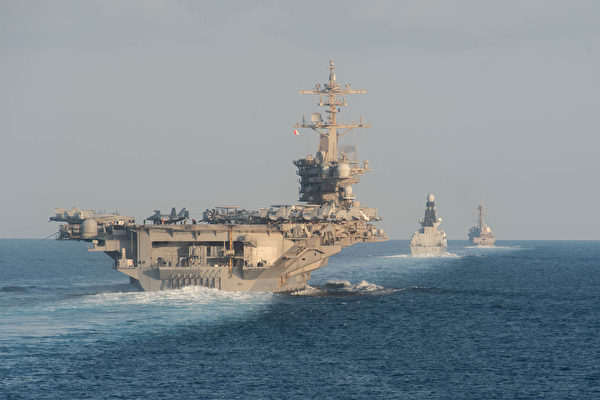
The U.S. military is closely monitoring the situation in the Persian Gulf and around the Strait of Hormuz, with the power to intervene if necessary. Despite significant challenges faced by Iran, such as military setbacks and resource limitations, its geographical advantage in the Strait of Hormuz strengthens its strategic position.
Both Iran and the U.S. understand the complexities at play and are cautious in their actions to avoid escalating conflicts. Iran aims to maintain a firm stance to reassure its population of its ability to stabilize the situation in the region.
The use of military measures and detentions by Iran serves not only as a message to external entities but also as a statement to its own populace, emphasizing its control over vital routes like the Strait of Hormuz. This dual purpose holds critical significance in the regional dynamics.
For more insights on the recent tensions between Iran and China and the broader geopolitical scenario, please refer to the video: “News Analysis: U.S. Fighter Jets Attack Iranian Commercial Ship.”