
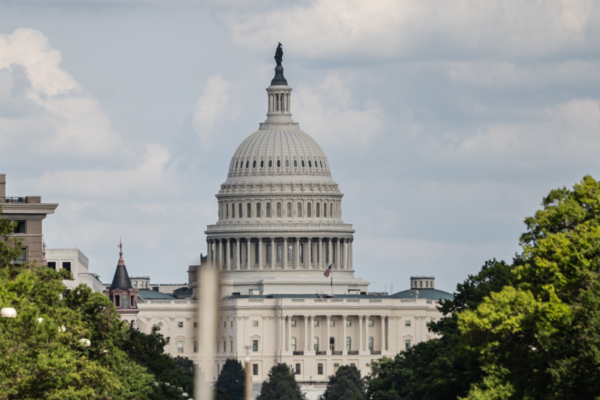
On Monday, June 8, three Republican members of the U.S. House of Representatives jointly introduced the “Prohibiting Adversarial Patents Act.” The bill aims to prohibit individuals or entities identified by the United States as posing a national security threat from obtaining U.S. patents, and specifies that patents obtained by these entities cannot be enforced in court.
This legislation, led by Chairman John Moolenaar, Representative Scott Fitzgerald, and Darrell Issa of the House Select Committee on the CCP, seeks to close existing legal loopholes to prevent sanctioned entities from using the U.S. intellectual property system to launch lawsuits against American businesses or gain economic benefits.
According to the text of the bill, the United States Patent and Trademark Office (USPTO) is prohibited from issuing patents to entities listed on certain lists, including the Department of the Treasury’s “Non-SDN CMIC List,” the Department of Defense’s “1260H Chinese Military Enterprise List,” and the Federal Communications Commission’s “Covered List.”
Moolenaar stated in a release that “The Chinese Communist Party seeks U.S. patents not because it believes in intellectual property but because stealing American innovations is part of its economic strategy.”
He emphasized that this legislation would strengthen the law to counter the Chinese Communist Party’s use of “legal warfare” to launch unjustified patent lawsuits in the U.S. legal system.
The bill addresses a gap in current U.S. sanctions policy, where some companies banned from accessing U.S. communications infrastructure can still collect fees from U.S. companies through patent licenses and even assert patent rights in U.S. courts.
For example, despite being prohibited from U.S. communication infrastructure, Huawei ranked fourth in the number of U.S. patents granted in 2025, with patent licensing revenue exceeding $630 million. Additionally, ZTE ranked fifth in the number of U.S. 5G technology-related patents granted in 2024.
Fitzgerald stated that the Prohibiting Adversarial Patents Act would close the door for hostile foreign entities to seek economic advantages and jeopardize U.S. national security through the patent system.
Issa also mentioned that companies associated with the Chinese Communist Party have long been allowed to benefit from U.S. patent protection while actively harming U.S. interests. He argued that this legislation would ensure that entities posing a national security threat cannot exploit the U.S. intellectual property protection originally designed to reward innovation and strengthen American interests.
According to data from the World Intellectual Property Organization (WIPO), China has submitted more patent applications in the past decade than any other country, with over 1.8 million applications in 2024. In the same year, nearly 55% of all U.S. patent applications were filed by foreign residents, with China submitting a record-breaking 49,000 applications.
Lawmakers point out that most of these patents have received funding from the Chinese Communist Party’s “Made in China 2025” initiative. Additionally, a report from WIPO on AI patents in China from 2014 to 2023 revealed that Chinese inventors hold over 38,000 AI patent families, ranking first globally.
The High Tech Inventors Alliance (HTIA) also expressed support for the bill, stating that the U.S. has long allowed entities deemed a security threat to accumulate and weaponize U.S. patents in key industries such as semiconductor manufacturing, digital infrastructure, and artificial intelligence to counter American domestic industries.
The bill also stipulates that the prohibitions will not affect these entities’ ability to submit patent applications but their patents cannot be enforced and speedy examination procedures like the “Patent Prosecution Highway” (PPH) cannot be used.
Furthermore, if the President determines that there are no significant national security interests involved, exemptions of up to 180 days can be granted to certain entities, with the option for consecutive exemptions, subject to submitting detailed reports to the House and Senate Judiciary Committees at least 30 days prior to each exemption.
To formally become law, the bill still needs to pass both chambers of Congress in a consistent version and be signed by the President.