
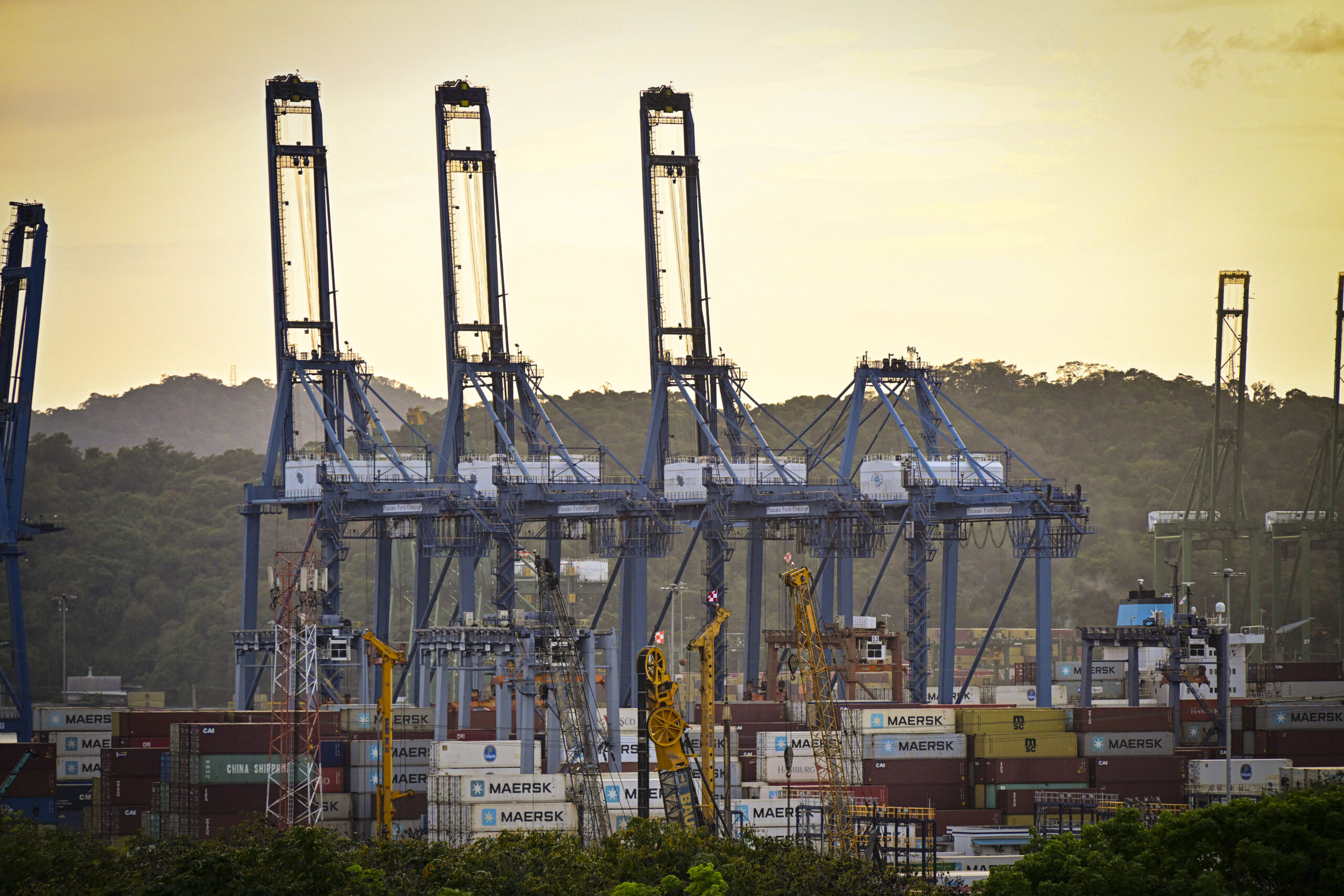
【Epoch Times August 21, 2026】Hong Kong-based Cheung Kong Hutchison, owned by Hong Kong tycoon Li Ka-shing, has initiated international arbitration against Panama over the Panamanian government’s takeover of two strategic ports at both ends of the Panama Canal, seeking compensation of over HK$11.7 billion (approximately $1.5 billion USD).
Cheung Kong announced on Thursday (August 20) that Panama’s takeover of the Balboa and Cristobal docks’ concession rights is considered a violation of its “sovereign actions” in its investments in Panama. Cheung Kong accuses Panama of breaching the investment protection treaty and international law.
The company stated that Panama only arranged one “hasty” negotiation meeting, more than six months after receiving the investment treaty notice, without offering any compensation or resolution.
However, Cheung Kong did not disclose which arbitration institution or rules it will seek, nor did it disclose the arbitration case number and composition of the arbitration tribunal.
Legal experts say that the path of investment treaty arbitration proposed by Cheung Kong is notorious for being time-consuming, regardless of which framework is chosen, with the whole process expected to take at least three years.
This investment treaty claim is unrelated to the contract arbitration initiated by Cheung Kong’s subsidiary Panama Ports Company (PPC). PPC has sought compensation of at least HK$15.6 billion (approximately $2 billion USD) over the Panama government’s takeover of port operations.
The Panamanian Supreme Court ruled in January that PPC’s port operating concession rights were unconstitutional, declaring the contract invalid. The Panamanian government took over two docks under PPC on February 23. Cheung Kong owns 90% of PPC shares. PPC had a 25-year concession contract for the Balboa and Cristobal ports, with a renewal in 2021.
Cheung Kong stated that this lawsuit involves its rights under the investment treaty, while PPC’s contract claims will be handled through the International Court of Arbitration of the International Chamber of Commerce.
Sandra Marco Colino, Associate Professor of Law at the Chinese University of Hong Kong, in an interview with the South China Morning Post, stated that Cheung Kong’s recent claim is based on the Investor-State Dispute Settlement (ISDS) arbitration mechanism under international public law.
She pointed out that such cases are typically handled under the framework of the International Centre for Settlement of Investment Disputes (ICSID) under the World Bank, or under the arbitration rules of the United Nations Commission on International Trade Law (UNCITRAL).
However, investment treaty arbitration is notorious for being time-consuming, with the entire process expected to take at least three years, if not longer.
According to her analysis, Cheung Kong’s move is elevating a commercial dispute to the level of international diplomacy and state responsibility, intending to focus on whether Panama breached its international law obligations to foreign investors. This would expand the scope of damages claimed, while increasing political and financial pressure on Panama. Of course, this also means a more lengthy and complex arbitration process.
Yuen, Yuk Ming, Deputy Dean of the Faculty of Law at the Chinese University of Hong Kong, stated that Cheung Kong’s initiation of investment treaty arbitration against Panama first requires proving its eligibility as a protected investor under the investment treaty and that the investment involved also complies with the treaty’s protected investment provisions. She pointed out that this would be one of the main legal challenges faced by Cheung Kong.
She also added that the investment arbitration tribunal does not rule on whether the Panama Supreme Court’s decision was correct but rather on whether Panama’s actions violated its international obligations under the relevant treaties.
The dispute originated in 2025 when Cheung Kong planned to sell its 43 ports spread across 23 countries for $22.8 billion, including two ports in Panama. The transaction sparked a geopolitical standoff between the United States and China over control of global trade infrastructure.
Beijing opposed Cheung Kong’s sale of Panama Canal ports to a U.S.-led consortium and insisted on Chinese state-owned enterprises participating in the transaction and obtaining control, ultimately leading to the deal falling through.
Following the loss of Panama ports, Cheung Kong did not experience significant business impacts. According to the company’s mid-year performance disclosed last week, overall throughput in the first half of this year decreased by 1%, but the performance of the overall port portfolio surpassed that of the same period last year.
Tensions between China and Panama have escalated due to the port dispute. Beijing openly accused Panama of participating in “hegemonic bullying,” implying the United States. Panamanian President Jose Raul Mulino dismissed these criticisms, stating that his government “respects the ruling of the judiciary, which is independent of the central government.”
As a clear retaliation, China began seizing dozens of ships flying the Panamanian flag at the ports.
Laura DiBella, a Commissioner of the Federal Maritime Commission (FMC), stated in a statement on March 26 that under the pretext of port state control, China significantly increased the detention of ships flying the Panamanian flag, far exceeding past practices.
She said, “These enhanced inspections were seemingly conducted under unofficial Chinese instructions, apparently aimed at punishing Panama after the transfer of Cheung Kong assets.”
She also warned that this move could have “significant commercial and strategic consequences” for the U.S. shipping industry, which the U.S. closely monitors.
U.S. pressure seemed to ease the tense situation. Data from the shipping intelligence company Lloyd’s List showed that between July 1 and 23, the number of ships flying the Panamanian flag detained in China was less than 20, a significant decrease from 140 ships in May.