
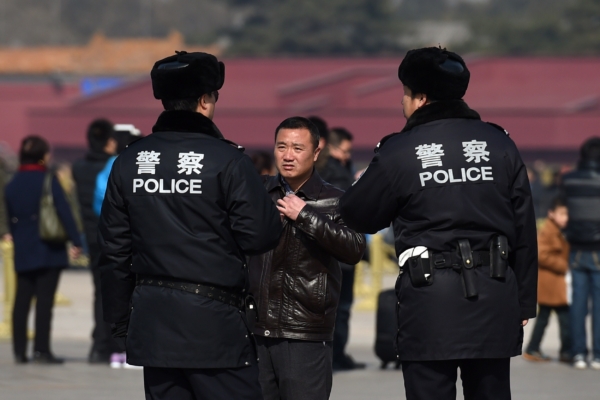
The Chinese Communist Party held a “Human Rights Forum” in Beijing, and the US State Department criticized Beijing for “distorting the human rights concepts established by international law” at the event. Experts explain where the CCP’s distorted human rights concepts come from and argue that the CCP itself violates human rights and is fundamentally unqualified to host a human rights forum.
According to Chinese state media, the “2026 Global Human Rights Governance High-Level Forum” (referred to as the Human Rights Forum) was held in Beijing on June 11th to 12th. Official reports stated that over 400 guests from nearly a hundred countries, as well as international and regional organizations including the United Nations, attended the forum.
On June 11th, the Chinese government released the “National Human Rights Action Plan (2026-2030)”, addressing issues such as employment discrimination, unpaid wages, and illegal layoffs.
In response to the forum, the US State Department criticized Beijing’s distortion of internationally established human rights concepts and its efforts to conceal disturbing human rights records both domestically and internationally, raising concerns.
The State Department expressed concerns about China’s ongoing infringement on religious groups, dissenters, and various ethnic groups including Uighurs, Tibetans, and Christians. The State Department also opposed China’s transnational repression actions, which infringe on the sovereignty of the United States and other countries.
The theme of the human rights forum hosted by the CCP was “Working Together for Shared Human Rights: 40th Anniversary of the Declaration on the Right to Development and a New Vision for Global Human Rights Governance.”
The Declaration on the Right to Development was adopted by the UN General Assembly on December 4th, 1986, under Resolution 41/128, but it has been criticized for being highly politicized. This declaration advocated for collective rights such as the right to development, peace, and environment, contrasting with the Western focus on civil and political rights.
The International Bill of Human Rights constitutes the core framework of the UN human rights system and includes the Universal Declaration of Human Rights (1948), the International Covenant on Civil and Political Rights (1966), and the International Covenant on Economic, Social and Cultural Rights (1966).
It is noteworthy that although China signed the International Covenant on Economic, Social and Cultural Rights in 1997 and ratified it in 2001, it has yet to ratify the International Covenant on Civil and Political Rights signed in 1998.
The US State Department’s criticism of China’s “distortion of internationally established human rights concepts” has sparked reactions from individuals attentive to China’s human rights issues. Scholars and commentators have shared their thoughts on the matter.
The US response prompted reflections from prominent figures like Sheng Xue, a Chinese-Canadian writer and commentator, who has long been concerned about human rights violations in China. She highlighted the importance of upholding international human rights standards, emphasizing that rights such as freedom of expression, personal safety, protection against torture, judicial fairness, political participation, and a free media are essential components of genuine human rights.
Sheng Xue reiterated her call for democratic countries to stand against China, emphasizing that the regime has committed egregious crimes against humanity, including forced organ harvesting. She stressed that without these essential rights, the so-called rights to survival and development in China are hollow.
A report released by Human Rights Watch on February 4th in 2026 highlighted the further erosion of basic freedoms under the leadership of Xi Jinping, emphasizing ideological conformity and unwavering loyalty to the CCP, leading to a loss of fundamental rights for Chinese citizens.
Renowned human rights lawyer Gao Zhisheng, hailed as the “conscience of China,” has been forcibly disappeared for over eight years without clarification of his whereabouts.
Critics argue that despite China’s seat as a permanent member of the UN Security Council, Xi Jinping has internally rejected universal values, including human rights norms. China’s focus on sovereignty and economic development over individual rights has been highlighted as contradictory to the principles of the UN human rights framework.
The US State Department specifically condemned China’s transnational repression in its email to Voice of America, advocating for international scrutiny on China’s human rights violations.
Sheng Xue and various leaders from human rights organizations have pointed out China’s efforts to deflect international concerns about its internal human rights abuses by redefining human rights through an economic development lens. They emphasize that the CCP’s history of grave human rights abuses, such as the Great Famine, underscores its lack of qualifications to host a human rights forum.