
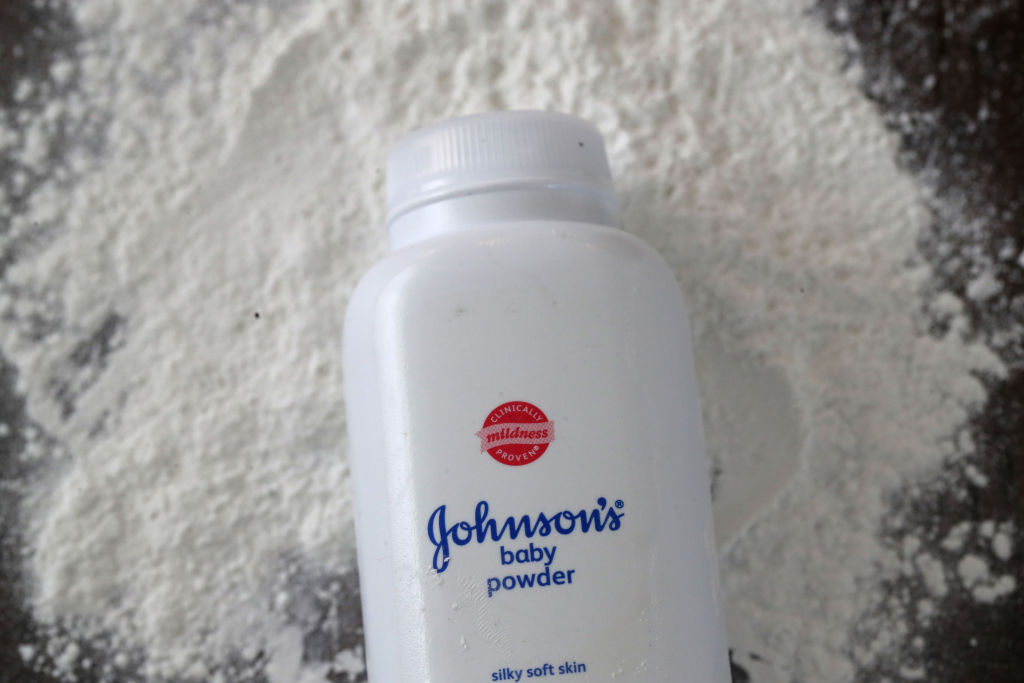
Johnson & Johnson, on Monday (July 27), agreed to pay about $5.5 billion to settle tens of thousands of remaining lawsuits alleging that the company’s baby powder and other talc products caused ovarian cancer. If the agreement is successfully passed, it is expected to put an end to the legal disputes that have plagued the company for a decade.
The settlement covers approximately 76,000 claims, including cases consolidated in federal court in New Jersey and related state court actions. The agreement requires approval from 95% of the ovarian cancer claimants to take effect.
Johnson & Johnson announced on its official website that the initial compensation is expected to be paid in 2027, not exceeding $3 billion, with no further payments required until 2028, and the remaining compensation will be settled thereafter.
The plaintiff’s law firm confirmed the agreement, describing it as a positive outcome after a decade of courtroom battles.
Though the settlement sets a specific value for eligible ovarian cancer claims, there is no cap on Johnson & Johnson’s total compensation amount, potentially leading to higher payouts. Additionally, the agreement only applies to existing claims and does not cover future lawsuits.
Chris Seeger, a lawyer representing about 2,500 talc powder claimants and involved in the negotiations of the agreement, stated that Johnson & Johnson could ultimately pay $7 billion or more in compensation.
Seeger pointed out that excluding future claims allows current plaintiffs to receive more compensation and shortens Johnson & Johnson’s payment terms to 18 months, rather than spread out over more than a decade.
Michelle Parfitt, a partner at Ashcraft & Gerel LLP, the co-lead counsel for the plaintiffs, emphasized, “Without the courage and determination of these women and their families to hold Johnson & Johnson accountable, this resolution would not have been possible.”
The settlement comes after a series of legal victories for Johnson & Johnson in court, such as individual trial wins, successfully disqualifying some plaintiff attorneys (like the MDL case in New Jersey in March 2026, prohibiting Beasley Allen from representing talc-related cases), and recent court rulings rejecting plaintiffs’ expert witnesses for failing to definitively prove that talcum powder caused ovarian cancer.
Erik Haas, Vice President of Global Litigation at Johnson & Johnson, stated that plaintiffs withdrew experts in two landmark cases in the field because they could not demonstrate a “specific causal relationship” between talc products and ovarian cancer.
He emphasized that the company has prevailed in the vast majority of ovarian cancer cases tried to date, demonstrating the lack of scientific basis behind these claims, and the settlement is aimed at bringing closure to the issue and allowing the company to focus on drug and device development.
For over a decade, many have accused Johnson & Johnson’s baby powder (talc) products of containing asbestos fibers, leading users to develop mesothelioma (related to prolonged asbestos exposure) or ovarian cancer.
Although Johnson & Johnson has consistently maintained that its products are asbestos-free and do not cause cancer, they ceased selling talcum powder baby powder in the United States in 2020, opting for a cornstarch formula instead.
To address the massive claims, Johnson & Johnson had attempted three times to use the “Texas two-step” strategy to transfer litigation to shell companies and file for bankruptcy to compel a settlement.
In a bankruptcy attempt in 2024, Johnson & Johnson offered over $8 billion in settlement to the plaintiffs, but the court ruled that the company’s financial health did not qualify for bankruptcy, ultimately returning the case to regular litigation proceedings. Johnson & Johnson continued to fight in court until reaching this agreement.