
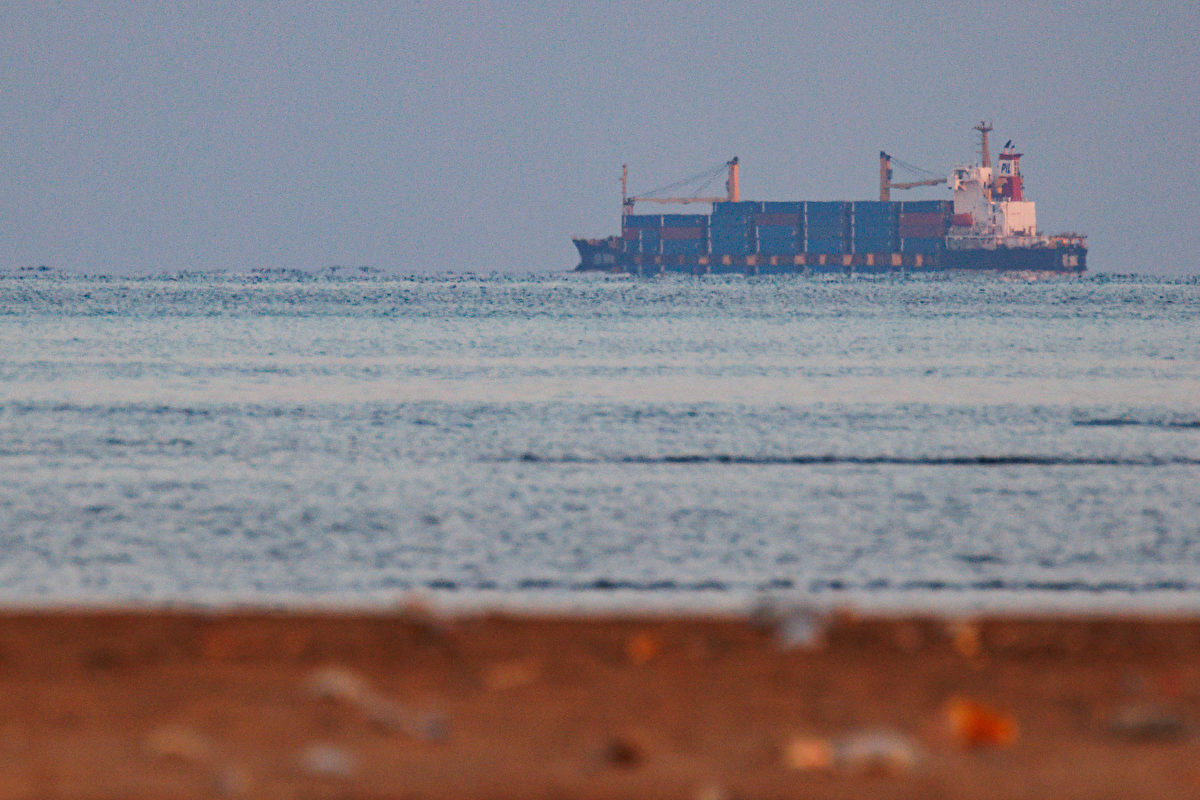
Saudi Arabia is increasing its crude oil transportation through the Suez Canal in Egypt, bypassing Africa for export to Asia, as both the Strait of Hormuz and the Bab el-Mandeb strait have been blocked consecutively.
This decision comes in response to disruptions in the shipping routes of the Strait of Hormuz and the Bab el-Mandeb strait. The ongoing conflict between the United States and Iran led Saudi Arabia to divert most of its Persian Gulf oil exports to the port of Yanbu in the Red Sea. However, recent attacks by the Houthi armed group on commercial ships in the Red Sea have escalated security concerns along the Bab el-Mandeb strait, prompting Saudi Arabia to further shift its crude oil exports towards the Suez Canal.
While Saudi Arabia has previously used this route, it has never been the primary export channel in decades past. Unlike the 1970s and 1980s, when Saudi Arabian crude oil was predominantly exported to Europe and the United States, Asia has now become its largest buyer. With the inability to pass through the Bab el-Mandeb strait en route to Asia, oil tankers are now required to transit through the Suez Canal into the Mediterranean Sea, circumnavigate the Cape of Good Hope in Africa, and then sail towards Asia, significantly prolonging the journey.
According to data from the shipping analysis firm Kpler and the London Stock Exchange Group (LSEG), a tanker sailing from the Red Sea port of Yanbu in Saudi Arabia to Taiwan through the Bab el-Mandeb strait typically takes around 19 days. When rerouted through the Suez Canal, the journey is expected to extend to approximately 48 days.
With this extended route, the fuel costs for each tanker are estimated to increase from around $1.26 million to $2.87 million, with a fuel cost increase alone of about $1.61 million. In addition, a transit fee of approximately $1 million is required when passing through the Suez Canal, resulting in an overall increase of about $2.5 million in transportation costs per trip.
Furthermore, the energy consultancy firm Energy Aspects has pointed out that due to draft restrictions in the Suez Canal, large supertankers cannot pass through fully loaded and must navigate in a partially loaded state. They will have to reload crude oil in the Mediterranean Sea, further increasing logistics complexity and costs.
Currently, Saudi Arabia can utilize the Sumed pipeline, approximately 320 kilometers long, to transport some crude oil from Ain Sokhna on the coast of the Red Sea to the Sidi Kerir port on the Mediterranean Sea to avoid restrictions on large oil tankers imposed by the Suez Canal.
However, Saudi Arabia’s daily crude oil export volume is around 7 million barrels, while the pipeline’s daily transportation capacity is only about 2.5 million barrels, making it unable to entirely replace seaborne capacity.
The Strait of Hormuz and the Bab el-Mandeb strait are crucial strategic passages for global energy transportation. With these two maritime chokepoints being affected by regional conflicts, the rising costs of crude oil transportation continue to exacerbate global concerns about the stability of Middle East oil supplies, further complicating the global energy market.