
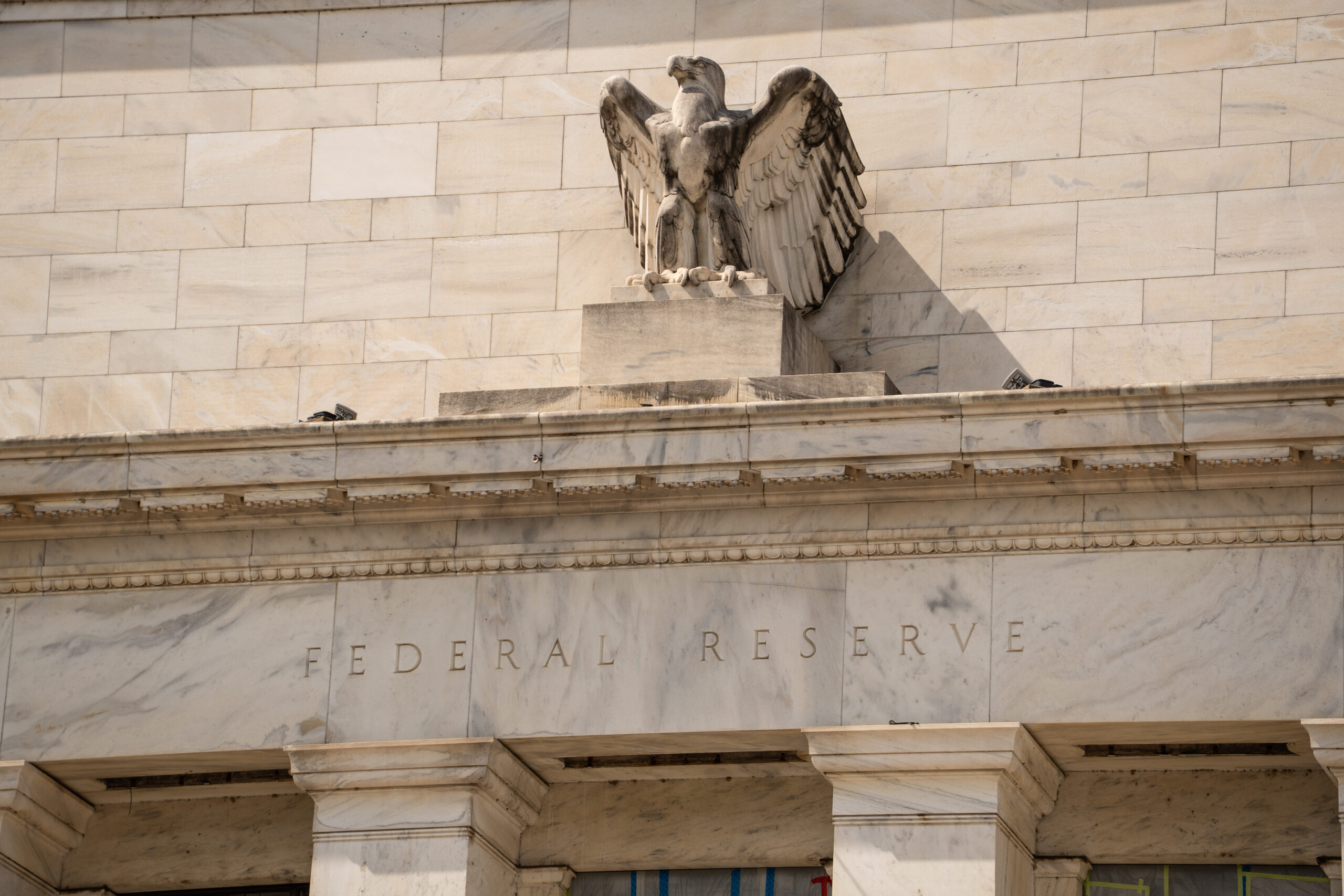
Recently, Federal Reserve Chairman Kevin Warsh has been pushing for reforms, resulting in the market receiving less information from the Fed than before. A survey shows that nearly 80% of economists believe that the Fed will keep interest rates unchanged in the three rate-setting meetings before the end of this year.
One significant change in the Fed’s approach is the weakening or even elimination of “forward guidance” on future policy paths. Opponents are concerned that reducing forward guidance could decrease policy transparency and increase market volatility. On the other hand, supporters of the reform argue that excessive reliance on forward guidance could lead investors to form inaccurate certainty expectations about policy paths. When economic conditions change, the Fed would then be forced to swiftly adjust its policies, potentially causing even greater market disruptions.
An article published by The Wall Street Journal on August 17 pointed out that under Warsh’s leadership, the Fed’s communication strategy has become more “silent.” Compared to a year ago, the post-FOMC (Federal Open Market Committee) statements have reduced by about 49%, meeting minutes by about 24%, and public speeches by Fed governors by about 27%. At the same time, Warsh has been avoiding clear hints on future policy paths during post-FOMC press conferences.
This adjustment signifies that the Fed is providing less public information regarding future interest rate directions, allowing the market to rely more on real-time economic data to assess policy directions.
Despite the hawkish stance revealed by several Fed officials in July, leading to high market expectations of a rate hike in September, recent U.S. economic indicators such as a decrease of 23,000 jobs in non-farm payrolls in July, a 0.6% monthly decline in retail sales, and a drop in CPI to 3.4%, have significantly elevated the probability of the Fed maintaining rates unchanged at around 69% for the September meeting.
The Fed will announce rate decisions after the meetings on September 15-16, October 27-28, and December 8-9. A survey indicates that nearly 80% of economists believe that rates will remain unchanged in all these meetings.
In a survey conducted by Reuters from August 12 to 17 with 104 economists, around 90% predicted that the Fed would maintain the federal funds rate target range at 3.50% to 3.75% at the September meeting, in alignment with the July survey results.
Around 80% of the economists also forecasted that the Fed will not adjust rates before the end of this year. However, 22 economists predicted at least one rate hike this year, with only 2 predicting a rate cut. The median forecast suggests that the Fed may keep rates at their current levels until the end of 2027.
Ryan Wang, a U.S. economist at HSBC, highlighted that the current policy debate focuses on the necessity of a rate hike. Although the July inflation data remained neutral, recent economic indicators showing a slight slowdown in growth might lead more FOMC members to adopt a wait-and-see approach rather than supporting an immediate rate hike.
Some market participants believe that the Fed could potentially raise rates as early as September, including some major traders. Stephen Stanley, Chief U.S. Economist of Santander Bank Group, mentioned that the FOMC’s debate in September will entirely depend on the inflation outlook. He estimated that the annualized growth rate of the core Personal Consumption Expenditures (PCE) price index may approach 3%, which he deemed as “not good enough,” thus still expects a rate hike in September.
Economists forecast an average core inflation rate of 3.5% for this year, consistent with last month’s survey, and it is expected to remain above the Fed’s 2% policy target at least until before 2028. The Fed will also receive a report on the PCE price index and non-farm payrolls before the September meeting, which could be crucial factors influencing officials’ positions on the policy.