
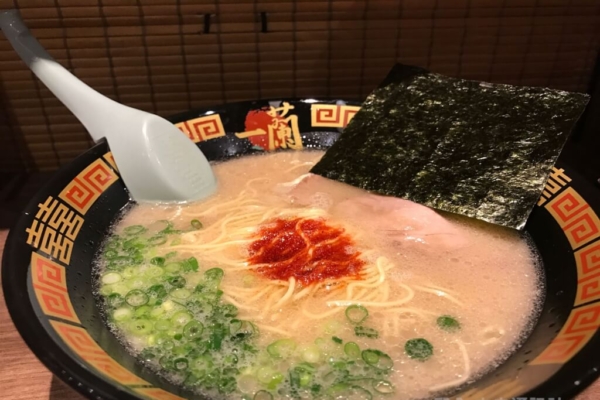
Recent News on “Ichran,” a Counterfeit Store of Japanese Ramen Brand “Ichiran,” has been a hot topic in Beijing, China. The store, named “本日一蘭拉麵,” mimicked the original “Ichiran” from its signage, logo to interior design, sparking discussions online. After the incident was exposed, the store was found empty. The Japanese headquarters of Ichiran stated that their legal department is handling the matter and legal actions are not ruled out.
The incident originated around May 13 when photos shared by netizens on social media platforms revealed the opening of “本日一蘭拉麵” in a Beijing shopping mall. The appearance of the store bore a striking resemblance to the Japanese “Ichiran,” quickly gaining attention online.
The counterfeit store’s signage adopted a similar red, green, black color scheme with a Japanese design, and the words “一蘭” were almost identical in size and font to “Ichiran,” only with a slight discrepancy in the English spelling from “ICHIRAN” to “ICHRAN,” missing the second letter “I.” The establishment date was altered from “Established in Showa 35” to “Established in the 65th year of the country,” with subtle differences but making it nearly indistinguishable at first glance.
Despite Ichiran having overseas branches in Taiwan, Hong Kong, and the United States, it has yet to open a store in China. Therefore, the revelation of this Beijing store immediately raised suspicions of counterfeiting.
Local residents of Fukuoka quickly noticed the discrepancies, pointing out not only errors in English spelling but also the notable differences in ramen ingredients from the authentic Ichiran, including soft-boiled eggs, dried bamboo shoots, Naruto fish cakes, and even corn, which are not common in Ichiran’s ramen.
This is not the first time a fake Ichiran has emerged in China. In 2018, a store called “蘭池” appeared in China, claiming to be a “specialized natural pork bone ramen shop,” replicating Ichiran’s exclusive individual booth seating, ticket machines, water facilities, and even a menu where customers could select the hardness of noodles and spiciness, nearly fooling everyone.
However, according to Japanese visitors who dined there, even when ordering hard noodles, the served noodles were still soft, the broth greasy and lukewarm, saying, “to be honest, it’s not tasty.” They believed that regardless of the imitation in appearance and system, reproducing the flavor of Ichiran is not easy.
The feedback for this recent Beijing “本日一蘭拉麵” was equally unsatisfactory. On a Chinese delivery platform, a bowl of ramen was priced at 42.1 Chinese yuan, and the product photos even resembled the official ones, including the placement of spring onions and char siu.
However, the customer reviews were overwhelmingly negative, with some bluntly stating, “It’s too terrible, not even comparable to instant noodles,” and others complained about the meat having a sour taste, making them scared to eat it, eventually spitting it out.
Many Chinese consumers have already experienced the true taste of Ichiran in Japan, therefore they can easily distinguish these knock-off stores.
When Kyushu Asahi Television visited the Beijing store on May 20, they found the place deserted with only kitchen utensils and delivery packaging littered around. Nearby businesses mentioned, “They were operating yesterday, but today there’s no sign of anyone.” The delivery platform page was also taken down.
In response, the operating company of Ichiran stated that they are aware of the situation, currently being confirmed and handled by the legal department, refraining from providing further details. Ichiran emphasized that all their stores, domestically and overseas, are operated directly and have never entertained franchising or cooperation for expansion.
In the face of recurrent counterfeit stores over the years, the Beijing counterfeit incident raises concerns about potential legal ramifications and has garnered attention from the public.