
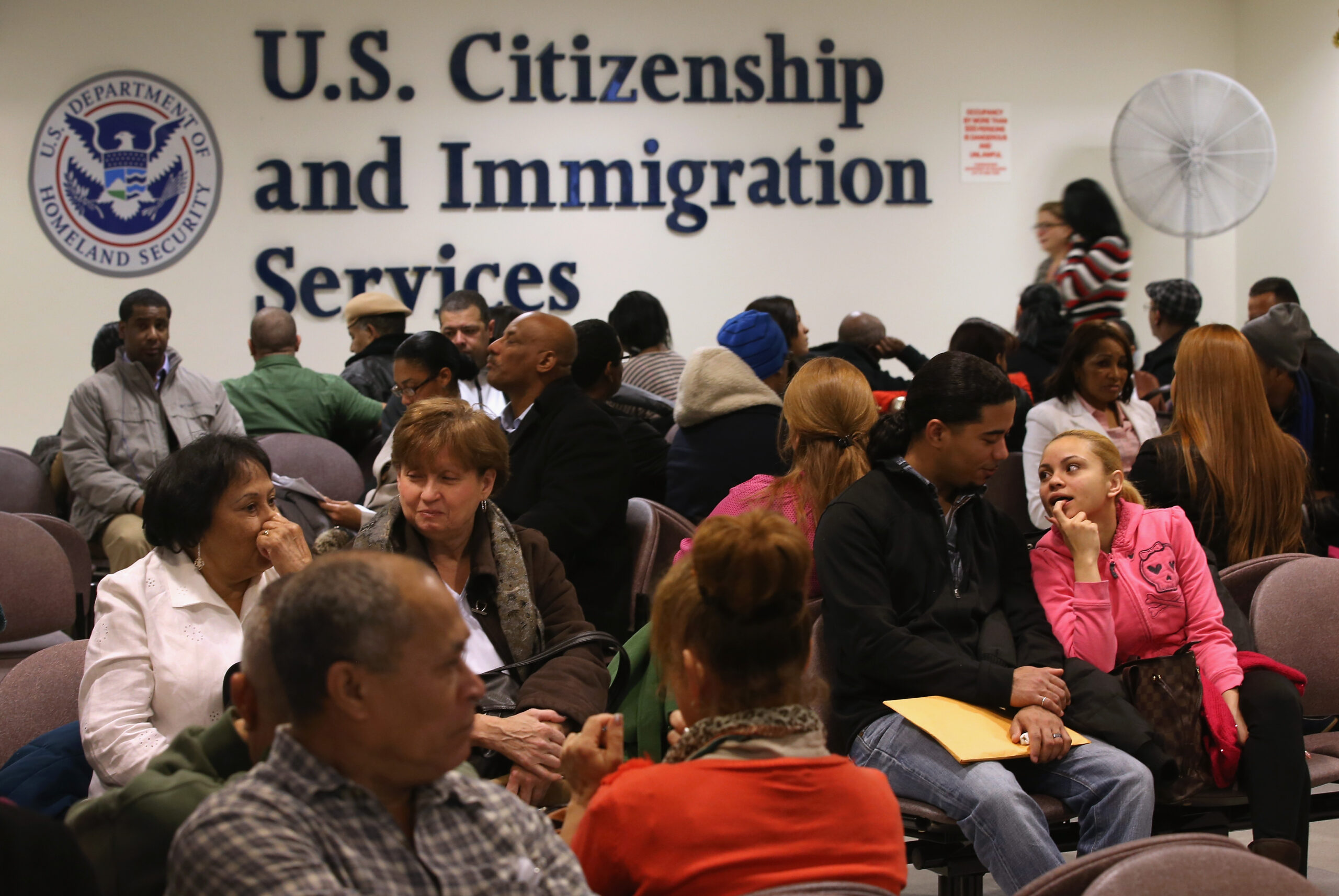
The U.S. Citizenship and Immigration Services (USCIS) announced last Friday, August 14, that the new versions of Form I-539 (Application to Extend/Change Nonimmigrant Status) and Form I-765 (Application for Employment Authorization) will be officially implemented on September 15, replacing the old forms issued on August 28, 2024, and August 21, 2025, respectively.
This move is in line with the previously published final rule on “Establishing a Fixed Period of Admission and an Extension of Stay Procedures for Nonimmigrant Academic Students, Exchange Visitors, and Foreign Information Media Representatives,” aiming to transition from the current system of “Duration of Status” (D/S) for nonimmigrant visa categories F, J, I, which allows individuals to stay as long as they maintain their status, to a fixed period of admission with specific end dates. This change is not intended to shorten the lawful stay of all F-1, J-1, I visa holders but rather to replace D/S with a fixed period designated by the government, requiring individuals to undergo a formal extension review to enhance immigration oversight, status verification, and national security control.
Generally speaking, which type of visa holders will be most affected by this change?
The first category includes H-4 visa holders, mainly referring to spouses and minor children of H-1B visa holders, particularly those who require H-4 EAD (Employment Authorization Document), as they often deal with both Form I-539 and I-765:
– I-539: Application to change or extend H-4 status;
– I-765: Application for H-4 EAD (work permit).
The USCIS explicitly allows H-4 spouses to submit Form I-765 along with I-539 together.
H-4 EAD is relatively sensitive under the current policy environment: most EAD renewal applications submitted after October 30, 2025, no longer enjoy the automatic extension of the longest 540-day work permit.
Therefore, for spouses relying on H-4 EAD for work, errors in form versions may result in resubmission, delays, and if the original EAD has expired, it could impact their employment.
The second category includes F-1 international students, especially those in OPT/STEM OPT programs.
They mainly deal with Form I-765, such as:
– Applying for OPT after graduation as an F-1 student;
– Extending STEM OPT.
Some status changes may involve Form I-539, but not all F-1 students need this form. The key is the I-765 form, rather than the I-539 form.
The third category encompasses others needing to change or extend nonimmigrant status through Form I-539:
– H-4 dependents;
– B-1/B-2 visa holders;
– Some F, M status applications;
– J-2 visa holders, etc.
The USCIS provides eligibility queries for online submission of Form I-539.
(This article referenced a report from “News Weekly”)