
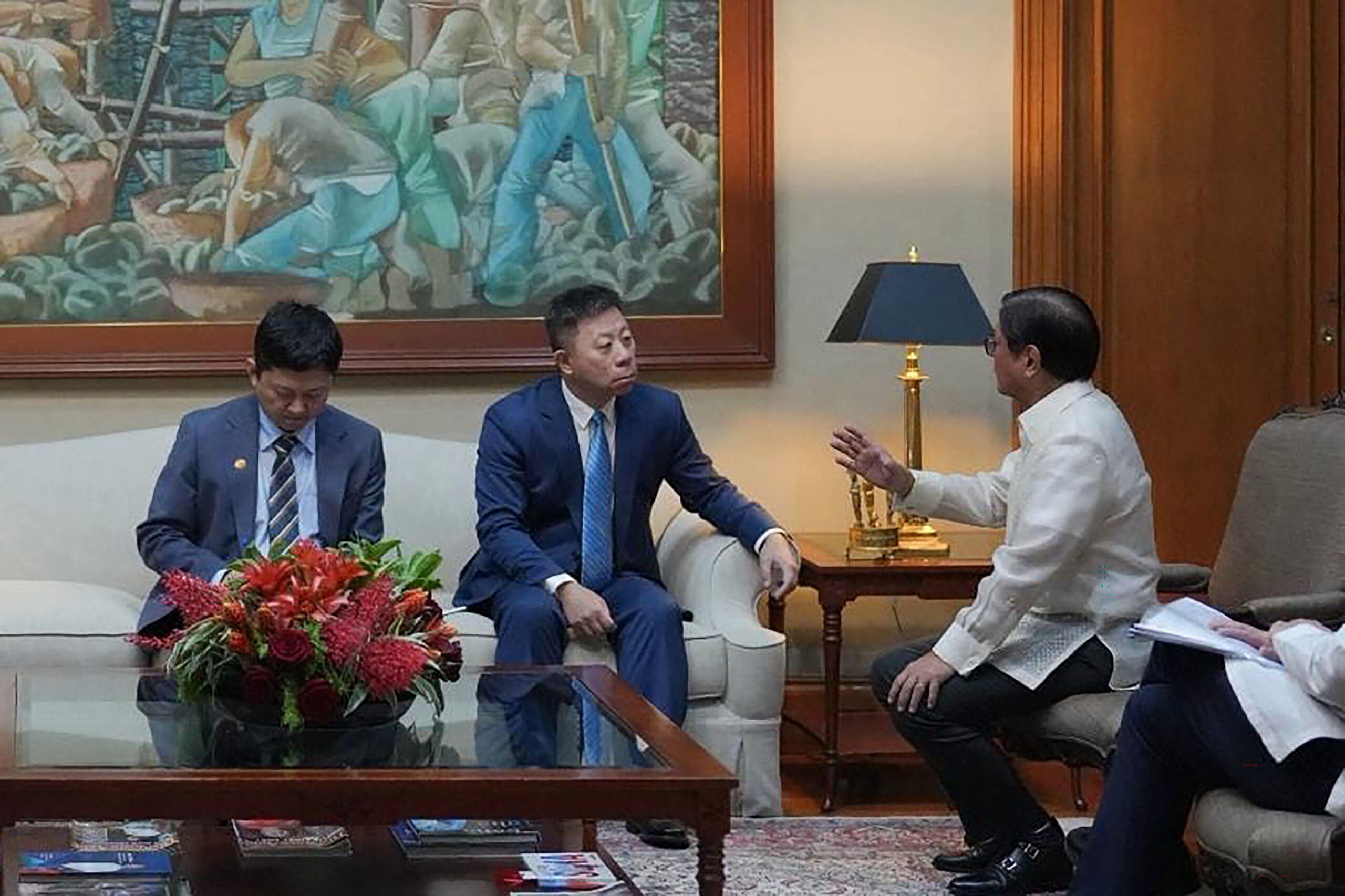
As tensions escalate between China and the Philippines over the recent conflict at the Ren’ai Reef in the South China Sea, an unusual diplomatic move was made. On Tuesday (July 21st), Filipino President Ferdinand Marcos Jr. met with the Chinese Ambassador to the Philippines, Jing Quan, at Malacañang Palace. Earlier that day, the Chinese Ministry of Foreign Affairs also summoned the Philippine Ambassador to Beijing.
Despite frequent maritime standoffs between China and the Philippines, the decision to “summon ambassadors” is considered rare, highlighting the rapid spread of the maritime conflict to the diplomatic level.
The conflict that occurred on Monday stemmed from an incident near the BRP Sierra Madre, a Filipino navy ship stranded at the Second Thomas Shoal in the South China Sea, where Chinese and Filipino vessels clashed. However, both sides provided starkly different accounts of the incident.
The Philippine Armed Forces (AFP) accused Chinese coast guard personnel of forcibly approaching the Filipino vessel, brutally assaulting two (previously reported as one) navy sailors with sticks and causing head injuries, as well as damaging a rubber boat. The Philippines released a video as evidence, with the Ministry of Foreign Affairs condemning such violent actions as “unacceptable.”
In response, the Chinese Coast Guard refuted the allegations, claiming that the Filipino rubber boat intentionally collided with the Chinese patrol boat and initiated a “malicious attack” by first using paddles and long sticks. The Chinese side stated that their coast guard acted within the law to safeguard their rights and emphasized that they allowed the transfer of injured Filipino personnel out of “humanitarian considerations.”
The Philippine military later rejected China’s humanitarian narrative as “false and misleading,” emphasizing the professionalism of Filipino personnel and denying any provocation.
This high-profile diplomatic negotiation between President Ferdinand Marcos Jr. and Ambassador Jing Quan is a rare occurrence since Marcos took office.
Previously, China had summoned the Philippine ambassador twice, once in January 2024 upon the Philippines congratulating Tsai Ing-wen on winning the Taiwan presidential election, and again in November 2024 when the Philippines enacted the Maritime Zones Act and the Archipelagic Sea Lanes Passage Act.
Reports indicate that the last time President Marcos Jr. met with a Chinese ambassador was in 2023 when a Chinese coast guard ship fired military-grade laser beams at a Philippine coast guard vessel.
The 59th ASEAN Foreign Ministers’ Meeting opened in Manila on Tuesday amidst the outbreak of this diplomatic conflict, with South China Sea security issues taking center stage.
Chinese Foreign Minister Wang Yi and U.S. Secretary of State Marco Rubio both attended the summit, along with representatives from Japan, Australia, the European Union, and other countries. Analysts point out that the increased frequency of physical clashes and diplomatic confrontations between China and the Philippines will significantly complicate crisis management and impact the long-delayed negotiations on the Code of Conduct in the South China Sea.