
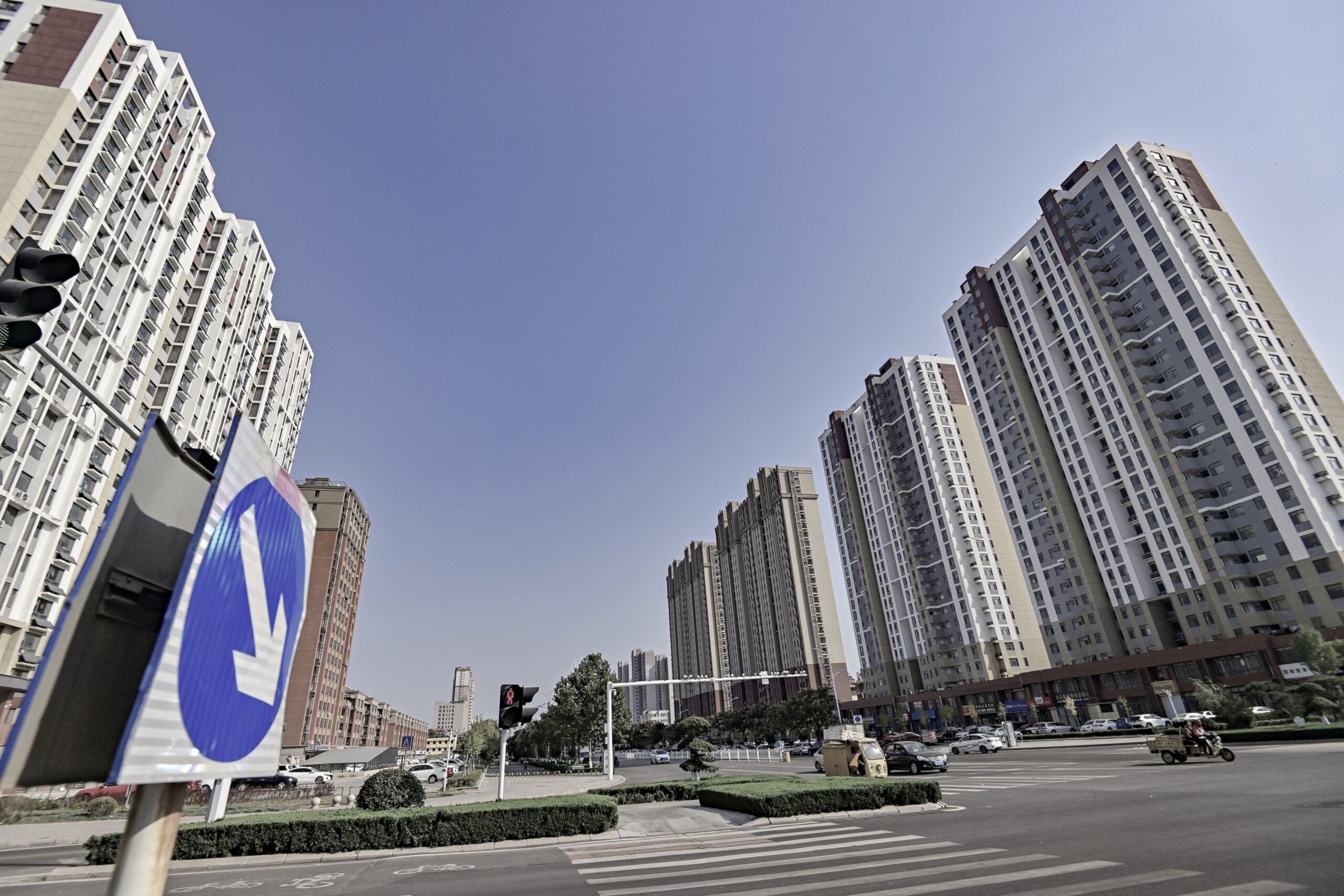
In recent years, the trend of “national advancement and private retreat” in the Chinese real estate market has further intensified. Since 2026, out of the top 10 real estate sales companies from January to July, state-owned enterprises have secured 9 positions, leaving only one spot for private enterprises such as Binjiang Group. This marks a significant reversal in the corporate landscape compared to 2019, where most of the top 10 spots were held by private enterprises.
Analysts point out that state-owned and state-holding enterprises have been expanding their advantages in sales and land acquisition due to higher credit ratings, lower financing costs, and policy support, while private enterprises have been facing further contraction under multiple pressures.
According to data from CEA, in the January to July 2026 top 10 real estate sales ranking in China, state-owned and state-holding enterprises occupy 9 spots, with only one spot for private enterprises.
The top 10 sales rankings are as follows: Poly Developments, China Overseas Land & Investment, China Resources Land, China Merchants Shekou, Greenland Holdings, China Fortune Land Development, China Jinmao, Yuexiu Property, Binjiang Group, and Vanke Real Estate. Among these, Binjiang Group, ranked 9th, is a private enterprise.
In the real estate industry sales amount statistics released by CRIC and other industry institutions, the number of state-owned enterprises in the top 10 in 2019 was only 4, while private enterprises accounted for 6 and held the top 4 positions (Country Garden, Vanke, China Evergrande, and Sunac China). Private enterprises not only outnumbered state-owned enterprises but also held a dominant position in the industry ranking.
However, in the 2026 ranking, only Binjiang Group, ranked 9th, was a private enterprise, while the other 9 were state-owned enterprises. This significant change in corporate nature compared to 2019 highlights the increasing differentiation within China’s leading real estate companies.
Financial news source Sina believes that the internal differentiation within China’s leading real estate companies is intensifying, with state-owned and state-holding enterprises showing strong performance and increasing their dominance, while other types of companies are facing continued squeeze.
Recent years have witnessed a strengthening trend of “national advancement and private retreat” in the Chinese economy, as the Chinese government has been vigorously supporting state-owned and state-holding enterprises while imposing stricter regulations on specific industries such as technology, education, and finance.
The rankings in the real estate market from January to July 2026 indicate a dramatic push towards “national advancement and private retreat,” leading to a historic reversal in the corporate landscape of the real estate market in China.
Amid the increasingly sluggish real estate market, how can state-owned and state-holding enterprises displace the previously leading private enterprises and dominate the industry in both sales and land acquisition?
According to industry expert Mike Li, one of the key factors contributing to the rapid growth of state-owned and state-holding enterprises is the significantly reduced financing costs compared to previous years. They are able to access ultra-low financing rates that are difficult for private enterprises to obtain, giving them a unique advantage.
A report by Securities Times on August 15th stated that due to the pressure of economic slowdown, the main financing price indicators in China are currently at low levels. The average interest rate for corporate loans and individual home mortgages has dropped from around 5%–6% to about 3%, while the interest rate for 5-year AAA-rated corporate bonds has decreased from around 4%–5% to approximately 1.8%.
The top state-owned enterprises in the real estate rankings from January to July in 2026, such as Poly Developments, China Overseas Land & Investment, China Resources Land, China Merchants Shekou, and Greenland Holdings, generally have higher credit ratings, enabling them to access discounted low-rate financing.
According to WIND data, the financing costs of listed real estate companies (core stocks) in China are mostly below 2.5%. For instance, China Merchants Shekou has a financing cost of 1.86%, Shanghai Lujiazui Group at 1.88%, China Railway Construction at 2.04%, and China Railway Engineering at 2.11%, while Poly Developments is at 2.24%. These companies are all either state-owned or state-holding enterprises, enjoying a significant advantage in financing due to their high credit ratings.
The fast-paced expansion of state-owned and state-holding enterprises and their gradual control of the Chinese real estate market can be attributed to the stability-oriented policy direction set by the Chinese Communist Party. These enterprises opportunistically acquired land during market downturns while also stabilizing low prices and preventing further decline in the real estate market.
In the “land acquisition rankings” of the Chinese real estate companies from January to July 2026, only Binjiang Group, ranked 7th, was a private enterprise. The other 9 companies were state-owned or state-holding enterprises, mirroring the distribution of company types in the “sales rankings.”
State-owned enterprise Poly Developments, topping the land acquisition ranking, acquired land worth 58 billion yuan, while state-owned China Resources Land secured 41 billion yuan and regional state-holding company Yuexiu Property obtained 29.6 billion yuan.
According to a report by the Luhu News, in the first half of 2026, state-owned and state-holding enterprises engaged in an intense competition in the land market, leading to many real estate companies disappearing from the rankings and creating a fiercely competitive land market.
In June 2026, Poly Developments acquired Bao’an Central District in Shenzhen for 10.51 billion yuan, making them the top land acquirer.
As reported by Fengkuai Financial, the veteran real estate company Golden Land Group saw a year-on-year sales decline of 41.86% in July 2026, resulting in nearly 3 billion yuan in losses for the first half of the year.
Golden Land Group is a large comprehensive real estate listed company headquartered in Shenzhen and is classified as a mixed-ownership private enterprise, without an absolute state-owned background.
Golden Land Group, previously part of China’s top-tier real estate companies along with China Merchants, Poly, and Vanke, collectively known as the “Zhao-Bao-Wan-Jin” group, has experienced a decline in rankings and financial performance.
According to data released by PwC, in July 2026, the total monthly sales amount of China’s top 100 real estate companies was 196.3 billion yuan, representing a year-on-year decrease of 13.3% and a month-on-month decrease of 39.6%. Compared to the industry average, Golden Land Group’s decline was 3.2 times sharper.
In the China Top 100 real estate company rankings, Golden Land Group dropped to the 36th position in the first half of 2026.
Data from 2026 revealed that Golden Land Group, though still within the “China Top 500”, dropped from 241st in 2025 to 401st in rank, descending from 212th in 2024 and 118th in 2017.
While Golden Land Group did not experience the drastic rise and fall seen with giants like China Evergrande, it has shown a gradual decline in the industry and ranking lists amidst the rapid development of state-owned and state-holding enterprises.
The wave of debt defaults among Chinese real estate companies began after the introduction of the “three red lines” policy by the Chinese government in 2020, targeting financial indicators of real estate developers. This led to over 70 real estate companies experiencing debt defaults in 2021 and 2022, with the total debt surpassing 5 trillion yuan, pushing many developers to the brink of bankruptcy.
Major real estate developers such as Evergrande and Sunac faced crises, resulting in unfinished projects and a sluggish market, leading to a chain reaction of bad debts and financial distress. This shadow continues to loom over the Chinese economy.
Following the wave of debt defaults among Chinese real estate companies, financial institutions significantly shifted their loans towards state-owned and state-holding enterprises, which, enjoying higher credit ratings (AAA-rated), benefited from extremely low discount rates and stronger financial support.
In July 2024, the Central Committee of the Chinese Communist Party proposed strategies to digest existing supply, optimize new supply, support the acquisition of existing commercial housing for affordable housing, and accelerate the development of a new model for real estate.
Mike Li mentioned that local governments heavily rely on land finances, and as private real estate companies are reducing their land reserves, state-owned and state-holding enterprises have essentially taken on the task of propping up land prices and preventing a continuous collapse in prices. Through this process, the roles of private enterprises and state-owned enterprises in the Chinese real estate market have undergone a significant transformation.