
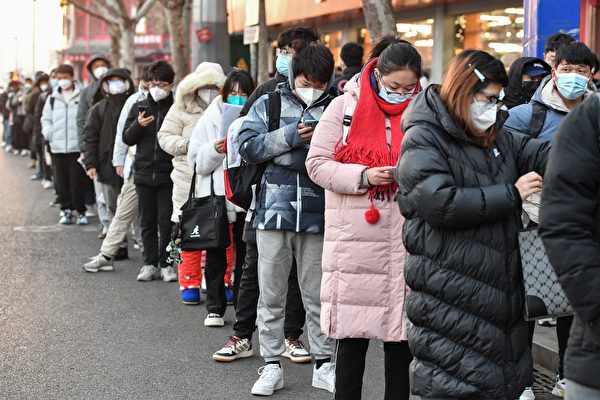
The number of applicants for the postgraduate entrance exam in China has decreased for the second consecutive year. Against the backdrop of scarce job opportunities for young people, interest in pursuing a postgraduate degree is waning, indicating a critical turning point in the mindset of university students.
According to data released by the Chinese Ministry of Education on the 21st, the number of applicants for the 2025 postgraduate entrance exam is 3.88 million, a decrease of 500,000 from 2024 (4.38 million), a decline of 11.4%, and a decrease of 18.1% from 2023’s 4.74 million.
Despite the decrease in postgraduate exam takers, the number of candidates for civil service exams this year has reached a new high, with an increase of over 220,000 compared to the previous year. The competition ratio has also risen from 76.51:1 last year to 82.07:1, further intensifying the competition pressure.
On mainland Chinese social media, discussions on “cooling down of postgraduate exams,” “critical turning point in postgraduate exams enthusiasm,” and “the second decrease in postgraduate exam takers in a decade” have quickly become hot topics, with netizens posting and discussing their thoughts.
Statements such as “Many around me took loans and started working without pursuing postgraduate studies” and “For many, postgraduate studies mean delaying employment, and there is still a high possibility of unemployment after completing the studies” reflect the sentiments of some individuals regarding postgraduate education.
The high costs associated with pursuing postgraduate studies, coupled with the uncertain job market, have led to a shift in perceptions among students and parents regarding the value and viability of investing in postgraduate education. The diminishing returns of postgraduate degrees in the current economic climate have raised concerns among the public.
Some individuals have pointed out that the oversaturation of master’s degree holders has diminished the value of such qualifications in the job market. The necessity of additional years of study and the associated costs have also been factors contributing to the declining interest in postgraduate education.
The shift towards prioritizing practical experience over academic qualifications has impacted the job prospects for postgraduates, with more emphasis being placed on the employability and practical skills of undergraduate graduates by employers.
The job market dynamics in China have also influenced the preferences of companies, with an increasing trend of hiring undergraduate candidates over postgraduates due to lower salary expectations and a greater focus on practical skills.
The challenges faced by postgraduates in securing stable employment opportunities have led to a decrease in demand for master’s graduates, especially in state-owned enterprises grappling with financial constraints imposed by local governments.
In light of the economic downturn in China, private enterprises are facing difficulties, resulting in fewer job opportunities and increased competition among job seekers, including postgraduates.
The increasing awareness of the challenges and uncertainties associated with postgraduate education has led many individuals to reevaluate the value and potential returns on investment in pursuing advanced degrees.
While the number of university graduates in China continues to rise, the job market remains competitive, with an increasing number of graduates entering the workforce each year.
Meanwhile, the persistently high youth unemployment rate in China has added to the challenges faced by young graduates, amplifying the pressure on both undergraduate and postgraduate job seekers in finding employment opportunities.
The overall situation of high unemployment rates, coupled with a surplus of graduates, has created a significant strain on the job market, exacerbating the employment prospects for recent graduates in China.
The uncertainties in the job market and the evolving dynamics of the education sector have highlighted the need for a reassessment of traditional career paths and educational pursuits among Chinese youth.
As individuals navigate the complexities of the job market and economic landscape, the changing perceptions towards postgraduate education reflect broader societal shifts in aspirations, expectations, and career prospects.
In conclusion, the evolving trends in postgraduate education and employment patterns in China underscore the challenges and opportunities that lie ahead for the country’s workforce and education system. The current landscape calls for a reevaluation of educational investments and a reimagining of career trajectories to adapt to a rapidly changing job market and economic environment.