
International gold prices have once again dropped below $4,000 per ounce, causing some Chinese investors who chased the high at the beginning of the year to be trapped. Some have invested over 390,000 yuan, with current floating losses of about 100,000 yuan; while others check the market dozens of times a day, struggling between setting a stop-loss and continuing to add positions.
On the evening of July 16, spot gold prices in London hit a low of $3,973.41 per ounce, a nearly 30% drop from the year-high of $5,598.75 per ounce on January 29. The price of gold investments in China has also fallen to around 880 yuan per gram.
According to a report by “China Finance and Economics”, an investor named Yan Yan bought 200 grams of bank gold investment products in mid-January for about 1,150 yuan per gram. As the price of gold continued to rise, she added at around 1,200 yuan per gram twice, eventually holding over 330 grams of gold with a total investment exceeding 390,000 yuan, at an average cost of about 1,180 yuan per gram.
Yan Yan said that social media platforms were filled with claims such as “gold is entering a major bull market” and “prices will rise to $6,000 by the year’s end,” in addition to seeing news of central banks around the world continuing to purchase gold. She believed that gold served as a safe-haven asset and that prices would continue to rise.
Based on an estimated price of around 880 yuan per gram, Yan Yan is facing a loss of around 300 yuan per gram, with floating losses of about 100,000 yuan. She mentioned that selling now would turn her years of savings into actual losses, and continuing to buy in to lower the average cost comes with worries that gold prices have not yet reached their bottom.
Another investor, Liu Tian, was also influenced by short video platforms. She saw some financial bloggers showing screenshots of “earning 20% monthly by investing in gold” and compared buying gold now to buying a house over a decade ago. She then bought 100 grams of bank accumulation gold at around 1,100 yuan per gram, and later purchased 50 grams of physical gold bars at around 1,230 yuan per gram.
After the gold price dropped, Liu Tian bought 20 grams of gold bars at around 888 yuan per gram in an attempt to average down the cost. Currently, she holds a total of 170 grams of gold, with an average cost of about 1,113 yuan per gram. Calculated at 880 yuan per gram, her floating losses are still close to 40,000 yuan.
Liu Tian mentioned that as the gold price continued to fall, she checks the market dozens of times a day, feeling reluctant to sell at a loss yet worried that continuing to add positions would further expand the losses.
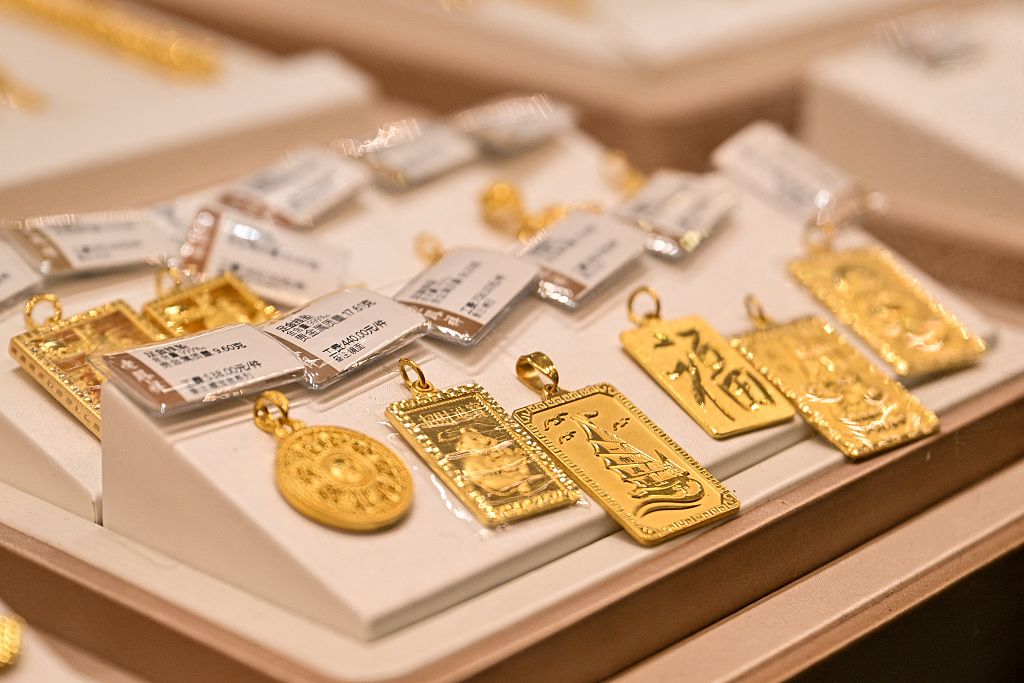
The prices of Chinese brand gold jewelry have also notably declined from their highs. On July 14, brands such as Chow Tai Fook and Lao Miao quoted approximately 1,217 yuan per gram for 24k gold jewelry, and brands like Lukfook quoted around 1,215 yuan per gram. Some brands had prices nearly reaching 1,700 yuan per gram earlier in the year, but have now dropped by nearly 30%.
Data from the Shanghai Gold Exchange shows that on July 15, Au99.99 gold (physical spot contracts with a gold fineness of not less than 99.99%) closed at 877.99 yuan per gram, about a 30% drop from the year-high of 1,256 yuan per gram.
“China Finance and Economics” cited Wang Hongying, director of the China (Hong Kong) Institute of Financial Derivatives Investment, stating that the previous rise in oil prices heightened concerns about inflation, leading the market to bet that the Federal Reserve still had room to raise interest rates. The actual yield of U.S. bonds and the strength of the U.S. dollar have exerted pressure on gold prices; simultaneously, the support for safe-haven assets due to geopolitical conflicts has weakened.