
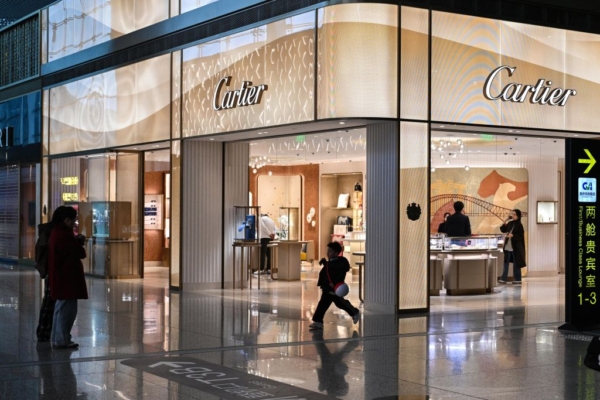
Swiss luxury goods group Richemont’s jewelry brand Cartier has closed 5 mainland stores this year. Senior executives of Richemont acknowledged that in recent years, the group was overly optimistic about the mainland market, with some brand stores expanding too quickly. They are currently in the process of reorganizing their store network.
According to a report by “Changsha Evening News” on June 2, Richemont recently announced its financial performance for the 2026 fiscal year ending March 31, 2026, with total sales increasing by 5% to 22.5 billion euros, and net profit increasing by 27% to 3.5 billion euros.
In terms of business sectors, including the jewelry department brands such as Cartier, Van Cleef & Arpels, and Buccellati remain the main sources of revenue for Richemont. The report states that the department’s annual sales increased by 8% to 16.54 billion euros, while sales of the professional watchmaking department decreased by 4%.
However, in the mainland market, the number of Cartier stores has been reduced. The report stated that in the first quarter of 2026, Cartier closed 5 stores on the mainland, marking a rare concentrated store closure action for the brand in the mainland market in recent years.
Richemont CEO Nicolas Bos mentioned in a financial conference call that in the past few years, both the group and its competitors were overly optimistic about the mainland market, leading to some brands expanding too quickly due to their previous success in the mainland market. With the decline in luxury goods consumption in mainland China, Richemont has begun to re-examine its market layout in China and is shrinking its store network.
Luxury brands contracting their stores in mainland China is not an isolated case. Reuters reported in April this year that the CEO of Kering Group, the parent company of Gucci, stated that Gucci needs to rebuild its position in the Chinese market. The brand acknowledged that it had previously considered the Chinese market as an easy growth market, and that there were issues with some store locations and retail experiences. According to industry media “Jing Daily,” Kering plans to reduce the scale of Gucci’s stores in China.
Apart from luxury goods, some foreign consumer brands have also been adjusting their operations in mainland China. General Mills, the American food company, announced on June 1 that it has reached an agreement to sell Häagen-Dazs ice cream stores and gift business in mainland China to an investment group including the tea brand Lele ji. The deal is expected to be completed by the end of 2026. General Mills will continue to supply Häagen-Dazs in mainland China through retail and catering channels.
As reported by the Chinese media “Fast Technology,” as of May 29, 2026, Häagen-Dazs had 171 stores in mainland China, a decrease of 92 from June 2025. The brand had about 600-700 stores globally in September 2021, with around 400 in the mainland market.
Another foreign food and beverage brand, “Food Republic,” will also close its last store in Beijing. According to “South China Morning Post” on June 2, Singaporean food group BreadTalk’s food court brand Food Republic will close its store at Wangfujing Oriental Plaza in Beijing on June 15. After the closure of the Beijing store, Food Republic will have only 4 remaining stores in mainland China, all located in Shanghai.