
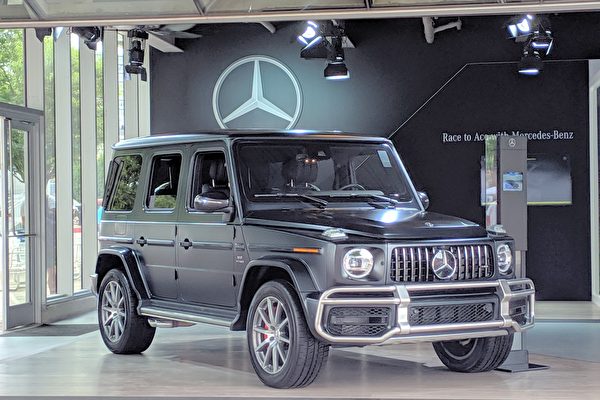
Mercedes-Benz, the German luxury car manufacturer, faces potential operational impacts due to the ownership structure of its largest shareholder. The Beijing government-backed automotive manufacturer, BAIC Group, holds a significant stake in Mercedes-Benz, alongside a Chinese billionaire, collectively owning over 15% of the company. This ownership structure could trigger new regulations proposed in the U.S. Congress, affecting Mercedes-Benz’s current operations.
The Motor Vehicle Modernization Act of 2026, passed by the U.S. House Energy and Commerce Committee, aims to prohibit any automotive manufacturer with direct or indirect ownership by foreign hostile governments from importing, selling, or manufacturing vehicles in the United States. Countries like China, Russia, and North Korea fall under the category of “foreign hostile” nations.
The legislation provides exemptions for companies with Chinese investments if they have been producing passenger cars in the U.S. for at least five years before January 1, 2026. However, the law specifies that such exemptions do not apply if the company has any ownership ties to foreign hostile governments. The Act also restricts companies controlled by foreign hostile nations, defining control as holdings exceeding 15% by foreign individuals.
Mercedes-Benz’s largest single shareholder is BAIC Group, a state-owned enterprise with Beijing State-owned Assets Supervision and Administration Commission as its controlling shareholder, indicating potential influence from the Chinese Communist Party government targeted by the new legislation.
The second-largest shareholder is Chinese billionaire Li Shufu, founder and chairman of Geely Automotive Holdings. Through his investment holding company, Tenaciou3 Prospect Investment, Li Shufu holds a 9.69% stake in Mercedes-Benz. Given the industrial and political landscape in China, this ownership structure could suggest indirect connections to the Chinese government.
BAIC Group and Li Shufu collectively hold 19.67% of Mercedes-Benz Group AG, the parent company of Mercedes-Benz, exceeding the specified 15% limit. Mercedes-Benz Group AG oversees all business operations of the Mercedes-Benz Group, listed on the Frankfurt Stock Exchange under the stock code MBG.DE.
Mercedes-Benz established its first official manufacturing plant in the United States 30 years ago. The Tuscaloosa plant in Alabama, founded in 1995, was the first major plant outside Germany for Mercedes-Benz. Approximately two-thirds of the plant’s annual production is exported, making Mercedes-Benz USA International (MBUSI) one of the largest vehicle exporters in the U.S. Since 1997, the Tuscaloosa plant has produced over 4.5 million vehicles.
Another Mercedes-Benz plant located near Charleston, South Carolina, in Ladson, was established in 2006. In 2018, the plant expanded from semi-assembly to a full manufacturing facility.
With over 10,000 employees in the U.S., Mercedes-Benz’s operations contribute significantly to job creation, considering the impact on the supply chain.
Insiders familiar with the situation mentioned potential ambiguities in the legislation that could hinder Mercedes-Benz’s business operations in the U.S. Depending on interpretations, these provisions might prevent Mercedes-Benz from conducting business activities in the country. The Act aims to prohibit companies controlled by hostile governments from manufacturing, selling, or importing vehicles in the U.S. within five years of its enforcement.
The legislation was introduced by Brett Guthrie, chairman of the House Energy and Commerce Committee, a Kentucky Republican lawmaker, and is currently only in the House, with no Senate version yet. However, the Senate introduced the Connected Vehicle Security Act of 2026 in early May to protect the U.S. automotive industry from increasing threats posed by Chinese-manufactured vehicles.
The Senate version of the 2026 Connected Vehicle Security Act was jointly proposed by Republican Senator Bernie Moreno from Ohio and Democratic Senator Elissa Slotkin from Michigan, while the House version was put forward by Republican Congressman John Moolenaar and Democratic Congresswoman Debbie Dingell, both from Michigan.
The legislation has garnered widespread support from the U.S. automotive industry and national security sectors, with endorsements from labor unions, automakers, and industry associations.
Shawn Fain, President of the United Auto Workers (UAW), emphasized the importance of a robust American automotive industry for the nation’s economic and national security. He highlighted the significance of domestic unionized automotive jobs as integral to the American Dream and the need to resist outsourcing that fuels global short-term profit-driven competition, stressing the role of domestic manufacturing in enhancing the livelihoods of the working class.
General Motors expressed its support for policies aimed at protecting and strengthening U.S. manufacturing and enhancing the global competitiveness of American automakers through long-term investments in domestic workforce, facilities, and technology.