
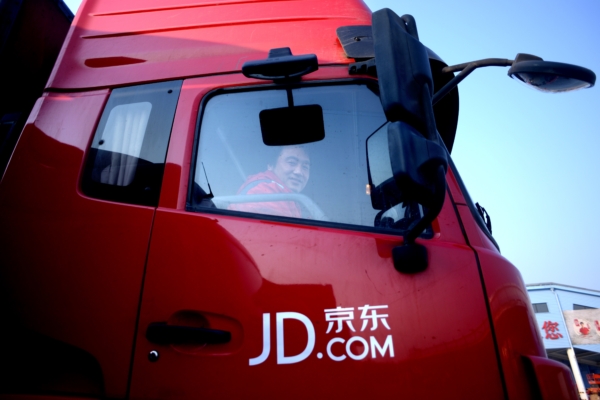
The European Union’s competition watchdog announced on May 28 that it has initiated a comprehensive investigation into the $2.5 billion acquisition of German electronics retailer Ceconomy (CECG.DE) by Chinese e-commerce giant JD.com (9618.HK), citing concerns that the acquisition may involve subsidies provided by the Chinese government.
According to information released on the official website of the European Commission, a detailed investigation has been launched under the Foreign Subsidies Regulation (FSR) to evaluate JD’s proposed acquisition of Ceconomy. The FSR, a new EU competition regulation enacted in 2022 and fully enforced since 2023, is specifically designed to address distortions in the market caused by subsidies from non-EU governments. This marks the first time the EU has officially initiated a deep investigation into a Chinese company’s merger and acquisition deal based on the FSR.
Preliminary investigations by the European Commission suggest that JD may have received foreign subsidies that could distort the internal EU market. These subsidies include preferential financing, tax incentives, grants, with potential links to the Chinese government.
The European Commission preliminarily believes that these potential foreign subsidies may have allowed JD to propose conditions during the Ceconomy acquisition negotiations that could distort competition. Additionally, the Commission is concerned that following the completion of the deal, the new merged company may pursue certain investment and business strategies that further impact the competitive environment within the EU market.
The thorough investigation initiated by the EU will evaluate several aspects, including whether potential foreign subsidies obtained by JD have distorted the outcome of the acquisition process, particularly in terms of JD being able to offer a higher acquisition price; whether JD can leverage its technology and logistical capabilities to support Ceconomy’s business operations and growth plans; and whether these potential foreign subsidies would enhance the competitive position of the merged company, potentially negatively affecting the EU market post-transaction.
The European Commission stated that a decision will be made within 90 working days at the latest, by October 2 this year, adding that initiating a deep investigation does not guarantee an unfavorable ruling.
JD proposed last July to acquire German electronics retailer Ceconomy for approximately $22 billion. Ceconomy is a German retail company operating both physical and online retail businesses, specializing in consumer electronics and household appliances. Brands under Ceconomy include MediaMarkt, MediaWorld, and Saturn, operating physical stores in multiple EU member states and conducting online retail as well.
JD is one of China’s largest retailers, headquartered in the Cayman Islands, and listed on the Hong Kong Stock Exchange and Nasdaq. Media reports last year speculated that if the acquisition of Ceconomy by JD was successful, JD could secure the position of Europe’s largest electronics retailer. The deal was initially expected to be completed in the first half of this year, but with the EU launching an investigation, the acquisition may face obstacles or delays.
The German Federal Cartel Office (Bundeskartellamt) had approved JD’s acquisition of a controlling interest in Ceconomy in September last year. The Federal Cartel Office is Germany’s antitrust and fair competition regulatory authority, similar to the EU’s competition authority. Andreas Mundt, the head of the Cartel Office, stated at the time: “JD’s business in Germany is still limited, with minimal overlap in competition, posing no monopoly concerns.”
German media reports highlighted the role of the Federal Cartel Office as a merger competition law review agency. However, issues involving national security or foreign trade fall outside the Cartel Office’s jurisdiction and are the responsibility of the German Federal Ministry for Economic Affairs and Energy.
The approval of JD’s acquisition of a controlling interest marks another significant step in the group’s international expansion, potentially altering the competitive landscape of the German retail industry in the long term.
JD is not only focusing on acquisitions in Germany but also expanding its presence in the UK. In April 2026, JD launched the Joybuy shopping platform website in the UK, dubbed as the “Chinese Amazon” by the media. Joybuy in the UK offers over 50,000 different products from renowned brands such as Apple, Sony, and Morrisons supermarket, while across Europe, it provides over 200,000 products including clothing, pet supplies, beauty products, appliances, food, and furniture. Brands like Lego and L’Oreal have set up their own online shopping sections on the site.
Joybuy heavily promotes its “Deliver by 11” policy – committing to deliver orders placed before 11 am on the same day and before 11 pm for next-day delivery.
Joybuy’s products in the UK are delivered by its distribution centers in Milton Keynes and Luton. Having its own warehouses and distribution centers enables Joybuy to offer next-day delivery services to approximately 17 million households along the M40 corridor, including London, Birmingham, Oxford, and Cambridge.
JD’s attempted acquisitions in the UK in 2024 and 2025 were unsuccessful. In early 2024, JD planned to acquire Currys, a UK electronics retailer, while the American Elliott Fund was also bidding; JD subsequently announced its withdrawal in March of the same year. The failure of these attempts was speculated to be due to various reasons such as a downturn in the UK retail market, significant profit pressure on Currys, and increasing security concerns over Chinese investments, thereby escalating scrutiny.
In 2025, discussions between JD and Sainsbury’s regarding the acquisition of Argos did not conclude successfully either. It is widely believed that JD was more interested in Argos’ logistics, namely same-day delivery and the UK warehouse network, rather than the brand itself.
On the same day the European Union announced the deep investigation into JD’s acquisition case, it also imposed a fine of 200 million euros (approximately $232 million) on the Chinese online retailer Temu for unlawful product sales on its platform and failure to take sufficient measures to prevent them.
In the related information released by the EU, evidence gathered by the Commission indicates that EU consumers are likely to encounter illegal goods on the Temu platform; Temu’s risk assessment in 2024 failed to meet the standards set out in the Digital Services Act.
EU investigations revealed a significant proportion of selected chargers on the platform had not passed basic safety tests. Additionally, a considerable percentage of tested baby toys posed moderate to high safety risks due to excessive levels of chemical substances or choking hazards from detachable parts.
The EU will hold a special meeting on Friday to discuss how the EU, composed of 27 member states, should adjust its strategies towards China to foster a fair competitive environment.