
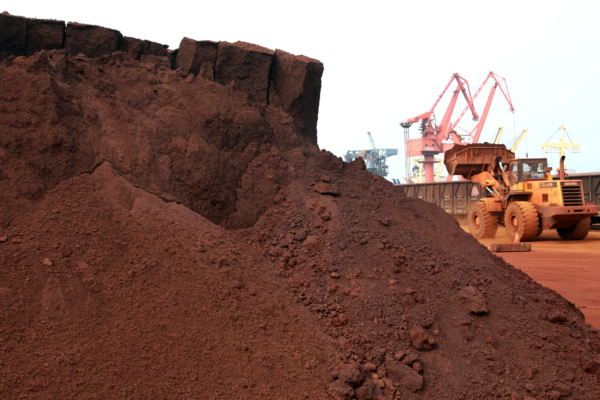
Amid Beijing’s restriction on rare earth exports, Australian rare earth mining company Viridis Mining and Minerals’ rare earth research and processing project in Brazil is seeking collaboration with potential buyers from the United States and Europe, rather than Chinese companies.
CEO Rafael Moreno of Viridis revealed to Reuters that the company is in high-level negotiations with potential buyers from Europe and the United States for its Colossus mine site in Minas Gerais, Brazil. He emphasized that the company is not seeking collaboration with Chinese entities.
Viridis recently inaugurated its rare earth research and processing center in Poços de Caldas, Brazil on Thursday (May 28), in preparation for stable production by the end of 2028 for the project. This facility will produce the first batch of mixed rare earth carbonates from the mine site, including minerals like neodymium and terbium, aiming to advance negotiations with buyers.
The activation of this center comes amidst global competition for rare earths and critical minerals, as European and American governments strive to reduce reliance on China for these materials crucial for electric vehicles and defense systems.
Although the project has garnered widespread interest from global buyers committed to purchasing specific quantities within a certain timeframe, and China has shown strong interest, Viridis has opted to exclusively partner with Western buyers.
“We have taken a Western approach early on. With the advancement of supply chain diversification, we believe our products will receive better value compared to having all products flow to China resulting in price suppression by the CCP,” Moreno stated on Wednesday (May 27). He further noted that negotiations with investors and lenders have been focused on securing the project’s independence from the Chinese supply chain.
Currently, China accounts for 60% of global rare earth ore production and 90% or more of refined production. To counter US tariffs, Beijing implemented strict export restrictions in April 2025, approving export applications only under specific conditions. This move has raised high concerns among Western countries regarding the security of critical mineral supply chains, further accelerating the pace for the US and Europe to seek alternative sources overseas, creating green critical mineral supply chains independent from China.
Colossus is Viridis’ first project in Brazil, but the company also operates in Australia and Canada. It is expected that the center can process up to 100 kilograms of ore per hour.
Moreno mentioned that the project is expected to cost between $360 to $370 million. Additional operating capital may increase the investment to $400 million if lenders require Viridis to hold extra working capital. Financing for the project is expected to be completed in the third quarter of this year.