
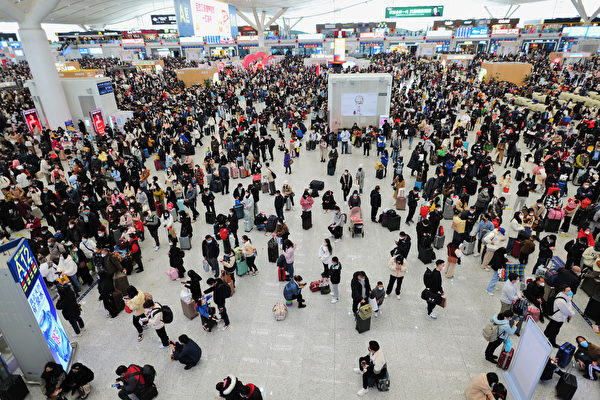
Recently, multiple provinces in China have begun disclosing their population data for the year 2025. As of April 9th, 27 provinces have released their data on resident population, with 20 provinces experiencing a decrease compared to the previous year, while 7 provinces saw an increase. Shaanxi, Hebei, and Jilin provinces have yet to disclose their data.
According to The Paper, in comparison to 2024, there was population growth in 7 provinces, namely Guangdong, Zhejiang, Xinjiang, Hainan, Shanghai, Tibet, and Ningxia. Among them, Guangdong saw the highest increase in resident population, reaching 790,000 new residents.
Among the 20 provinces with a decline in resident population, Hunan saw a decrease of 470,000 people, Sichuan 460,000, Anhui 410,000, and Shandong 372,000. Looking at the three northeastern provinces, Heilongjiang decreased by 280,000 people, Liaoning by 240,000, and Jilin province has not disclosed its data yet.
This data has sparked attention on social media platforms.
Netizens commented, “I just checked the resident population data of 27 provinces. Shanghai had a net increase of 51,500 people in 2025. The natural growth rate is negative (with 107,000 births and 164,000 deaths), relying on a net inflow of 108,500 people to turn it positive. This is the only positive growth among the four municipalities. Beijing, Chongqing, and Tianjin are all declining. The total fertility rate in Shanghai is only 0.66…”
“The driving force of growth differentiation: the increase or decrease of resident population mainly depends on two factors: natural population growth (births-deaths) and mechanical growth (net population inflow). Guangdong is the ‘most fertile’: with a birth rate of 1.003 million last year, one out of every 8 newborns in the country is from Guangdong. However, its growth is mainly driven by ‘snatching people’, with a net inflow of 500,000.”
“The ‘most attractive’ is Zhejiang: although Zhejiang’s natural growth is actually negative (-1.18‰), it attracted around 389,000 external population with its strong industrial clusters. Industry is the core magnet: populations tend to concentrate where industries cluster. For instance, the Shanghai Lingang New Area, focusing on integrated circuits, AI, and other industries, attracted over 130,000 young talents.”
“Population decline is no longer a problem confined to individual provinces. Among the 27 provinces that have released data this time, the vast majority are facing a decrease in resident population, becoming a nationwide population trend. Low fertility desires, exacerbated population aging, changing views on marriage and childbearing among the youth, and the persistently high costs of raising children, education, and housing have discouraged and deterred people from having children. The population issue is significant as it directly relates to future labor supply, elderly care, social development, and various other aspects. It indeed warrants the implementation of more substantial policies across regions to encourage childbirth and safeguard people’s livelihoods.”