
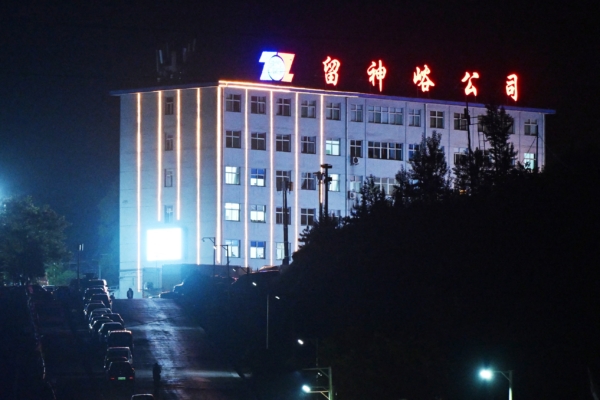
In the evening of May 22, a major gas explosion occurred at the Liushenyu coal mine of Tongzhou Coal Industry Group in Qinyuan County, Changzhi City, Shanxi Province, China. At the time of the explosion, there were 247 workers on duty underground, but over a hundred of them could not be accounted for in the system. The official initial report stated that the accident had resulted in at least 90 deaths, which was later revised to 82. The systemic corruption behind this mining disaster has raised serious concerns.
According to reports from mainland China, after the accident on the evening of May 22 until the morning of May 23, the official announcement from Changzhi City, Shanxi Province indicated 8 fatalities and only 38 trapped underground. However, by midday, the number of casualties was rapidly updated within a span of 2 hours, escalating from the initial 8 reported deaths to over 50, and by 2 p.m. on the 23rd, CCTV cited official information stating that the accident had claimed the lives of 90 individuals.
However, during a press conference around 10:30 p.m. on the 23rd, Changye officials announced that the accident had resulted in 82 fatalities, 2 missing persons, and 128 injuries. Officials claimed that due to the chaos at the scene, the company’s record-keeping of the workforce was inaccurate, leading to the initial incorrect reporting of the numbers.
As of the morning of the 25th, official information still stated that the death toll was 82, with 2 individuals still missing, and rescue teams were continuing their efforts to locate them.
It was previously reported by mainland media that at the site of the coal mine explosion, a journalist observed that the personnel board at the time of the explosion showed 124 individuals underground. However, after verification from multiple sources, it was confirmed that there were actually 247 personnel underground, with 123 individuals having no valid information in the system.
The official data reported on casualties has been criticized for underreporting. According to mainland media, miners are required to undergo facial recognition, registration with safety gates, and carrying personnel positioning cards before entering the mines. Netizens have questioned why there is a discrepancy in the data if the entry registration process is so strict.
Additionally, as reported by mainland media, the explosion occurred 300 meters underground. Rescue teams discovered two hidden passages, each approximately one kilometer long. The drawings provided by the Liushenyu coal mine were inconsistent with reality, making it challenging for rescue teams to search through each passage one by one. The mine has been criticized for illegally mining using “yin-yang drawings,” lacking personnel positioning and accurate maps becoming the major hurdle for rescue operations, and the two hidden kilometer-long passages are still under investigation, potentially harboring missing individuals.
Public records show that Tongzhou Coal Coking Group is a privately-owned enterprise in Qinyuan County, Shanxi Province, engaging in coal mining, coal washing, coking, and chemical product recovery integrated in 1983, with total assets of 950 million yuan and over 3,000 employees. The group oversees multiple coal mines, primarily producing No. 2 main coking coal, employing drift mining and comprehensive mining processes with an annual production capacity of 700,000 tons.
As reported by mainland media, documents issued by the Shanxi Emergency Management Department and the Shanxi Local Coal Mine Safety Supervision Administration on November 14, 2023, revealed that Shanxi Tongzhou Group’s Liushenyu Coal Industry Co., Ltd. had been assessed and confirmed as a second-tier standardized coal mine for safety production, valid for three years from the confirmation date.
Liushenyu coal mine is classified as a high-gas mine, previously listed in the national serious disaster-producing coal mine directory in 2024. Despite being penalized twice in 2025, the mine still bore the label of “second-tier standardized coal mine for safety production” until the recent accident occurred.
On May 23, during a press conference held by the mayor of Changzhi City in Shanxi, the circumstances of the gas explosion at Liushenyu coal mine were presented, indicating preliminary findings of significant illegal activities by the involved coal mine enterprise. Netizens commented: “Why wasn’t this addressed earlier? Why not take action sooner?”
Located in the coal-producing belt of Shanxi, Liushenyu coal mine primarily produces coking coal. As a medium-sized enterprise, its output accounts for only a small portion of the total annual production in the region.
Earlier this year, coal in China was considered oversupplied due to the impact of the war in Iran causing a surge in liquefied natural gas (LNG) prices and a decrease in imports, putting additional pressure on coal and the responsibility for the majority of the nation’s thermal power generation.
A report by Bloomberg on May 24 pointed out that China has sufficient coal reserves, which helped mitigate the impact of the Iran conflict previously, yet this mining disaster has raised questions about the hidden costs behind such incidents.
Following the mining accident in Shanxi, leaders from various regions in China visited underground to oversee safety production. However, according to Bloomberg, Beijing has not addressed structural issues, including distorted incentive mechanisms. After incidents, officials’ focus is on accident prevention rather than reducing overall production output. When problems arise, penalties are predominantly directed at local officials rather than the central government. When production becomes the top priority, local governments may face a dilemma between following Beijing’s economic guidance and adhering to safety standards.
It was reported that after the Liushenyu coal mine accident, the responsible individual from the involved coal mine enterprise has been detained. The State Council of the People’s Republic of China has established an accident investigation team.
Over the years, criticism has been ongoing regarding official-business collusion and systemic corruption in Chinese mining accidents, with officials investing, accepting benefits, local governments pursuing GDP and fiscal revenue, relaxing regulations, and shielding illicit production. In the aftermath of incidents, there are often instances of “concealment, delayed reporting,” lenient punishment or scapegoating.
Traditionally, high-ranking Chinese Communist Party officials rarely assume responsibility following mining accidents.
Chinese affairs expert familiar with the CCP system, Li Linyi, stated that China’s recurring mine accidents and other major incidents have systemic implications. Firstly, the party manages enterprises, focusing on political needs, leading to formalism, prioritizing not valuing workers’ lives and rendering many systems virtually ineffective. Secondly, after incidents occur, authorities at all levels attempt to cover up and conceal the facts as much as possible to avoid implicating top officials, resulting in low penalties for official misconduct since they are not elected officials.
Li Linyi cited the case of Fei Gaoyun, a member of the Anhui Provincial Party Committee and Secretary of the Hefei City Committee. Fei Gaoyun was revealed to have been removed from office on May 6. During his tenure as Deputy Governor of Jiangsu, in March 2019, he received only a disciplinary warning for his involvement in a significant explosion at the Jiangsu Xiangshui Jiangyin Chemical Plant on March 21, 2019. Subsequently, he was promoted to the Jiangsu Provincial Party Committee, Secretary of the Discipline Inspection Commission, Executive Deputy Governor, before being transferred to Anhui as a member of the Provincial Party Committee and Executive Deputy Governor, where he continued to hold influential positions.
Li Linyi emphasized that under CCP rule, many accidents in China have been found to be caused by human factors, yet these are often concealed by authorities. Fearing accountability, following natural disasters or man-made calamities, senior CCP officials prioritize stability maintenance over valuing human lives truly.