
The United States Embassy in the Philippines recently announced that 8 countries have officially joined the “Luzon Economic Corridor” initiative, working together with the Philippines, the United States, and Japan to promote the development of strategic infrastructure, supply chains, and regional connectivity on Luzon Island. To accelerate the implementation of this project, the three parties have decided to jointly hold an investment forum in September this year, focusing their cooperation on the development of AI, semiconductors, and modern infrastructure.
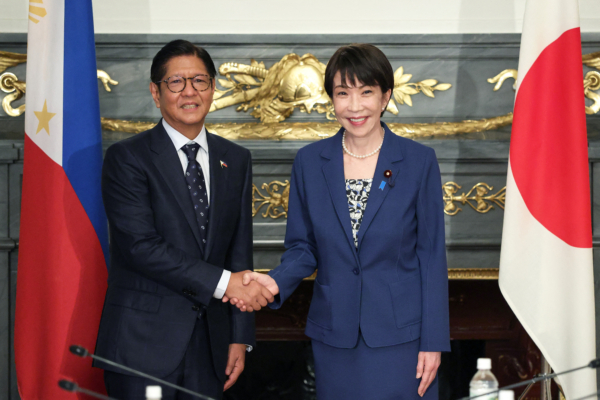
President of the Philippines Ferdinand R. Marcos Jr. and Japanese Prime Minister Sanae Takaichi released a joint statement after a summit on Thursday, May 29th. The statement emphasized their agreement to deepen cooperation on high-impact infrastructure and economic initiatives within the framework of the Luzon Economic Corridor (LEC).
The project, announced in 2024, is the first “Pacific Geo-Infrastructure and Investment Partnership (PGI) corridor” in the Indo-Pacific region. LEC is a trilateral initiative involving the Philippines, Japan, and the United States aimed at enhancing connectivity and economic growth along the corridor from Subic, Clark, Manila to Batangas on Luzon Island.
In their joint statement, Japan and the Philippines emphasized their commitment to making LEC a world-class economic center, strengthening global supply chains, accelerating economic development, and bringing about shared economic prosperity.
The leaders of both countries highlighted the importance of Japan’s Official Development Assistance (ODA) in enhancing the connectivity and resilience of Philippine infrastructure, which is crucial for Philippine economic growth and regional stability.
They agreed to deepen cooperation in the economic security field, including modernization of railways and ports, key minerals, renewable energy, automotive manufacturing, and advanced technologies such as AI. They also committed to enhancing cooperation on digital infrastructure, such as undersea cables and 5G network technology, and creating a secure and reliable AI ecosystem through Japan’s AI Co-Creation with ASEAN initiative.
The US Embassy in the Philippines announced on Facebook that the newly joined countries include Australia, Canada, Denmark, France, Italy, South Korea, Sweden, and the United Kingdom.
Frederick D. Go, the Philippine Finance Secretary and Co-Chair of the LEC Steering Committee, stated, “We are collectively building infrastructure that will improve the lives of millions of Filipinos and create new opportunities for our partner countries and the entire region’s business and innovation industries.”
In terms of future plans, the United States plans to establish an “Economic Security Zone” within approximately 16 square kilometers on Luzon Island to attract AI-related industries. Japan is seeking participation and investment from Japanese companies interested in expanding in the region.
Japan also hopes to attract companies domestically providing AI disaster prevention services, satellite and data centers, as the Philippines frequently experiences heavy rainfall and natural disasters, presenting significant demand.
Additionally, Japan proposed involving Japanese businesses in nurturing AI talent in the Philippines, which not only assists in the development of the AI industry in the Philippines but also, due to the alignment of the two countries’ geographical and strategic positions, integrating them into the supply chain from an economic security perspective, and aiding Japanese companies in expanding their market.
Australia is providing technical assistance to the Philippines through the “Infrastructure Partnership” and investing 1.9 billion pesos (32.6 million dollars) to promote inclusive economic growth; Denmark aims to revitalize the Philippine shipbuilding industry, promote environmentally friendly maritime innovation, employment, and sustainable industrial development, expected to create 10,000 job opportunities in the local market.
France is funding the construction of 100 bridges through official aid and enhancing interconnectivity through foreign direct investment (FDI) in the aviation sector; Italy is increasing public financial aid to promote private sector investments in transportation, semiconductors, and manufacturing.
South Korea is donating 1.5 billion pesos (25.6 million dollars) through official development assistance and Public-Private Partnership (PPP) to establish a national cybersecurity center and promote the modernization of the Ninoy Aquino International Airport.
Sweden is donating 74 million pesos (1.2 million dollars) for funding feasibility studies on the operational mode of freight railway signaling systems. The United Kingdom is deploying its “Growth and Investment Partnership” (GIP+) toolkit, providing up to 411 billion pesos (6.8 billion dollars) in export financing and technical assistance.