
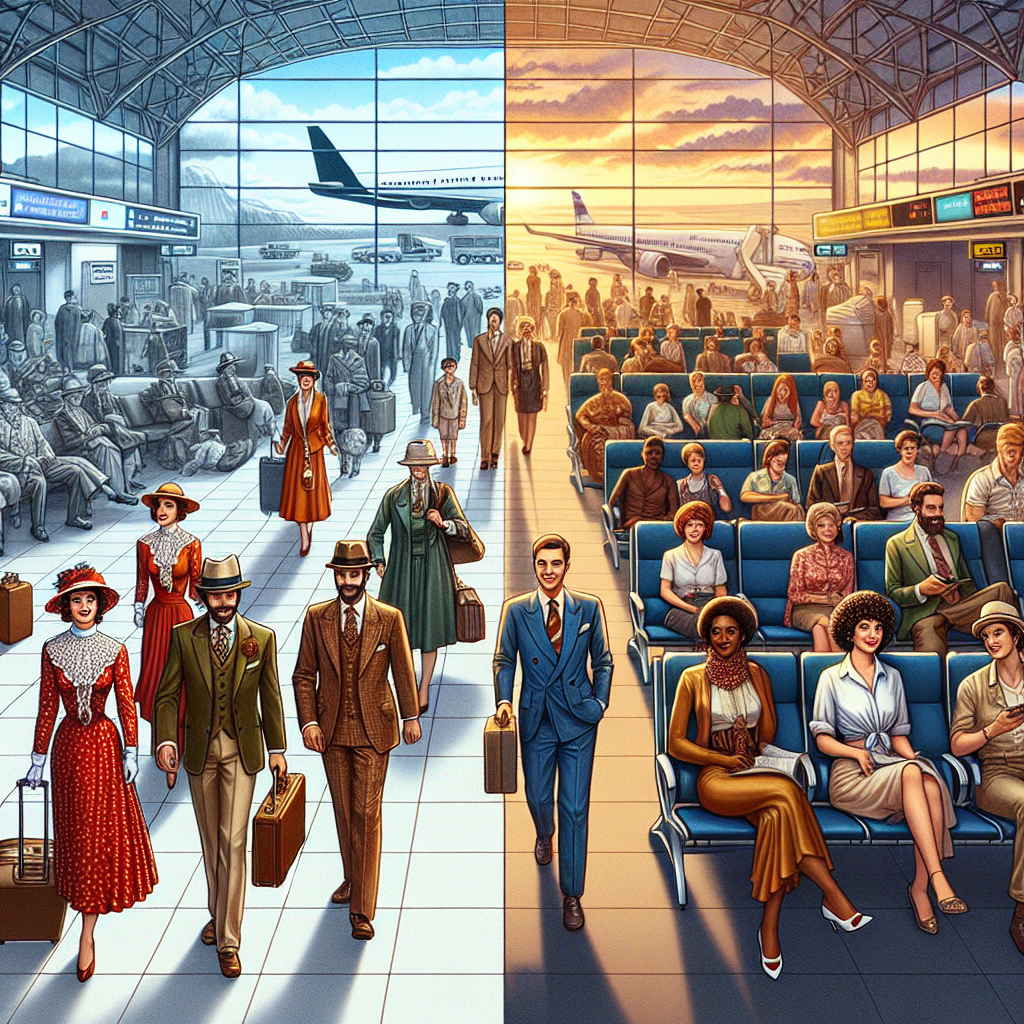
In the age where air travel is no longer just a privilege of the wealthy, people used to dress up when going to the airport. It was considered a high-end activity and one’s status would be reflected through their attire. Nowadays, people prioritize comfort when dressing for a flight.
At airports around the world, while some business travelers may still wear professional attire, the majority of passengers opt for comfort in the form of sweatpants, casual wear, or any other comfortable clothing.
However, stories of passengers being denied boarding due to inappropriate attire do occasionally make headlines, leading to some travelers feeling anxious and wanting to clarify if there are specific clothing regulations for air travel.
So what constitutes inappropriate attire for air travelers, and who enforces these dress codes? Taking the United States as an example, each airline has its own simple regulations.
Here are the dress code regulations you need to be aware of for airlines in the United States.
In the United States, each major airline’s Contract of Carriage (the agreement you enter into when you fly with the airline) includes terms regarding attire. Typically, these terms require you to be dressed appropriately, not barefoot, or emitting strong odors, except for medical conditions.
The dress code regulations are often vague and primarily left to the discretion of airline staff on whether to enforce them.
Only one major U.S. airline, Hawaiian Airlines, has relatively specific descriptions of what clothing is acceptable and unacceptable in their Contract of Carriage. Most other airlines have very similar policies, outlining the potential consequences if dress code violations occur.
If you violate the dress code rules outlined in the Contract of Carriage, you may be asked to cover up. If you have a sweatshirt or a change of clothes in your carry-on, you can quickly change. If you are unable to change, you may be denied boarding or even removed from the plane. If a dress code violation escalates into a larger issue causing flight delays, the situation could worsen.
Southwest Airlines, American Airlines, Delta Air Lines, United Airlines, Spirit Airlines, JetBlue Airways, and Alaska Airlines have similar dress code terms for passengers, specifying that those barefoot, wearing indecent, obscene, or overtly offensive clothing, poor hygiene, or emitting body odor that unreasonably offends or harasses other passengers, may be refused boarding or removed from the plane.
In addition to general dress code regulations, Hawaiian Airlines explicitly prohibits boarding in swimwear.
According to Southwest Airlines, passengers may also be held financially responsible for losses incurred due to disruptive or unruly behavior.
This is clearly the worst-case scenario, so it’s important to be aware of the terms and conditions you agree to when purchasing a ticket.
(Translated and rewritten from a leisure and travel website)