
From a well-known children’s program host on Xinjiang TV, to an internationally renowned journalist who exposed the mass detention of Uighurs in Xinjiang, Gulchehra Hoja’s life underwent a significant transformation 25 years ago. She recently visited Taiwan for the first time to give an exclusive interview to the Central News Agency, reflecting on how she moved from working for the Chinese state media to independent journalism, as well as discussing the repercussions her reporting had on her family members who were arrested and issuing a warning on Taiwan’s democracy and freedom.
Gulchehra is now a correspondent for Reporters Without Borders (RSF). Before the interview with the Central News Agency, Gulchehra jokingly remarked that anyone who comes into contact with her could be targeted by Beijing. “Now that you have seen me, you are a terrorist,” she quipped.
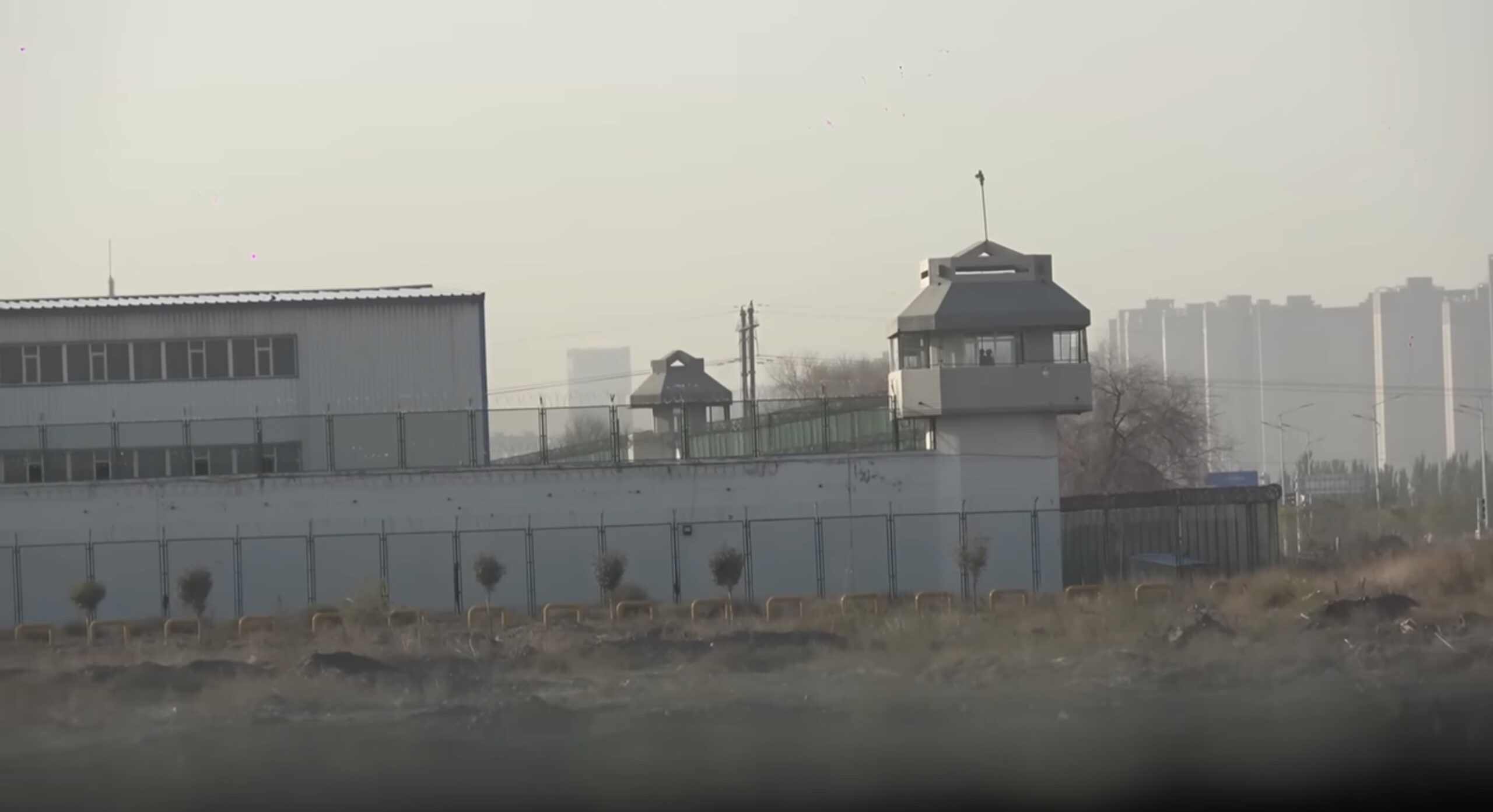
This jest reveals the tremendous change Gulchehra underwent over the past two decades. After leaving the Chinese state media, she joined Radio Free Asia’s Uighur language department, where she and her colleagues were the first to expose Xinjiang’s large-scale “camp” system, a move that resulted in her family members being arrested by the Chinese authorities.
Gulchehra was once a host on Xinjiang TV. She mentioned that the turning point in her TV career came around the year 2000. At that time, the Chinese Communist Party was promoting “bilingual education,” and her program in Xinjiang was used to persuade Uighur parents that their children must learn Mandarin to have a bright future.
She later interviewed Uighur students studying in other parts of China and gradually understood the assimilation goals behind Beijing’s push for bilingual education.
Gulchehra realized she was being used by the Chinese authorities. She stated that the Chinese government exploited Uighurs’ trust in her and used her as a propaganda tool for assimilating her own people. When she realized the intentions of the Beijing authorities, “I immediately felt guilty.”
After about a year of struggle, Gulchehra left China in July 2001 and went to Vienna, Austria for a short visit, where she first accessed uncensored information online. She listened to Radio Free Asia from abroad and compared its reporting with the work she had been doing in China.
“I felt like I was wrong. The work I was doing in my homeland had nothing to do with real journalism,” Gulchehra recalled. It was then she decided to go to the US and join Radio Free Asia, viewing it as her mission to “give a voice to those who are completely voiceless.” She arrived in Washington, D.C. in October of the same year and has never been able to return to Xinjiang since.
Gulchehra and her colleagues in Radio Free Asia’s Uighur language department were the first to expose Xinjiang’s large-scale “camp” system. Despite the highly censored environment, they obtained rare first-hand information through cross-checking.
As a result of her reporting, the Chinese authorities arrested Gulchehra’s brother in 2017 and detained another 24 of her relatives in a wave of arrests at the end of January 2018.
“That was the most unbearable night for me,” she recalled, “I kept thinking, should I go back? If I turn myself in, maybe they will release my family members.”
Such thoughts were eventually blocked by her husband. “He said to me, ‘How do you know the Chinese government will release them? We must continue to resist from here.’”
Subsequently, Gulchehra publicly sought help from the outside world, testified in the US Congress, and explained her family’s ordeal to the international community.
The situation in Xinjiang has since continued to attract international attention. The Office of the United Nations High Commissioner for Human Rights stated in 2022 that the large-scale detention of Uighurs could constitute “crimes against humanity,” while the US has characterized Beijing’s policies towards the Uighurs as “genocide.”
Although Gulchehra’s relatives were gradually released, she can now only talk to her parents once or twice a month for about 15 to 20 minutes each time. She believes that these conversations are constantly monitored by the authorities.
For Gulchehra, her reporting is not just about documenting persecution; it is also about conveying a message to the Uighur people: “The whole world is watching you. Everyone knows your situation and is listening to your voice.”
However, as Beijing continues to tighten its grip on information control, Gulchehra describes Xinjiang today as an “information black hole,” where even she cannot imagine the lives its inhabitants lead.
Gulchehra believes that China’s assimilation policy towards the Uighurs has long been in place, but it has intensified significantly since Xi Jinping took office.
She regards freedom as a “precious gift” and urges the people of Taiwan to cherish the hard-won democracy and freedom. “When you lose hope for freedom, that is the beginning of danger.”