
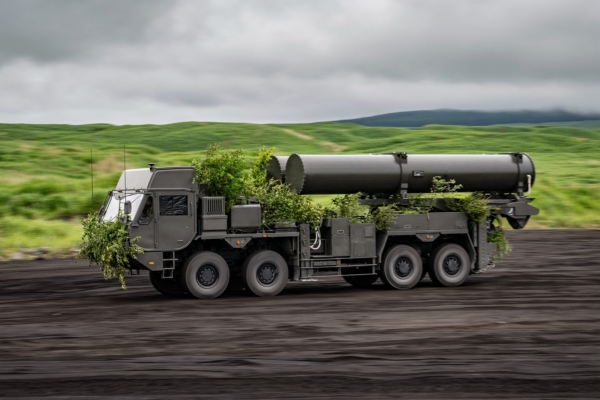
On Sunday, June 7th, the Japan Ground Self-Defense Force (JGSDF) held its largest annual live-fire exercise at the East Fuji Training Ground in Shizuoka Prefecture. Defense Minister Taro Kono personally inspected the exercise, which showcased the debut of the long-range “Type 25 High-Velocity Gliding Projectile” (25HVGP) launcher, attracting considerable attention from the audience.
According to various media reports, the large-scale live-fire exercise involved approximately 3,000 soldiers, 50 tanks and armored vehicles, as well as 50 artillery pieces, consuming nearly 70 tons of ammunition throughout the day. The JGSDF helicopters initiated the exercise with an aerial assault demonstration, as troops rappelled swiftly down ropes, followed by amphibious assault vehicles, mortars, and Type 16 maneuver combat vehicles engaging in continuous firing, amidst the echoing sounds of explosions.
In response to recent international conflicts, the Self-Defense Force also introduced a new anti-unmanned aerial vehicle project, utilizing rifles equipped with automatic targeting capabilities to shoot down approaching targets. Additionally, mine-clearing vehicles launched explosive charges consecutively, while SDF personnel remotely controlled quadruped robots for obstacle traversal.
A highlight of the exercise was the debut appearance of the “Type 25 High-Velocity Gliding Projectile” long-range missile launcher. Deployed since March of this year, this weapon boasts a range of several hundred kilometers and possesses the ability to fly irregular trajectories, designated by the Japanese Ministry of Defense as a core equipment for “island defense.” However, the exercise did not involve live ammunition firing, instead showcasing launch footage on a large screen at the venue.
Japanese Defense Minister Taro Kono made an on-site inspection during the exercise. Given Japan’s revision of weapon export regulations in April this year, observers believe that this demonstration also signifies ongoing adjustments in Japan’s military policy.