
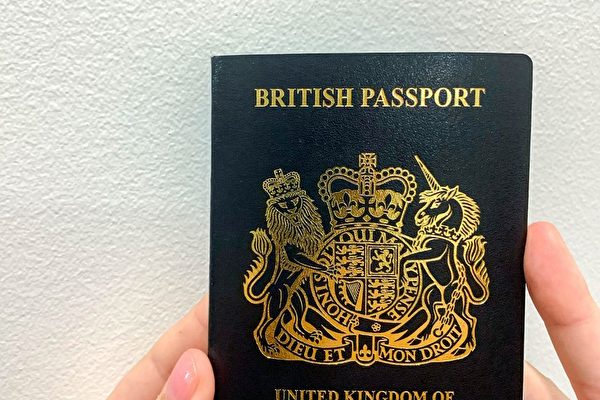
Latest reports show that a French company supplying core components for electronic passports to the UK and several European countries has been found to have links with Chinese capital impacted by US export controls, sparking concerns among political and security experts in the UK about the security of critical infrastructure, identity document counterfeiting, and supply chain risks.
According to the Financial Times, Linxens, a French electronic components manufacturer, primarily produces the electronic inlays for passports. The inlay is an ultra-thin layer embedded in the passport cover or data pages, typically invisible to the naked eye. It integrates a micro RFID chip with an antenna to store the passport holder’s personal data, digital photo, biometrics (such as fingerprints), and other electronic information, enabling contactless electronic reading of passport data, making it an essential component of biometric passports.
Linxens is owned by a holding company, with major investors including Beijing private equity funds Wise Road Capital and JAC Capital.
In 2024, the US Department of Commerce included Wise Road Capital and JAC Capital in the Entity List. The US side claimed that these companies were believed to assist the Chinese Communist Party in obtaining sensitive semiconductor manufacturing capabilities, which are crucial for the defense industry of the US and its allies, thus subjecting them to export controls.
In recent years, Western countries, led by the US, have been expanding export controls and investment scrutiny on China’s high-tech industry. In 2024, the UK government, in accordance with the National Security and Investment Act, mandated another consortium led by JAC Capital to sell its stake in a UK semiconductor company.
According to documents obtained by the Financial Times and sources familiar with the matter, Linxens currently supplies blank electronic inlays to French defense and technology group Thales, which is responsible for the production of UK passports commissioned by the Home Office. The final encoding of holder information and encryption is carried out by Thales within the UK.
The UK Home Office stated that there is currently no evidence to suggest that Linxens’ supply poses a security threat, as all core encryption technologies are controlled by the UK passport authority, and passport holders’ personal information will not be taken out of the UK.
Apart from the UK, Linxens also supplies electronic inlays to the French national printing office for passports and provides ID chip components to a state-owned printing institution in the Czech Republic. The Czech authorities stated that no security issues have been detected so far, as the core chips are manufactured by a trustworthy Dutch company, and the supplier meets all legal and tender requirements. The French government has yet to publicly respond to the reports.
Liam Byrne, Chair of the UK House of Commons Business and Trade Committee, stated that the situation could pose potential risks to the integrity of critical national infrastructure. The committee’s ongoing investigation into Sino-British economic relations will also take this into consideration.
Former director of the UK National Cyber Security Centre, Ciaran Martin, pointed out that the risks are more likely related to passport counterfeiting and forgery rather than just data encryption issues. A source familiar with the company mentioned that having detailed technical knowledge of national identity documents itself holds intelligence value.
In response, Linxens emphasized that its products are manufactured within certified secure facilities in Thailand and undergo regular third-party security audits. The company stressed that it does not have access to the encryption keys or personal data on passport chips and has implemented technology to detect tampering with the chips. Therefore, even if there is a risk of passport counterfeiting, it should not be attributed to the components it supplies.
Public records indicate that Linxens was initially held by European investment institutions and was fully acquired by Tsinghua Unigroup in 2018. After Tsinghua Unigroup’s judicial restructuring in 2022, all its shares were held by Beijing ZhiGuang Xin Holdings, with major investors including Wise Road Capital, JAC Capital, and several other Chinese state-owned capital institutions.